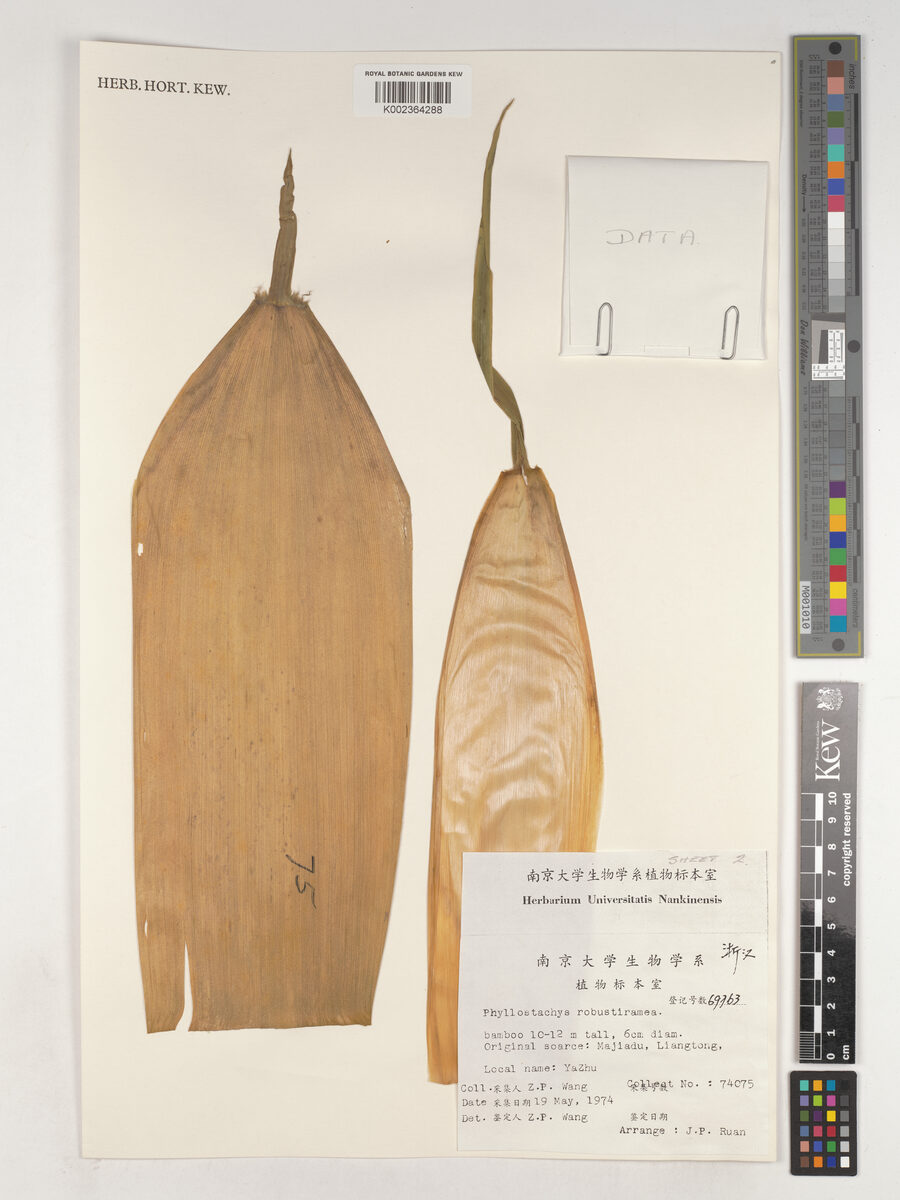
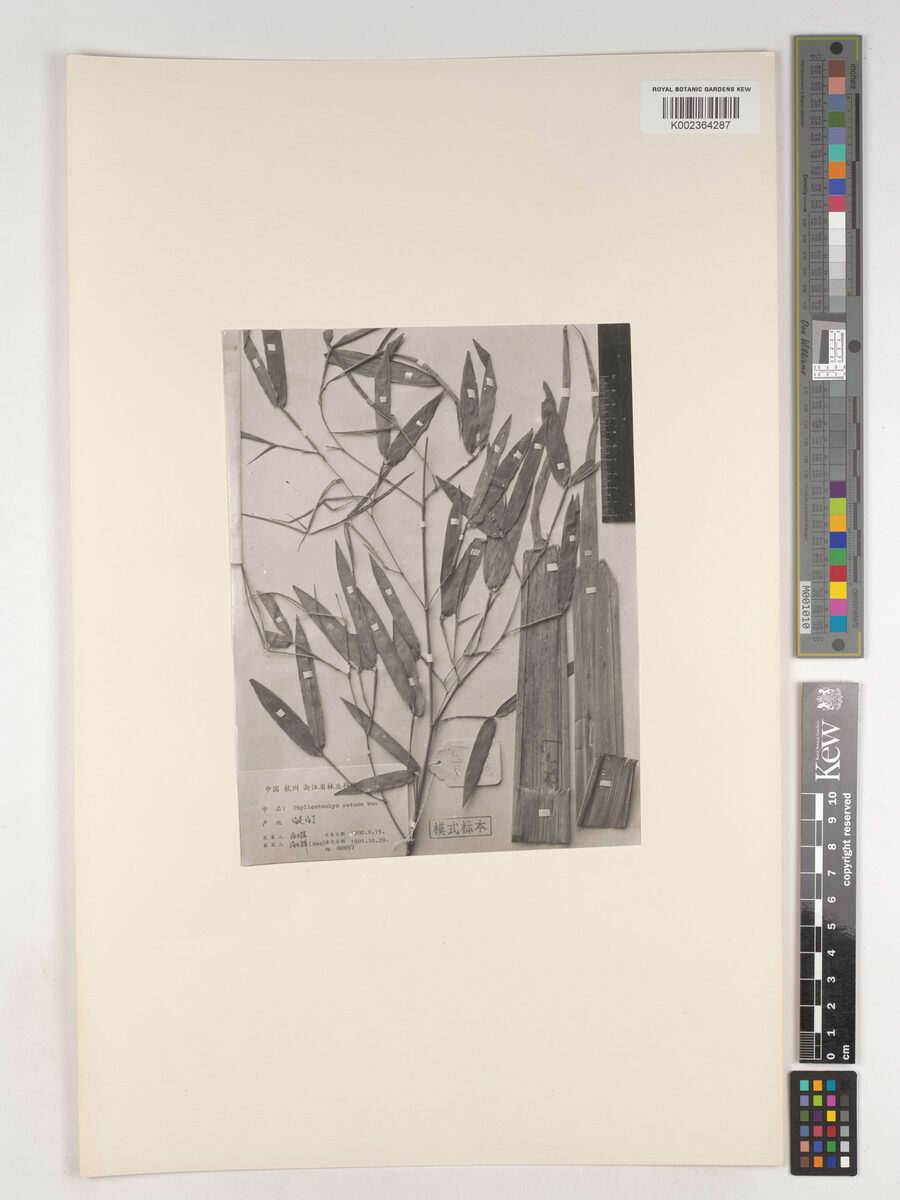
Phyllostachys makinoi
Hayata
Makino bamboo
iNaturalist· cc0
no rights reserved, uploaded by 葉子
iNaturalist· cc0
no rights reserved
Summary
Evergreen bamboo growing to 6 m at a moderate rate. Hardy to UK zone 8. Hermaphroditic and wind-pollinated. Tolerates light sandy, medium loamy, and heavy clay soils across mildly acidic to mildly alkaline pH. Grows in semi-shade or full sun. Prefers consistently moist soil with year-round foliage.
Description
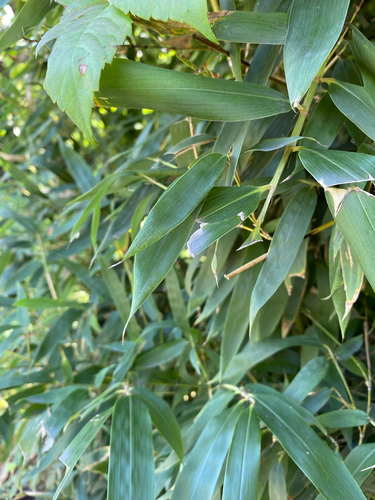
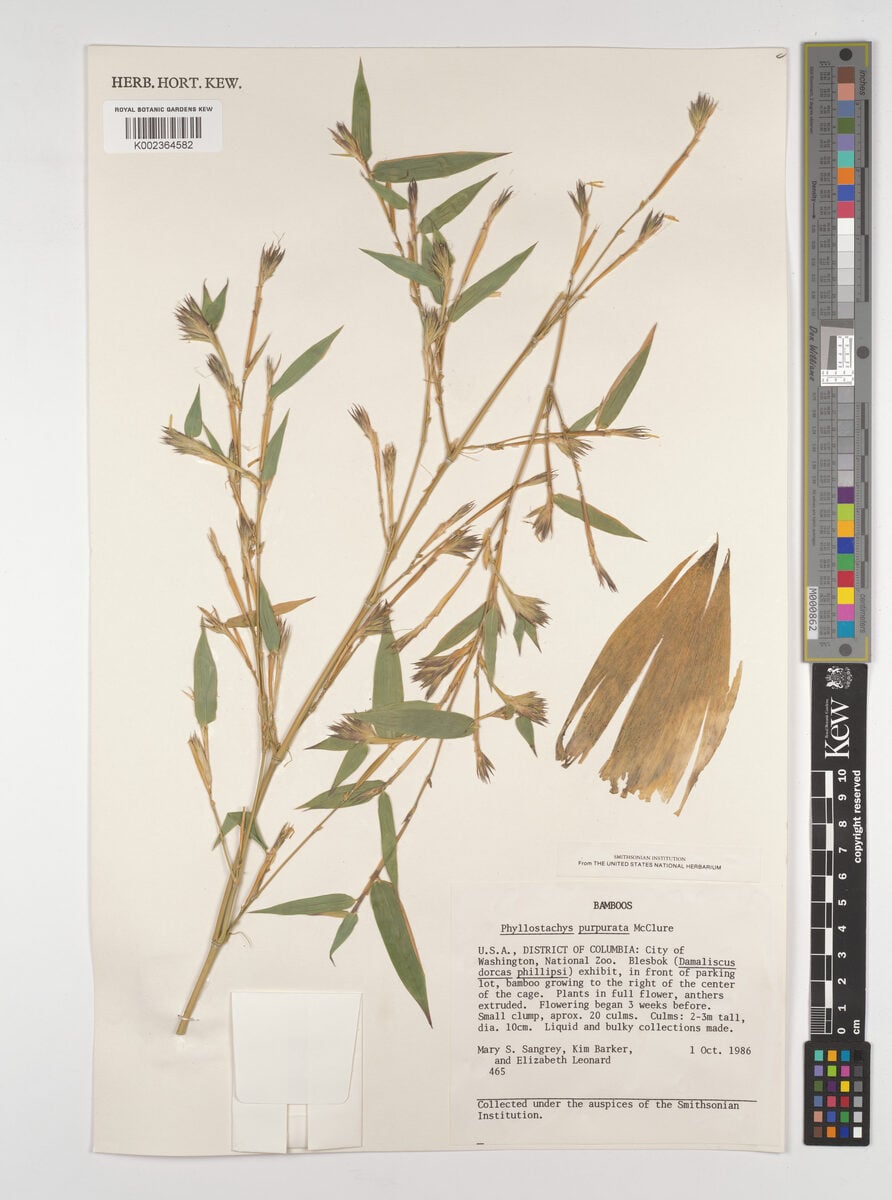
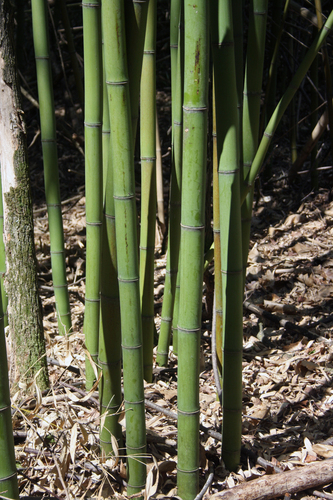
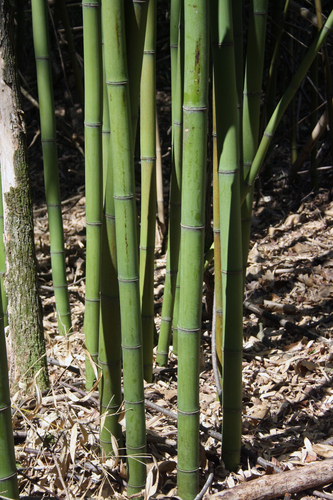
A bamboo. The stems are straight and 6-16 m tall. They are 2-10 cm across. They are green when young but become more brown with age. The sections between the joints (internodes) are 12-40 cm long. There are 2 branches at each node. The leaves are oval or sword shaped and 6-15 cm long by 1-2 cm wide.
Edible Uses
The young shoots are eaten cooked and are typically boiled in at least one change of water. They measure 3–8cm in diameter and are harvested in spring when they stand about 8cm above the ground, cut roughly 5cm below soil level.
Traditional Uses
The young shoots are cooked and eaten.
This uses section is brief — help expand it
Medicinal Uses
None known.
Distribution
It is a warm temperate plant. In Taiwan it grows from sea level to 1,550 m altitude.
Where It Grows
Asia, China, Japan, Taiwan*,
Cultivation
Requires a rich damp soil in a sheltered position. This species is not hardy in the colder areas of the country, it tolerates temperatures down to between -5 and -10°c. It dislikes prolonged exposure to hard frosts. This is a good companion species to grow in a woodland because the plants are shallow rooted and do not compete with deep rooted trees. This species is notably resistant to honey fungus. Plants only flower at intervals of many years. When they do come into flower most of the plants energies are directed into producing seed and consequently the plant is severely weakened. They sometimes die after flowering, but if left alone they will usually recover though they will look very poorly for a few years. If fed with artificial NPK fertilizers at this time the plants are more likely to die.
Propagation
Surface sow seed as soon as it is ripe in a greenhouse at around 20°C, keeping the compost consistently moist. Germination usually occurs fairly quickly with good-quality seed, though it can take 3–6 months. Grow seedlings on in a lightly shaded greenhouse until large enough to plant out. Seed is rarely available. Divide in spring as new growth begins; divisions from open ground transplant poorly and will need careful treatment under cover in pots until at least late spring. Divide during wet weather, as small divisions establish better than large clumps. Alternatively, large divisions can be taken from established clumps and moved directly to their permanent positions, provided they are misted or drenched frequently until established. Basal cane cuttings can also be taken in spring.
Other Uses
The culms are tough and compact, making them suitable for building, papermaking, and the manufacture of furniture, umbrellas, containers, and agricultural implements. In Taiwan, these canes are an especially important material for scaffolding and construction.
Other Information
It is a commercially cultivated vegetable. It is cultivated throughout Taiwan.
References (6)
- Arora, R. K., 2014, Diversity in Underutilized Plant Species - An Asia-Pacific Perspective. Bioversity International. p 44
- Flora of Taiwan Vol. 5:634
- Kays, S. J., and Dias, J. C. S., 1995, Common Names of Commercially Cultivated Vegetables of the World in 15 languages. Economic Botany, Vol. 49, No. 2, pp. 115-152
- Kermath, B. M., et al, 2014, Food Plants in the Americas: A survey of the domesticated, cultivated and wild plants used for Human food in North, Central and South America and the Caribbean. On line draft. p 648
- Kuo, W. H. J., (Ed.) Taiwan's Ethnobotanical Database (1900-2000), http://tk.agron.ntu.edu.tw/ethnobot/DB1.htm
Show all 6 references Hide references
- Zeven, A. C. & de West, J. M. J., 1982, Dictionary of cultivated plants and their regions of diversity. Wageningen. p 38