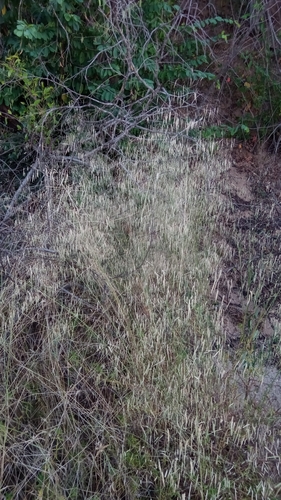
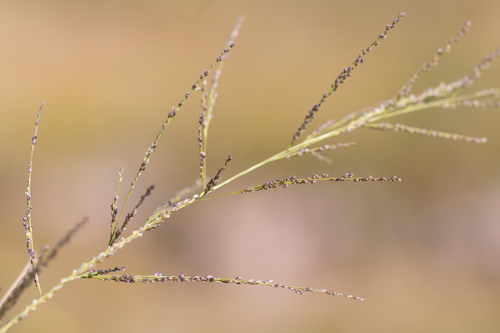
Bambusa blumeana
Schult. & Schult. f.
Spiny bamboo, Thorny bamboo
iNaturalist· cc-by-nc
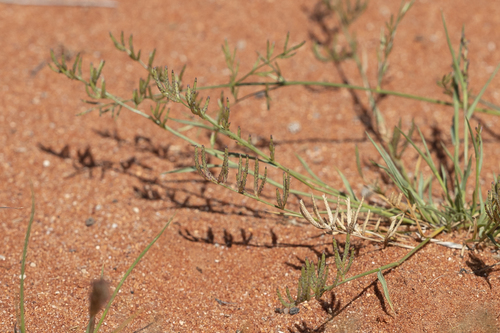
(c) CC黎明, some rights reserved (CC BY-NC)
iNaturalist· cc-by-nc
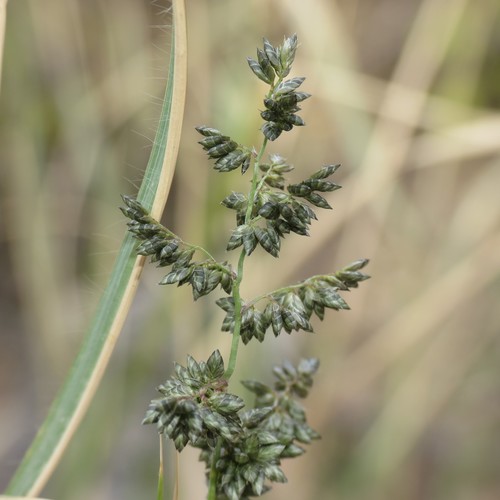
(c) Sebastián, some rights reserved (CC BY-NC)
iNaturalist· cc-by-nc
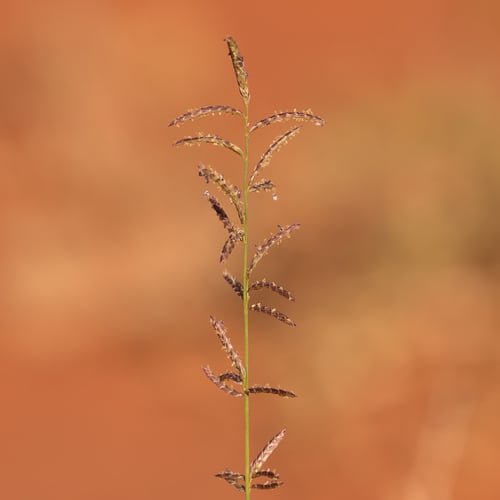
(c) Sebastián, some rights reserved (CC BY-NC)
Summary
Source: WikipediaBambusa blumeana is a fast-growing evergreen bamboo reaching 20 m tall with a 10 m spread. Hardy to UK zone 10. Grows in medium loamy and heavy clay soils with good drainage, mildly acidic to mildly alkaline pH. Requires full sun and moist soil.
Description
A spiny tufted bamboo. It grows up to 25 m high. The stems are 20 cm across. The internodes are usually hollow and from 40 to 60 cm long. The lower internodes are so thick walled they are almost solid. It grows in large clumps and the lower portion to 2 to 3 m is interlaced with spiny branches. The stems are smooth and green. Branches arise from the nodes. The culm sheath is 30 cm long by 22 cm wide. The back is covered with stiff hairs. The leaf blade is narrow and sword shaped. It is 15 cm long by 1.5 cm wide. Young shoots have yellowish green sheaths and blades. Plants flower very rarely. It may only flower every 20-30 years. The plants die after flowering.
Edible Uses
Edible Parts: Shoots Edible Uses: Young shoots are eaten as a vegetable, usually boiled and shredded. The young shoots are harvested as they emerge from the soil.
Traditional Uses
The young shoots are cooked and eaten. They are usually shredded. They are used in soup.
This uses section is brief — help expand it
Medicinal Uses
None known
Distribution
A tropical plant. Throughout the Philippines at low and medium altitudes. It grows up to 300 m altitude. It is normally always planted. It can tolerate flooding. It does best with a pH of 5-6.5. It cannot tolerate salty soils. In XTBG Yunnan.
Where It Grows
Asia, Australia, Cambodia, China, Guam, India, Indochina, Indonesia, Kiribati, Laos, Malaysia, Marshall Islands, Micronesia, Myanmar, Pacific, Palau, Philippines, SE Asia, Singapore, Taiwan, Thailand, Vietnam, Yap,
Cultivation
It grows best in areas where annual daytime temperatures are within the range 18 - 32c, but can tolerate 8 - 37°c. It can be killed by temperatures of -1c or lower. It prefers a mean annual rainfall in the range 1,500 - 4,000mm, but tolerates 1,000 - 5,000mm. Plants grow best on heavier, fertile soils. Intolerant of saline soils. Tolerant of occasional inundation of the soil.Prefers a pH in the range 5 - 6.5, tolerating 4.5 - 7. Planted culm cuttings at first send up thin shoots and culms are produced only after about 3 years. The number and size of the culms produced increases yearly until the clump reaches maturity. A planted cutting develops into a harvestable clump in 6 - 8 years. A mature clump (containing 10 - 40 culms) may develop about 30 shoots per year of which only about one-third to one-fourth reaches maturity because of diseases and pests, wind damage, and shortage of water and nutrients. New shoots emerge during the rainy season and can be harvested for food after 7 - 15 days. Bamboos have an interesting method of growth. Each plant produces a number of new stems annually - these stems grow to their maximum height in their first year of growth, subsequent growth in the stem being limited to the production of new side branches and leaves. In the case of some mature tropical species the new stem could be as much as 30 metres tall, with daily increases in height of 30cm or more during their peak growth time. This makes them some of the fastest-growing species in the world. Culms reach about full height in approximately 5 months, which means for the larger culms (growing to 25 metres or more) there is a daily height increase of about 17 cm. The most rapid growth usually occurs near the end of the growth period in the latter part of the rainy season. In that period, daily height increase may reach 45 cm on average. The harvesting of culms depends on the intended end use but should preferably be effected in the dry season. For handicraft purposes, 1-year-old culms can be taken. For construction purposes, 3-year-old culms are suitable. Culms are cut 2 - 3 metres above the ground, just above the dense growth of spiny branches. The remaining basal portion should be cut back close to the ground within 6 months of the harvest. In order to ensure sustained yield, the number of culms that can be cut annually should not exceed 60% of the standing mature culms in the clump. About 6 - 7 edible shoots can be harvested per clump per year. Managed (cleaned) clumps produce an average of 8 mature culms per year (800 - 1200/ha), whilst unmanaged (uncleaned) clumps only 5 (500 - 750/ha). Removal of the basal spiny thickets and basal parts of harvested culms makes access easier, promotes the development of healthy shoots and reduces the number of deformed culms. Bamboos in general are usually monocarpic, living for many years before flowering, then flowering and seeding profusely for a period of 1 - 3 years before usually dying. Spiny bamboo flowers very rarely, perhaps once in 20 - 30 years.
Propagation
Seed - surface sow in containers as soon as it is ripe, preferably at a temperature around 20c. Do not allow the compost to dry out. Germination usually takes place fairly quickly so long as the seed is of good quality, though it can take 3 - 6 months. Prick out the seedlings into containers when they are large enough to handle and grow on in a lightly shaded place until large enough to plant out. Plants only flower at intervals of many years and so seed is rarely available. Division as new growth commences. Take divisions with at least three canes in the clump, trying to cause as little root disturbance to the main plant as possible. Grow them on in light shade in pots of a high fertility sandy medium. Mist the foliage regularly until plants are established. Plant them out into their permanent positions when a good root system has developed, which can take a year or more. Propagation by culm cuttings is most common. Culm cuttings about 50 cm long (with 2 - 3 nodes) are taken from the middle portion of 1 - 2-year-old culms with a relatively large diameter. They are planted horizontally at 10 cm depth. They should be planted immediately in a nursery or directly into the field in direct sunlight. Planting is preferably done at the beginning of the rainy season. After planting, mulch is distributed around the plant. Good results have also been obtained with 3-noded-cuttings from branches, up to 1.5 cm in diameter, from 1 - 2-year-old culms. Treated with 100 ppm IAA and planted in a sand bed, the cuttings could be potted when rooted (after about 20 days) and transplanted to the field after 2 - 3 months.
Other Uses
Basketry Fencing Fuel Furniture Paper Shelterbelt Soil stabilization Wood Agroforestry Uses: It is often planted along water courses to prevent soil erosion[310. Planted around farmhouses as wind-breaks, in fields as living fences or to mark boundaries. Other Uses The culms walls are up to 3 cm thick; the internodes are usually hollow, 25 - 60cm long. They are used as scaffolding in construction, for basketry (baskets are very popular), furniture, parquets, concrete reinforcements, kitchen utensils, chopsticks, hats and toys. They are suitable for making paper. They are also used as firewood if wood is scarce. The natural durability of untreated culms is poor: 1 - 3 years outdoors, 2 - 5 years indoors, 6 months or less in seawater. Special Uses Carbon Farming Food Forest
Production
A clump with 10-40 culms can produce 30 shoots per year. Shoots emerge after the rainy season and can be harvested after 7-15 days. About 6-7 edible shoots can be harvested per clump per year.
Notes
There are about 120 Bambusa species. They are tropical and subtropical in Asia. It is used to make chopsticks in the Philippines. Chemical composition; Young shoots per 100 g edible portion: Water 89 g, protein 4 g, fat 0.5 g, carbohydrates 4 g, fibre 1 g, ash 1 g, Ca 37 mg, P 40 mg, Fe 1.5 mg Vitamin B1 0.1 mg, Vitamin C 10 mg. The energy value is about 120 kJ/100 g.
Synonyms
Also Known As
Bambu duri, Bambu gesing, Buloh duri, Buloh sikai, Gesing bamboo, Haur chuchuk, Haur cucuk, Kauayan-tinik, Kida, Mai phai ban, Phai-sisuk, Phaix banz, Piao lahe, Pio titoca, Pring gesing, Pring ori, Rusay roleak, Ru'ssei roliek, Tituka, Tre gai, Tre la nga
References (15)
- Ambasta S.P. (Ed.), 2000, The Useful Plants of India. CSIR India. p 66
- Arora, R. K., 2014, Diversity in Underutilized Plant Species - An Asia-Pacific Perspective. Bioversity International. p 36
- Bircher, A. G. & Bircher, W. H., 2000, Encyclopedia of Fruit Trees and Edible Flowering Plants in Egypt and the Subtropics. AUC Press. p 53 (Also as Bambusa spinosa)
- Burkill, I.H., 1966, A Dictionary of the Economic Products of the Malay Peninsula. Ministry of Agriculture and Cooperatives, Kuala Lumpur, Malaysia. Vol 1 (A-H) p 301
- Cengel, D. J. & Dany, C., (Eds), 2016, Integrating Forest Biodiversity Resource Management and Sustainable Community Livelihood Development in the Preah Vihear Protected Forest. International Tropical Timber Organization p 125
Show all 15 references Hide references
- Dransfield, S. & Widjaja, EA., 1995, Plant Resources of South East Asia. PROSEA No. 7 Bamboos. Leiden. p 60
- Hibbert, M., 2002, The Aussie Plant Finder 2002, Florilegium. p 37
- Luczaj, L., et al, 2021, Wild food plants and fungi sold in the markets of Luang Prabang, Lao PDR. Journal of Ethnobiology and Ethnomedicine (2021) 17:6
- Monsalud, M.R., Tongacan, A.L., Lopez, F.R., & Lagrimas, M.Q., 1966, Edible Wild Plants in Philippine Forests. Philippine Journal of Science. p 477
- Ochse, J.J. et al, 1931, Vegetables of the Dutch East Indies. Asher reprint. p 301 (As Bambusa spinosa)
- Phon, P., 2000, Plants used in Cambodia. © Pauline Dy Phon, Phnom Penh, Cambodia. p 86
- Sang, D. T., & Mizoue, K. O. N., 2012, Use of Edible Forest Plants among Indigenous Ethnic Minorities in Cat Tien Biosphere Reserve, Vietnam. Asian Journal of Biodiversity Vol. 3 (1), p 23-49
- Sukarya, D. G., (Ed.) 2013, 3,500 Plant Species of the Botanic Gardens of Indonesia. LIPI p 836
- Syst. veg. 7(2):1343. 1830
- Wiersema, J. H. & Leon, B., 2013, World Economic Plants. A Standard Reference CRC Press. 2nd Ed. p 91