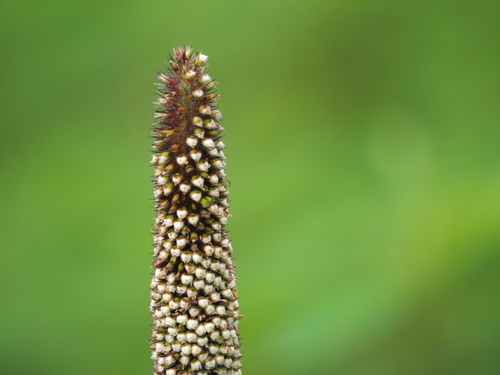
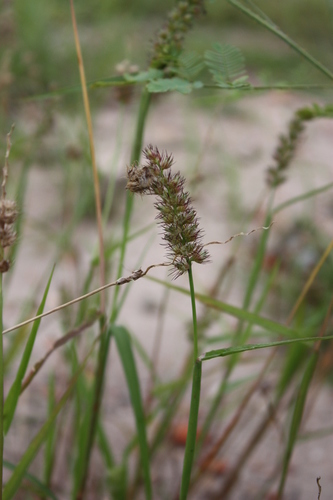
Bambusa bambos
(L.) Voss
Giant thorny bamboo, Spiny bamboo
iNaturalist· cc-by-sa
(c) Abu Hamas, some rights reserved (CC BY-SA), uploaded by Abu Hamas
iNaturalist· cc-by-sa
(c) Abu Hamas, some rights reserved (CC BY-SA), uploaded by Abu Hamas
iNaturalist· cc-by-sa
(c) Abu Hamas, some rights reserved (CC BY-SA), uploaded by Abu Hamas
Summary
Source: WikipediaBambusa bambos, (synonym Gigantichloa maxima) the giant thorny bamboo, Indian thorny bamboo, spiny bamboo, or thorny bamboo (but see Bambusa spinosa) is a species of clumping bamboo native to southern Asia (India, Bangladesh, Sri Lanka and Indochina). It is also naturalized in Seychelles, Central America, West Indies, Java, Malaysia, Maluku, and the Philippines.
Description
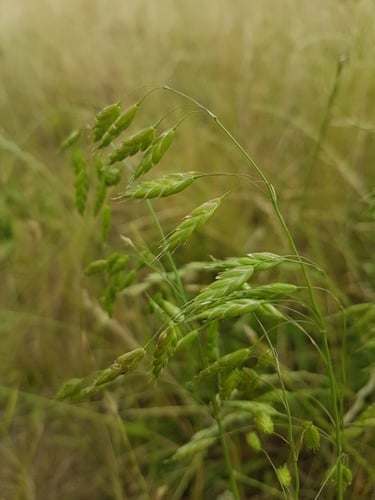
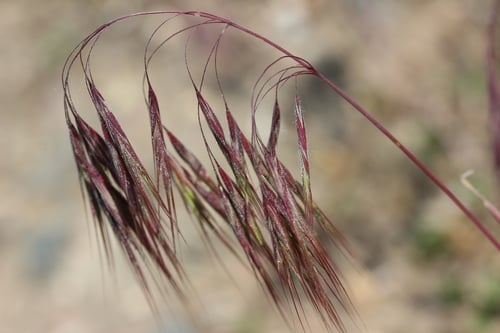
A densely tufted bamboo. The culm or stem is 30 m tall. It is 1`5-18 cm across. The wall is very thick. The internodes are 20-40 cm long. The stem is bright green. The nodes are slightly swollen. The lower nodes can have aerial roots. There are branches from the nodes. The lower branches have spines which curve backwards. The sheath of the stem is 15-35 cm long by 18-30 cm wide. It is wrinkled at the top. It is brown and hairy when young. It falls off as the branches develop. The leaf blade is sword shaped and 6-22 cm long by 1-3 cm wide. The flowering stalk is at the end of the leafy branches. After the bunch flowers, seeds are set and the clump dies.
Edible Uses
Edible Parts: Sap Seed Shoots Edible Uses: Drink Edible portion: Shoots, Seeds, Sap, Cereal. Young shoots - cooked. They are often cooked in two changes of water to remove the bitterness. The sugary sap is made into a drink. Seed. Chemical composition: Seeds per 100 g edible portion. Water 8 g, Protein 13.5 g, carbohydrates 73 g, fibre 1 g, fat 0.4 g, ash 1.7 g, calcium 87 mg, P 163 mg. Shoots per 100 g edible portion. Water 87-88 g, protein 3.9-4.4 g, fat 0.5 g, carbohydrates 5.5 g, fibre 1 g, ash 1 g, Ca 20-24 mg, P 40-65 mg, Fe 0.1-0.4 mg Vit A 76 IU, Vit B1 0.16 mg, Vit B2 0.05 mg Vit C 0.3-0.5 mg The energy value is about 185 kJ/100g. Young shoots contain HCN so should be cooked.
Traditional Uses
The shoots should be cooked to remove the bitter cyanide. The water should be changed. They are often pickled then eaten. The seeds are used for flour.
Medicinal Uses
Antibilious Antispasmodic Aphrodisiac Astringent Digestive Emmenagogue Skin Stomachic The plant contains high levels of silica and is used in many ways in Ayurvedic medicine. The root is astringent and cooling. It is used to treat joint pain and general debility. The leaves are antispasmodic and emmenagogue. They are taken internally to stimulate menstruation and to help relieve period pain. They are also taken to tone and strengthen stomach function; to expel worms; and have the reputation of being aphrodisiac. The young sprouts, harvested as they emerge from below soil level, are taken internally to relieve nausea, indigestion and wind. They are applied externally as a poultice to help drain infected wounds. The juice of the plant is rich in silica and is taken internally to aid in the strengthening of cartilage in conditions such as osteoarthritis and osteoporosis.
Distribution
A tropical plant. It grows in hot tropical climates. It is best in river valleys. It grows in mixed moist deciduous forest. AIt grows up to 1,000 m altitude.
Where It Grows
Asia, Australia, Bangladesh, Cambodia, Central America, China, Himalayas, India, Indochina, Indonesia, Laos, Malaysia, Myanmar, NIcaragua, Northeastern India, Pacific, Pakistan, Philippines, SE Asia, Singapore, Sri Lanka, Thailand, Vietnam,
Cultivation
It can easily be grown from seed. It can be grown by cuttings of the rhizome or the stem. Fresh seed germinate in 5-10 days. Seeds can be stored for 6 months at cool temperatures and in dry condition. Seedlings are normally kept in a nursery for 2 years before planting out. When stem cuttings are used stems with 1-3 nodes are planted horizontally. They are treated with root promoting hormones. A spacing of 6 m is suitable.
Propagation
Seed - it has a short viability of less than 3 months in normal storage. Surface sow in containers as soon as it is ripe, preferably at a temperature around 20°c. Do not allow the compost to dry out. Germination rates in excess of 80% can be expected, so long as the seed is of good quality, with the seed sometimes sprouting in as little as 5 - 10 days, though it can take 3 - 6 months. Prick out the seedlings into containers when they are large enough to handle and grow on in a lightly shaded place until large enough to plant out. Division as new growth commences. Take divisions with at least three canes in the clump, trying to cause as little root disturbance to the main plant as possible. Grow them on in light shade in pots of a high fertility sandy medium. Mist the foliage regularly until plants are established. Plant them out into their permanent positions when a good root system has developed, which can take a year or more. Plants can be propagated vegetatively by rhizome, culm and branch cuttings. The propagules are raised in a nursery and after they have produced roots and developed rhizomes they are planted out in the field during the rainy season in pits filled with a mixture of compost and soil.
Other Uses
Basketry Biomass Containers Fibre Furniture Paper Shelterbelt Soil stabilization String Wood Other uses rating: Very High (5/5). Agroforestry Uses: One of the best bamboos for windy sites due to the strength of the culms, it is often planted to form wind-breaks around farms - when planted as a hedge around a farm or field, it requires little care. Planted along rivers in order to check floods. Other Uses The stems have a huge range of applications, being manufactured in different ways to make items as diverse as scaffolding, rafts, furniture, paper and dozens of other items. They are used to make the sails of ships, as well as their masts and rigging. Almost every article of furniture in houses, including mats, screens, chairs, tables, bedsteads and bedding, can be made from the stems. Household utensils, and even coarse underclothing, are made of this material. The whole stems are employed in shipbuilding, the construction of bridges, water pipes etc. Buckets, pitchers, flasks, and cups, are made from sections of the stems. Baskets, boxes, fans, hats, and jackets are made from split bamboo stems. Ropes and Chinese paper are made from the fibres in the stems. A Chinese umbrella consists of bamboo paper, with a bamboo handle and split bamboo for a frame. All sorts of agricultural implements, appliances for spinning cotton and wool or for reeling silk are often constructed entirely from bamboo. Very many articles of household use or decoration made from bamboo have become articles of commerce. So many and varied are the uses that it is possible to mention here only a part of them!. Traditionally, when making paper, the stems are split into lengths of 90 - 120cm and placed in a layer in a tank. This is covered with lime, and alternate layers of bamboo and lime are so placed until the tank is full. Water is run in to cover the whole, and this is then left for three or four months, by which time the bamboo has become rotten. The soft bamboo is pounded in a mortar into a pulp, mixed with water, and then poured on square, sieve-like molds. The sheets are allowed to dry on the mold, then placed against a hot wall, and finally exposed to the sun. The leaves are used for packing, as a filling for mattresses etc. Special Uses Carbon Farming Food Forest
Production
A clump from seed reaches about 5 m high in 7 years. It achieves full growth of 25-50 stems in 20 years. A 1000 seeds weigh 11.6 g. Flowering occurs between 16-45 years.
Other Information
It is cultivated.
Notes
There are about 120 Bambusa species. They are tropical and subtropical in Asia. Chemical composition: Seeds per 100 g edible portion. Water 8 g, Protein 13.5 g, carbohydrates 73 g, fibre 1 g, fat 0.4 g, ash 1.7 g, calcium 87 mg, P 163 mg. Shoots per 100 g edible portion. Water 87-88 g, protein 3.9-4.4 g, fat 0.5 g, carbohydrates 5.5 g, fibre 1 g, ash 1 g, Ca 20-24 mg, P 40-65 mg, Fe 0.1-0.4 mg Vit A 76 IU, Vit B1 0.16 mg, Vit B2 0.05 mg Vit C 0.3-0.5 mg The energy value is about 185 kJ/100g. Young shoots contain HCN so should be cooked.
Nutrition
| Part | Moisture | kJ | kcal | Protein | Vit A | Vit C | Iron | Zinc |
|---|---|---|---|---|---|---|---|---|
| Shoots | — | — | — | — | 5 | 0.1 | — | — |
| Seeds | — | — | — | — | — | — | — | — |
Synonyms
Also Known As
Bambu berduri, Bambu duri, Bans, Baroowa, Behor, Biduru, Bonga-vedura, Chek sudo, Daba, Kalak, Kanta bans, Kantabanso, Karil, Kating, Kattaekalli, Kayalkkali, Ketua, Ketuasi, Ketwa, Kharra, Kotoba, Kotoha, Kya-kat-wa, Kyakat-wa, Moongil, Mulankumpu, Mulkas veduru, Mullu veduru, Naw mai phai paa, Nga-chat-wa, Phai-pa, Phaix pax, Pring ori, Russei khlei, Russei prei, Schee, Saneibi, Thorny bamboo, Tre gai rung, Tre laf ngaf
References (29)
- Arora, R. K., 2014, Diversity in Underutilized Plant Species - An Asia-Pacific Perspective. Bioversity International. p 36 (As Bambusa spinosa)
- Ashton, M. S., et al 1997, A Field Guide to the Common Trees and Shrubs of Sri Lanka. WHT Publications Ltd. p 71
- Bhatt, B. P., et al, 2003, Commercial edible bamboo species and their market potentiality in three Indian tribal states of the North Eastern Himalayan Region. J. Bamboo and Rattan. 2(2): 111-133
- Cengel, D. J. & Dany, C., (Eds), 2016, Integrating Forest Biodiversity Resource Management and Sustainable Community Livelihood Development in the Preah Vihear Protected Forest. International Tropical Timber Organization p 125
- Cruz-Garcia, G. S., & Price, L. L., 2011, Ethnobotanical investigation of 'wild' food plants used by rice farmers in Kalasin, Northeast Thailand. Journal of Ethnobiology and Ethnomedicine 7:33
Show all 29 references Hide references
- Dransfield, S. & Widjaja, EA., 1995, Plant Resources of South East Asia. PROSEA No. 7 Bamboos. Leiden. p 56
- Hibbert, M., 2002, The Aussie Plant Finder 2002, Florilegium. p 37
- Kar, A., 2004, Common wild vegetables of Aka tribe of Arunachal Pradesh. Indian Journal of Traditional Knowledge 3(3) pp 305-313 (As Bambusa spinosa)
- Kar, A., & Borthakur, S. K., 2007, Wild vegetables sold in local markets of Karbi Anglong, Assam. Indian Journal of Traditional Knowledge. 6(1) January 2007, pp169-172 (As Bambusa spinosa)
- Marandi, R. R. & Britto, S. J., 2015, Medicinal Properties of Edible Weeds of Crop Fields and Wild plants Eaten by Oraon Tribals of Latehar District, Jharkhand. International Journal of Life Science and Pharma Research. Vo. 5. (2) April 2015
- Martin, F.W. & Ruberte, R.M., 1979, Edible Leaves of the Tropics. Antillian College Press, Mayaguez, Puerto Rico. p 194
- Misra S. & Misra M., 2016, Ethnobotanical and Nutritional Evaluation of Some Edible Fruit Plants of Southern Odisha, India. International Journal of Advances in Agricultural Science and Technology, Vol.3 Issue.1, March- 2016, pg. 1-30
- Narayanan Ratheesh, M. K. et al, 2011, Wild edible plants used by the Kattunaikka, Paniya and Kuruma tribes of Wayanad District, Kerala, India. Journal of Medicinal Plants Research Vol. 5(15), pp. 3520-3529
- Ochse, J.J. et al, 1931, Vegetables of the Dutch East Indies. Asher reprint. p 303
- Pradhan, R., et al, 2020, Potential Wild Edible Plants and its Significance in Livelihood of Indigenous People of Male Mahadeshwara Hills, Karnataka. Economic Affairs Vol. 64, No. 4 pp. 01-14
- Ray, A., et al, 2020, How many Wild Edible Plants do we Use. Frontiers in Sustainable Food Systems. 4:56 p 12
- Sahni, K.C., 2000, The Book of Indian Trees. Bombay Natural History Society. Oxford. p 186
- Singh, H.B., Arora R.K.,1978, Wild edible Plants of India. Indian Council of Agricultural Research, New Delhi. p 84
- Sukarya, D. G., (Ed.) 2013, 3,500 Plant Species of the Botanic Gardens of Indonesia. LIPI p 836
- Tanaka, Y. & Van Ke, N., 2007, Edible Wild Plants of Vietnam. Orchid Press. p 115
- Teron, R. & Borthakur, S. K., 2016, Edible Medicines: An Exploration of Medicinal Plants in Dietary Practices of Karbi Tribal Population of Assam, Northeast India. In Mondal, N. & Sen, J.(Ed.) Nutrition and Health among tribal populations of India. p 154 (As Bambusa spinosa)
- Terra, G.J.A., 1973, Tropical Vegetables. Communication 54e Royal Tropical Institute, Amsterdam, p 27
- USDA, ARS, National Genetic Resources Program. Germplasm Resources Information Network - (GRIN). [Online Database] National Germplasm Resources Laboratory, Beltsville, Maryland. Available: www.ars-grin.gov/cgi-bin/npgs/html/econ.pl (10 April 2000)
- Vartak, V.D. and Kulkarni, D.K., 1987, Monsoon wild leafy vegetables from hilly regions of Pune and neighbouring districts, Maharashtra state. J. Econ. Tax. Bot. Vol. 11 No. 2 pp 331-335
- Vilm. Blumengaurtn. ed. 3, 1:1189. 1895
- Wiersema, J. H. & Leon, B., 2013, World Economic Plants. A Standard Reference CRC Press. 2nd Ed. p 91
- Wild edible plants of Himachal Pradesh (As Bambusa spinosa)
- World Checklist of Useful Plant Species 2020. Royal Botanic Gardens, Kew (Also as Bambusa spinosa)
- Zeven, A. C. & de West, J. M. J., 1982, Dictionary of cultivated plants and their regions of diversity. Wageningen. p 53 (As Bambusa spinosa)