Pourouma bicolor
Mart.
Bicolor pourouma, Mangabe
iNaturalist· cc-by-nc
(c) Paul Donahue, some rights reserved (CC BY-NC), uploaded by Paul Donahue
gbif· cc-by-nc
Unidad Educativa Fiscal Portoviejo
Description
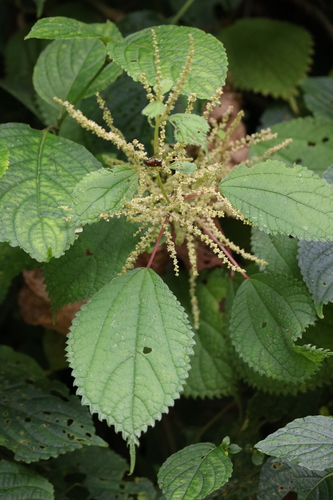
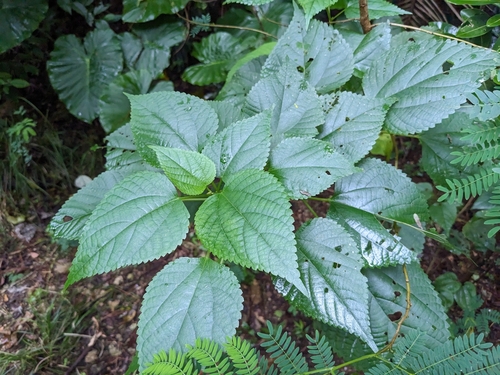
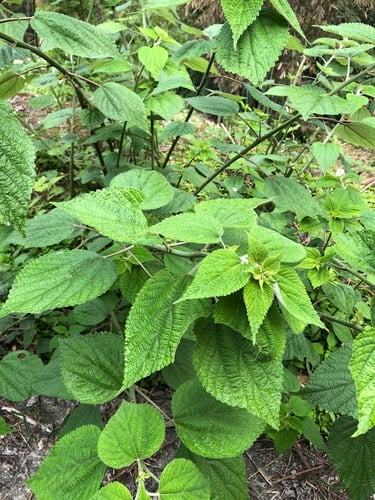
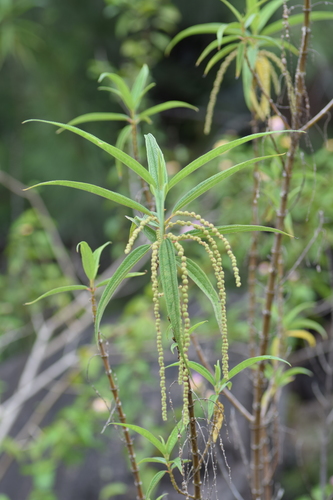
A tree. It grows 25 m tall. The trunk has rings along it. There are stilt roots at the base. The leaves are large with wide lobes. The leaves are white on the underside. The leaf stalk is attached at the base. The leaf lobes are triangular. They are pointed at the tip. The flowers are small and reddish brown. The flowers are in clusters below the leaves. The fruit are large berries.
Edible Uses
The fruit are eaten fresh and are a significant food source.
Distribution
It is a tropical plant. It grows in lowland forests.
Where It Grows
Amazon, Andes, Belize, Bolivia, Brazil, Central America, Colombia, Costa Rica, Ecuador, El Salvador, French Guiana, Guatemala, Guianas, Guyana, Honduras, Mexico, Nicaragua, North America, Panama, Peru, South America*, Suriname, Venezuela,
Other Information
It is a significant food. The fruit is enjoyed.
Notes
Probably all Pourouma species have edible fruit. Flora Neotropica. They are also put in the families Moraceae and Cecropiaceae.
Synonyms
Also Known As
Chichico uvillas, Chichiku, Chumico, Cirpe, Cuiya'i, Deyeyohue, Deyeyowe, Guarumo, Hantia uvilla, Hichosa, Hichoso, Huo coro cu'yai, Ikitikawe, Mano de leon, Mintitonka, Momihi mahi, Nakantar shuinia, Pacica, Parahuatu uvilla, Shuinia, Torem-abacate, Uva, Uva de monte, Uva menuda, Uvilla, Uvito, Wjukam shuinia, Yahal, Yowe
References (13)
- Condit, R., et al, 2011, Trees of Panama and Costa Rica. Princeton Field Guides. p 456
- Duchelle, A. E., 2007, Observations on Natural Resource use and Conservation by the Shuar In Ecuador's Cordillera del Condor. Ethnobotany Research & Applications 5:005-023
- Galeano, G., 2000, Forest Use at the Pacific Coast of Choco, Colombia: A Quantitative Approach. Economic Botany, Vol. 54, No. 3, pp. 358-376
- Grandtner, M. M., 2008, World Dictionary of Trees. Wood and Forest Science Department. Laval University, Quebec, Qc Canada. (Internet database http://www.wdt.qc.ca)
- Grandtner, M. M. & Chevrette, J., 2013, Dictionary of Trees, Volume 2: South America: Nomenclature, Taxonomy and Ecology. Academic Press p 520
Show all 13 references Hide references
- Grenand, P., 1992, The Use and Cultural Significance of the Secondary Forest Among the Wayapi Indians. ORSTOM. In Sustainable Harvesting and Marketing of Rainforest Products. Island Press. Washington. p 32
- Kermath, B. M., et al, 2014, Food Plants in the Americas: A survey of the domesticated, cultivated and wild plants used for Human food in North, Central and South America and the Caribbean. On line draft. p 682
- Lopez-Diago, D. & Garcia, N., 2021, Wild edible fruits of Colombia. Biota ColomBiana 22 (2) p 53
- Roa, J. A. G. & Boada, D. S. G., 2018, Fundación para el Fortalecimiento de la Fruticultura y Plantas Alimenticias no Convencionales en Colombia.
- Torre, de la, L., et al, 2008, Enciclopedia de las Plantas Útiles del Ecuador. Herbario QCA. Pontificia Universidad Católica del Ecuador. p 609
- Van den Eynden, V., et al, 2003, Wild Foods from South Ecuador. Economic Botany 57(4): 576-603
- Villachica, H. 1996. Frutales y hortalizas promisorios de la Amazonía. Tratado de Cooperación Amazónica.
- www.proyanomami.org