Boehmeria nivea
(L.) Gaudichaud-Beaupre
Ramie
iNaturalist· cc-by-nc
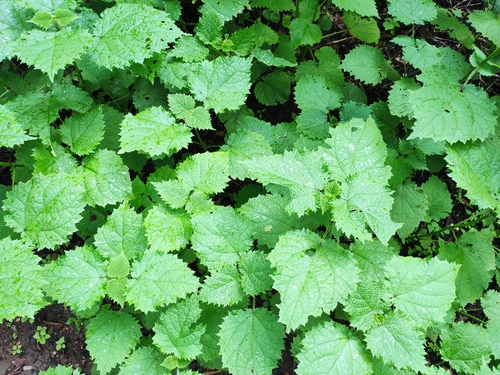
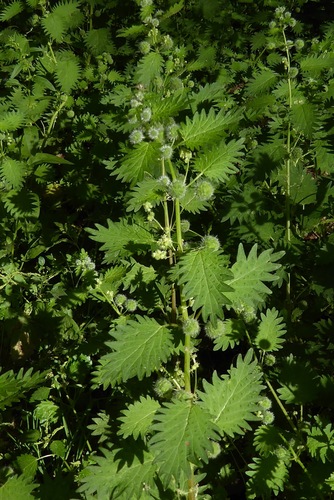
(c) JODY HSIEH, some rights reserved (CC BY-NC), uploaded by JODY HSIEH
iNaturalist· cc0
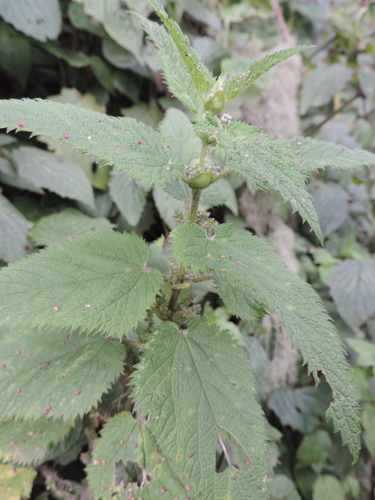
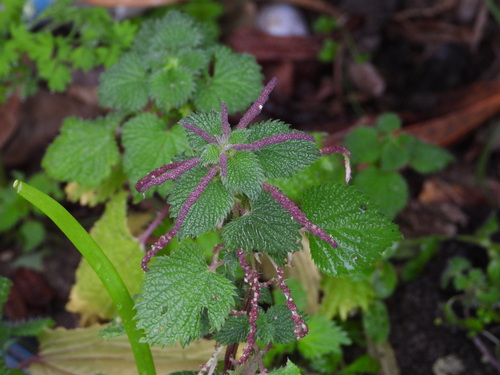
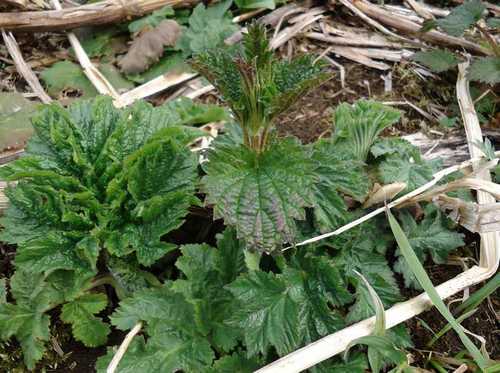
no rights reserved, uploaded by 葉子
iNaturalist· cc-by-nc
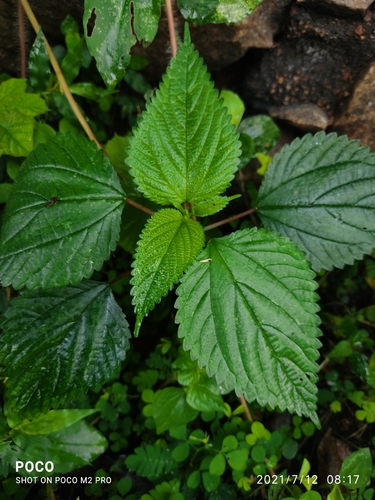
(c) alanyip, some rights reserved (CC BY-NC), uploaded by alanyip
Summary
Source: WikipediaBoehmeria nivea, commonly known as ramie, Chinese grass or Chinese silk plant, is a monoecious shrub or subshrub in the family Urticaceae commonly found in China. It is native to warm temperate and tropical regions of the eastern Himalaya, and east and southeastern Asia. It grows to 2 metres tall, with alternately-arranged leaves 7–15 cm long and 6–12 cm broad, oval-acuminate with a serrated margin. Boehmeria nivea has been cultivated in China and elsewhere in southeast Asia for thousands of years, as the source of the fibre crop ramie. It has been introduced into tropical and subtropical parts of other continents, such the southeastern United States.
Description
An erect shrub which grows from year to year. It is 1-3 m tall. The underground roots are thick storage roots. The leaves occur one after another along opposite sides of the stem. The leaves have long leaf stalks and are oval but broad. They have teeth along the edge. They are 7.5-15 cm long by 5-10 cm wide. The leaves are white underneath. The more tropical form does not have hairs under the leaf. The flowers are small. They occur in the axils of leaves. The flowers have separate sexes. The male flowers are lower down and the female flowers higher up. The fruit is a small dry one seeded fruit. It is brownish-yellow and about 1 mm long. Flowers are wind pollinated.
Edible Uses
Edible Parts: Leaves Root Edible Uses: Edible portion: Root, Leaves, Seeds – oil. Root - peeled and boiled. A pleasant, sweet taste. We can detect very little flavour, but the root has a very strange mucilaginous texture that does not appeal to most people who have tried it. Once in the mouth, it takes a lot of chewing before it is ready to be swallowed. The leaves are used for making cakes. This report could refer to the plants use as a poultice. They are also used as a dye to make black rice cake.
Traditional Uses
The roots are eaten after boiling and peeling. Oil extracted from the seeds is used for cooking. The leaves are cooked and eaten. They are also used as a dye to make black rice cake.
Medicinal Uses
Antiphlogistic Astringent Demulcent Diuretic Febrifuge Haemostatic Poultice Resolvent Vulnerary Women's complaints Antiphlogistic, demulcent, diuretic, febrifuge, haemostatic and vulnerary. Used to prevent miscarriages and promote the drainage of pus. The leaves are astringent and resolvent. They are used in the treatment of fluxes and wounds. The root contains the flavonoid rutin. It is antiabortifacient, antibacterial, cooling, demulcent, diuretic, resolvent and uterosedative. It is used in the treatment of threatened abortions, colic of pregnancy, haemorrhoids, leucorrhoea, impetigo etc. The fresh root is pounded into a mush and used as a poultice.
Known Hazards
Although members of the nettle family, plants in this genus do not have stinging hairs.
Distribution
A tropical and subtropical plant. The plant grows best in warm moist climates. It needs rich well drained soil. It can grow in part shade. It grows on the edges of forests between 200-1,700 m above sea level. Melbourne Botanical gardens. In Sichuan and Yunnan.
Where It Grows
Africa, Asia, Australia, Bangladesh, Bhutan, Brazil, Cambodia, Central Asia, China*, Dominican Republic, East Africa, Fiji, Grenada, Guam, Haiti, Hawaii, Himalayas, India, Indochina, Indonesia, Japan, Korea, Laos, Malaysia, Mozambique, Myanmar, Nepal, Norfolk Island, North America, Northeastern India, Pacific, Papua New Guinea, PNG, Philippines, Rwanda, Sao Tome and Principe, SE Asia, Sikkim, Slovenia, South America, Taiwan, Tajikistan, Thailand, USA, Vietnam, West Indies,
Cultivation
It can be grown from seed. It is more commonly grown from cuttings of the rhizome. Sections 15-25 cm long are planted at a depth of 5-8 cm. Suckers and stem cuttings can also be used.
Propagation
Seed - sow in pots and only just cover the seed. When they are large enough to handle, prick the seedlings out into individual pots and plant them out when at least 20cm tall. Division. Very easy, larger divisions can be planted straight into their permanent positions whilst smaller clumps are best planted in a nursery until they are growing away well. Layering. Basal cuttings. Harvest new shoots when they are about 10 - 15cm long with plenty of underground stem. Pot them up into individual pots and keep them in light shade until they are rooting well.
Other Uses
Fibre Fodder Paper Agroforestry Uses: Planted to prevent erosion in gullies. Other Uses A fibre is obtained from the inner bark of the stem - of excellent quality, it is highly water-resistant and has a greater tensile strength than cotton. It is used for textiles, linen etc and is said to be moth-proof. It is best harvested as the female flowers open. The outer bark is removed and then the fibrous inner bark is taken off and boiled before being woven into thread. The fibres are the longest known in the plant realm. The tensile strength is 7 times that of silk and 8 times that of cotton, this is improved on wetting the fibre. The fibre is also used for making paper. The leaves are removed from the stems, the stems are steamed and the fibres stripped off. The fibres are cooked for 2 hours with lye, fresh material might require longer cooking, and they are then beaten in a Hollander beater before being made into paper. Special Uses Carbon Farming
Notes
The plant is often grown for the fibres. There are about 100 Boehmeria species. They grow in the tropics and subtropics. It is used in medicine.
Synonyms
Also Known As
Ban, Bela kopriva, China Grass, Gon, Kankura, Kya-sha, Lashen, Rami, Rhea
References (29)
- Ambasta, S.P. (Ed.), 2000, The Useful Plants of India. CSIR India. p 76
- Bircher, A. G. & Bircher, W. H., 2000, Encyclopedia of Fruit Trees and Edible Flowering Plants in Egypt and the Subtropics. AUC Press. p 60
- Burkill, I.H., 1966, A Dictionary of the Economic Products of the Malay Peninsula. Ministry of Agriculture and Cooperatives, Kuala Lumpur, Malaysia. Vol 1 (A-H) p 346
- Cobley, L.S. (rev. Steele, W.M.) 2nd Ed., 1976, An Introduction to the Botany of Tropical Crops. Longmans. p 278
- Flora of China @ efloras.org Volume 5
Show all 29 references Hide references
- Flora of Australia, Volume 3, Hamamelidales to Casuarinales, Australian Government Publishing Service, Canberra (1989) p 85
- Flora of Australia Volume 49, Oceanic Islands 1, Australian Government Publishing Service, Canberra. (1994) p 70
- Hibbert, M., 2002, The Aussie Plant Finder 2002, Florilegium. p 44
- Hu, Shiu-ying, 2005, Food Plants of China. The Chinese University Press. p 363
- Hwang, H., et al, 2013, A Study on the Flora of 15 Islands in the Western Sea of Jeollanamdo Province, Korea. Journal of Asia-Pacific Biodiversity Vol. 6, No. 2 281-310
- Kuo, W. H. J., (Ed.) Taiwan's Ethnobotanical Database (1900-2000), http://tk.agron.ntu.edu.tw/ethnobot/DB1.htm (As var. tenacissima)
- Lim, T. K., 2015, Edible Medicinal and Non Medicinal Plants. Volume 9, Modified Stems, Roots, Bulbs. Springer p 16
- Liu, Yi-tao, & Long, Chun-Lin, 2002, Studies on Edible Flowers Consumed by Ethnic Groups in Yunnan. Acta Botanica Yunnanica. 24(1):41-56
- Martin, F.W. & Ruberte, R.M., 1979, Edible Leaves of the Tropics. Antillian College Press, Mayaguez, Puerto Rico. p 77, 223
- Plants for a Future database, The Field, Penpol, Lostwithiel, Cornwall, PL22 0NG, UK. http://www.scs.leeds.ac.uk/pfaf/
- Plants of Haiti Smithsonian Institute http://botany.si.edu/antilles/West Indies
- Purseglove, J.W., 1968, Tropical Crops Dicotyledons, Longmans. p 620
- Rashid, H. E., 1977, Geography of Bangladesh. Westview. p 319
- READ
- Recher, P, 2001, Fruit Spirit Botanical Gardens Plant Index. www.nrg.com.au/~recher/ seedlist.html p 4
- Smith, A.C., 1981, Flora Vitiensis Nova, Lawaii, Kuai, Hawaii, Volume 2 p 239
- Smith, P.M., 1979, Ramie, in Simmonds, N.W., (ed), Crop Plant Evolution. Longmans. London. p 323
- Sukarya, D. G., (Ed.) 2013, 3,500 Plant Species of the Botanic Gardens of Indonesia. LIPI p 592
- Tanaka, Y. & Van Ke, N., 2007, Edible Wild Plants of Vietnam. Orchid Press. p 140
- Terra, G.J.A., 1973, Tropical Vegetables. Communication 54e Royal Tropical Institute, Amsterdam, p 29
- Voy. Uranie 12:499. 1830
- Williams, C.N., Chew, W.Y., and Rajartnam, J.A., 1989, Tree and Field Crops of the Wetter Regions of the Tropics. Longman, p 87
- World Checklist of Useful Plant Species 2020. Royal Botanic Gardens, Kew
- Xu, You-Kai, et al, 2004, Wild Vegetable Resources and Market Survey in Xishuangbanna, Southwest China. Economic Botany. 58(4): 647-667.