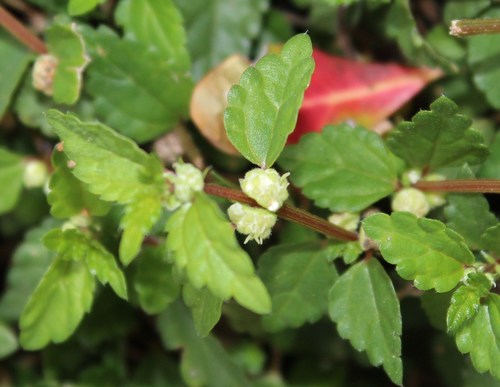
Boehmeria macrophylla
Hornem.
Chalnesisnu, African jolanettle
iNaturalist· cc-by-nc-sa
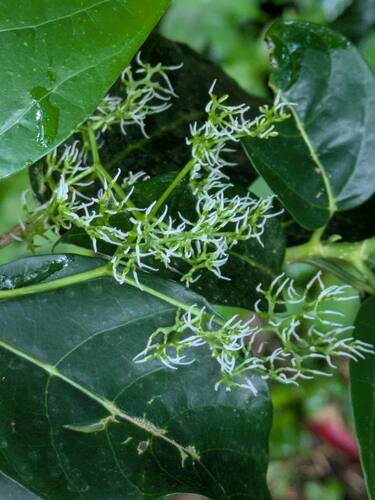
(c) Phuentsho, some rights reserved (CC BY-NC-SA), uploaded by Phuentsho
iNaturalist· cc-by-sa
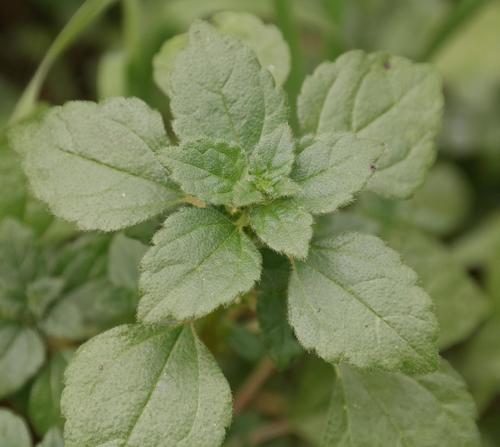
(c) Colin Meurk, some rights reserved (CC BY-SA), uploaded by Colin Meurk
iNaturalist· cc-by-nc
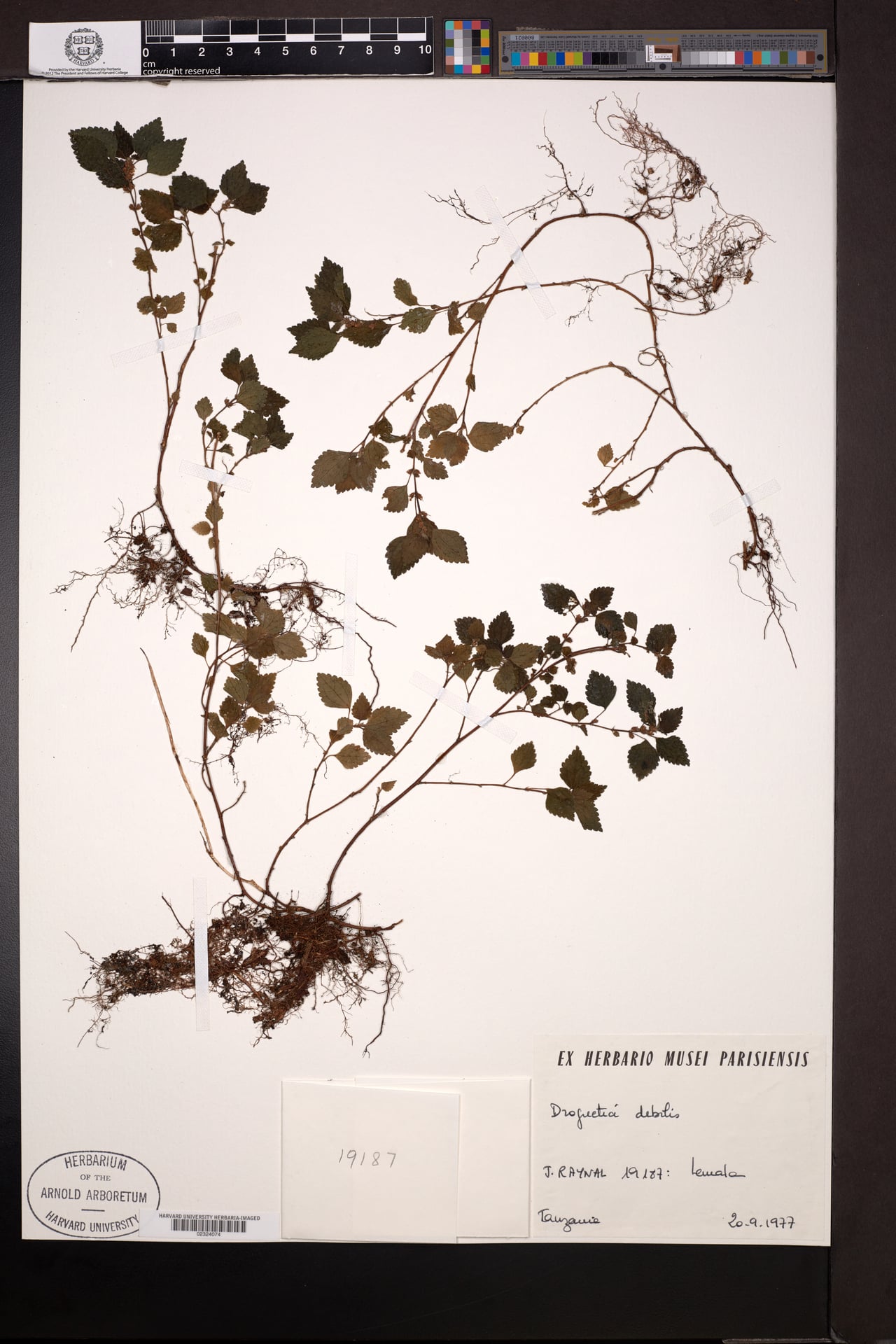
(c) Bart Wursten, some rights reserved (CC BY-NC)
Summary
Source: WikipediaDeciduous shrub reaching 2.5 m tall. Flowers from June to September with seeds ripening September to January. Dioecious species requiring both male and female plants for seed production. Tolerates light sandy and medium loamy soils with good drainage. Grows in mildly acid to basic pH and adapts to semi-shade or full sun in dry or moist conditions.
Description
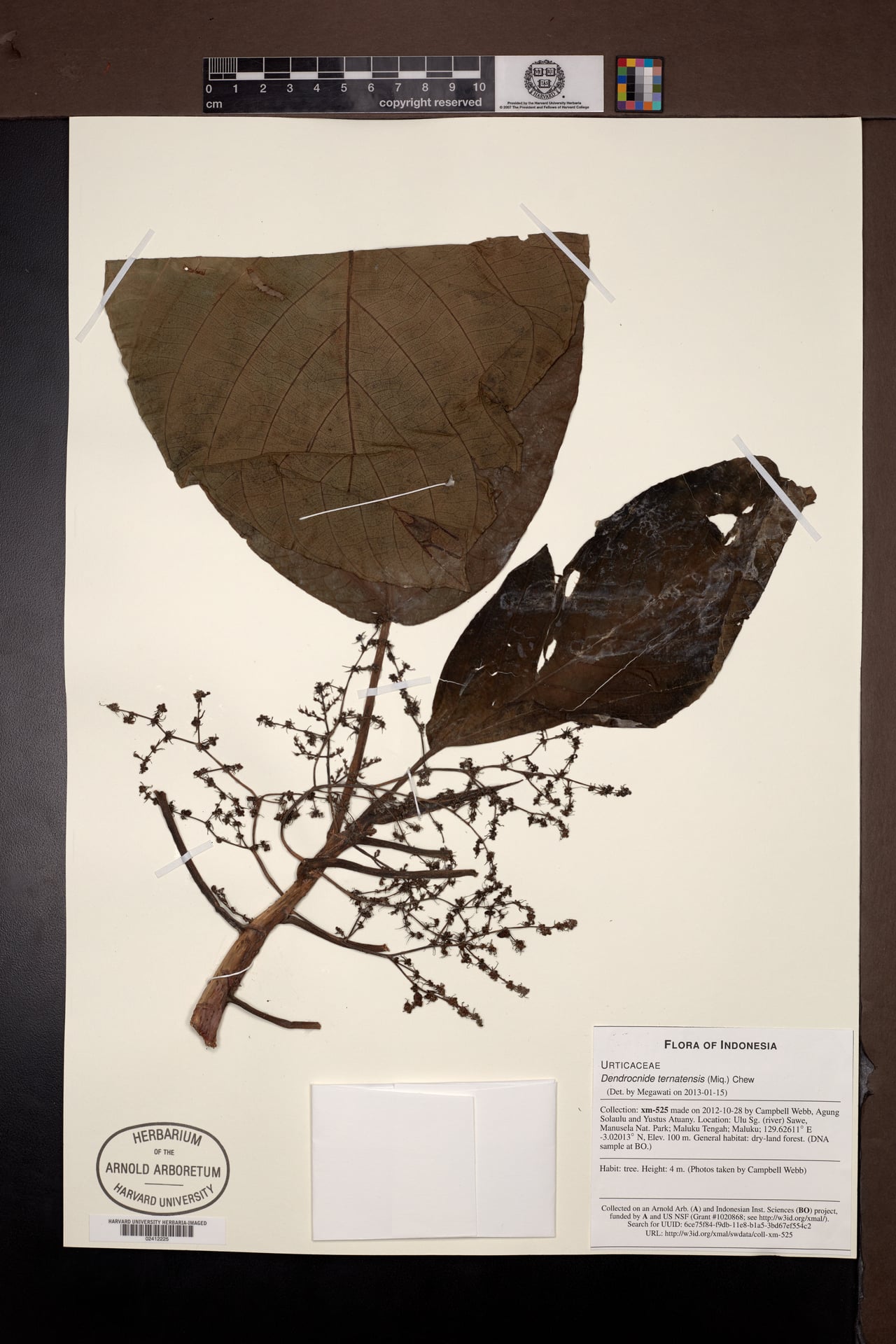
A herb or shrub. It can be party woody. It loses its leaves during the year. It grows 2.5 m tall. Plants are separately male or female. The leaves are broadly oval and 6-18 cm long by 3-12 cm wide.
Edible Uses
None known
Traditional Uses
The leaves are eaten as a vegetable.
This uses section is brief — help expand it
Medicinal Uses
None known
Known Hazards
Although members of the nettle family, plants in this genus do not have stinging hairs.
Distribution
A tropical plant. It grows in Nepal between 500-2500 m altitude. It grows on moist hillsides. It suits light sandy well-drained soils. It grows in Yunnan.
Where It Grows
Africa, Asia, Australia, Bhutan, Central Africa, Central African Republic, CAR, China, Congo DR, East Africa, Himalayas, India, Indochina, Indonesia, Laos, Mozambique, Myanmar, Nepal, Nigeria, Northeastern India, Pacific, Philippines, Sao Tome and Principe, SE Asia, Sikkim, Sri Lanka, Thailand, Vanuatu, Vietnam, West Africa,
Cultivation
We have very little information on this species and do not know if it will be hardy in Britain, though judging by its native range it could succeed outdoors in the milder parts of this country. The following notes are based on the general needs of the genus. Succeeds in a warm sandy soil that is very well-drained. We are not sure if this species is dioecious or monoecious.
Propagation
Seed - sow spring in a warm greenhouse and only just cover the seed. When they are large enough to handle, prick the seedlings out into individual pots and grow them on in the greenhouse for at least their first winter. Plant them out into their permanent positions in late spring or early summer, after the last expected frosts. Division in spring. Very easy, larger divisions can be planted straight into their permanent positions whilst smaller clumps are best potted up and kept in a cold frame until they are growing away well. Layering. Basal cuttings in late spring. Harvest the shoots when they are about 10 - 15cm long with plenty of underground stem. Pot them up into individual pots and keep them in light shade in a cold frame or greenhouse until they are rooting well. Grow them on for their first winter in the cold frame and then plant them out in the summer.
Other Uses
Fibre Fuel A fibre is obtained from the stem. Of excellent quality, it is used for making sacks, bags, rough clothes, nets, rope etc. The fibre is shiny, white and strong and is used for making nets, sacks and rough clothes. It is possibly useful for textiles. Wood is moderately hard but too small for much use, it makes a good fuel. Special Uses
Notes
Leaves are fed to cattle. There are about 100 Boehmeria species. They grow in the tropics and subtropics.
Synonyms
Also Known As
Kamle ghans, Kamle jhar, Kamley, Loklok, Mubgulugulu, Ngamba kishuusha
References (16)
- Ambasta, S.P. (Ed.), 2000, The Useful Plants of India. CSIR India. p 76
- Cabalion, P. and Morat, P., 1983, Introduction le vegetation, la flore et aux noms vernaculaires de l'ile de Pentcoste (Vanuatu), In: Journal d'agriculture traditionnelle et de botanique appliquee JATBA Vol. 30, 3-4
- Chapman, J. D. & Chapman, H. M., 2001, The Forest Flora of Taraba and Andamawa States, Nigeria. WWF & University of Canterbury. p 206
- Flora of China @ efloras.org Volume 5
- http://aflora.africa.kyoto-u.ac.jp (As Boehmeria platyphylla)
Show all 16 references Hide references
- Jardin, C., 1970, List of Foods Used In Africa, FAO Nutrition Information Document Series No 2.p 59
- Joshi, N. & Siwakoti, M., 2012, Wild Vegetables Used by Local Community of Makawanpur District and Their Contribution to Food Security and Income Generation. Nepal Journal of Science and Technology Vol. 13, No. 1 (2012) 59-66 (As Boehmeria platyphylla)
- Latham, P. & Mbuta, A. K., 2014, Useful Plants of Bas-Congo Province, Democratic Republic of Congo. Volume 1. Salvation Army. p 79
- Manandhar, N.P., 2002, Plants and People of Nepal. Timber Press. Portland, Oregon. p 115
- Martin, F.W. & Ruberte, R.M., 1979, Edible Leaves of the Tropics. Antillian College Press, Mayaguez, Puerto Rico. p 223
- Okigbo, B.N., Vegetables in Tropical Africa, in Opena, R.T. & Kyomo, M.L., 1990, Vegetable Research and development in SADCC countries. Asian Vegetable Research and development Centre. Taiwan. p 45
- Prodr. fl. nepal. 60. 1825
- Savita, et al, 2006, Studies on wild edible plants of ethnic people in east Sikkim. Asian J. of Bio Sci. (2006) Vol. 1 No. 2 : 117-125 (As Boehmeria platyphylla)
- Terra, G.J.A., 1973, Tropical Vegetables. Communication 54e Royal Tropical Institute, Amsterdam, p 29
- Williams, J.B., Harden, G.J., and McDonald, W.J.F., 1984, Trees and shrubs in rainforests of New South Wales and Southern Queensland. Univ. of New England, Armidale. p 102
- Yamada, T., 1999, A report of the Ethnobotany of the Nyindu in the Eastern part of the former Zaire. African Study Monographs 20(1):1-72 (As Boehmeria macrophylla)