Brassica oleracea var. gemmifera
L.;Zenker
Brussels sprouts
gbif· cc-by-nc
Bora Çelen
gbif· cc-by-nc
Bora Çelen
gbif· cc-by-nc
Bora Çelen
Summary
Source: WikipediaBrassica oleracea, also known as wild cabbage in its uncultivated form, is a plant of the family Brassicaceae. The species originated from feral populations of related plants in the Eastern Mediterranean, where it was most likely first cultivated. It has many common cultivars that are used as culinary vegetables, including cabbage, broccoli, cauliflower, romanesco, kale, Brussels sprout, collard, Savoy cabbage, kohlrabi, and gai lan.
Description
A cabbage family plant. It has a single stem with small sprouts of compact leaves up the stem. It grows up to about 1 m high. The leaves are stalked and the edges are wavy. They are slightly lobed. The flowers are yellowish.
Edible Uses
The sprouts are cooked and eaten. The leafy tops can also be eaten.
Traditional Uses
The sprouts are cooked and eaten. The leafy tops can also be eaten.
This uses section is brief — help expand it
Distribution
It is a temperate plant. It suits the highlands in the tropics. Normally it needs to be above 800 m and in places with cool nights. It grows in the highlands up to 2600 m. It is frost tolerant. It grows in areas with temperatures between 14-26°C. It needs a pH between 6-6.9. It suits hardiness zones 8-11.
Where It Grows
Africa, Andorra, Asia, Australia, Austria, Belgium, Britain, Cambodia, Caucasus, China, Cook Islands, Cuba, East Africa, Europe, Fiji, Finland, France, Georgia, Guam, Hawaii, Himalayas, India, Japan, Mediterranean, Myanmar, Nepal, Pacific, Papua New Guinea, PNG, Philippines, Scandinavia, SE Asia, Senegal, Slovenia, South Africa, Southern Africa, Switzerland, Tasmania, Thailand, USA, West Africa, West Indies, Zimbabwe,
Cultivation
It is normally grown from imported seed. Seedlings are transplanted after 5 or 6 weeks. The spacing needs to be about 60 cm x 60 cm.
Production
The sprouts can be harvested about 4 months after transplanting.
Other Information
It is a commercially cultivated vegetable. In Papua New Guinea, mainly only grown by a few people for sale to Europeans.
Notes
There are about 30 Brassica species and many cultivated varieties.
Nutrition
| Part | Moisture | kJ | kcal | Protein | Vit A | Vit C | Iron | Zinc |
|---|---|---|---|---|---|---|---|---|
| Buds boiled | 91.5 | 175 | 42 | 2.8 | 72 | 40 | 1.2 | 0.4 |
| Buds raw | 88.1 | 111 | 27 | 4 | 400 | 90 | 0.7 | 0.5 |
| Leaves | — | — | — | — | — | — | — | — |
Also Known As
Aande kaule, Brstični ohrovt, Col de Bruselas, Monla-dok-nge, Mon-nyin-ywet, Phat-ka, Tarok-mon-nyin
References (30)
- Bianchini, F., Corbetta, F., and Pistoia, M., 1975, Fruits of the Earth. Cassell. p 64
- Brouk, B., 1975, Plants Consumed by Man. Academic Press, London. p 90
- Bussman, R. W., et al, 2016, A comparative ethnobotany of Khevsureti, Samtskhe-Javakheti, Tusheti, Svaneti, and Racha-Lechkhumi, Republic of Georgia (Sakartvelo), Caucasus. Journal of Ethnobiology and Ethnomedicine (2016) 12:4
- Cundall, P., (ed.), 2004, Gardening Australia: flora: the gardener's bible. ABC Books. p 256
- Facciola, S., 1998, Cornucopia 2: a Source Book of Edible Plants. Kampong Publications, p 54
Show all 30 references Hide references
- Flora of China. www.eFloras.org
- Fl. Thuringen 15:2. 1836-1855
- French, B.R., 1986, Food Plants of Papua New Guinea, A Compendium. Asia Pacific Science Foundation p 117
- Grubben, G. J. H. and Denton, O. A. (eds), 2004, Plant Resources of Tropical Africa 2. Vegetables. PROTA, Wageningen, Netherlands. p 143
- Hadfield, J., 2001, The A-Z of Vegetable Gardening in South Africa. Struik p 97
- Hedrick, U.P., 1919, (Ed.), Sturtevant's edible plants of the world. p 126
- Hu, Shiu-ying, 2005, Food Plants of China. The Chinese University Press. p 411
- Jardin, C., 1970, List of Foods Used In Africa, FAO Nutrition Information Document Series No 2.p 61
- Kays, S. J., and Dias, J. C. S., 1995, Common Names of Commercially Cultivated Vegetables of the World in 15 languages. Economic Botany, Vol. 49, No. 2, pp. 115-152
- Lazarides, M. & Hince, B., 1993, Handbook of Economic Plants of Australia, CSIRO. p 38
- Macmillan, H.F. (Revised Barlow, H.S., et al), 1991, Tropical Planting and Gardening. Sixth edition. Malayan Nature Society. Kuala Lumpur. p 361
- Manandhar, N.P., 2002, Plants and People of Nepal. Timber Press. Portland, Oregon. p 121
- Miguel, E., et al, 1989, A checklist of the cultivated plants of Cuba. Kulturpflanze 37. 1989, 211-357
- Plants for a Future database, The Field, Penpol, Lostwithiel, Cornwall, PL22 0NG, UK. http://www.scs.leeds.ac.uk/pfaf/
- Purseglove, J.W., 1968, Tropical Crops Dicotyledons, Longmans. p 95
- Schneider, E., 2001, Vegetables from Amaranth to Zucchini: The essential reference. HarperCollins. p 127
- Sharma, B.B., 2005, Growing fruits and vegetables. Publications Division. Ministry of Information and broadcasting. India. p 158
- Siemonsma, J. S. and Piluek, K. (Eds), 1994, Plant Resources of South-East Asia No. 8 Vegetables. Prosea Foundation, Bogor, Indonesia, p 104
- Small, E., 2009, Top 100 Food Plants. The world's most important culinary crops. NRC Research Press. p 143
- Terra, G.J.A., 1973, Tropical Vegetables. Communication 54e Royal Tropical Institute, Amsterdam, p 31
- Tronickova, E. & Krejcova, Z., 1987, Ortaggi, Instituto Geografico de Agostini, Cecoslovacchia. p 20
- USDA, ARS, National Genetic Resources Program. Germplasm Resources Information Network - (GRIN). [Online Database] National Germplasm Resources Laboratory, Beltsville, Maryland. Available: www.ars-grin.gov/cgi-bin/npgs/html/econ.pl (10 April 2000)
- van Wyk, B., 2005, Food Plants of the World. An illustrated guide. Timber press. p 103
- Wiersema, J. H. & Leon, B., 2013, World Economic Plants. A Standard Reference CRC Press. 2nd Ed. p 114
- Zhou Taiyan, Lu Lianli, Yang Guang, Ihsan A. Al-Shehbaz, BRASSICACEAE (CRUCIFERAE), Flora of China.
More from Brassicaceae
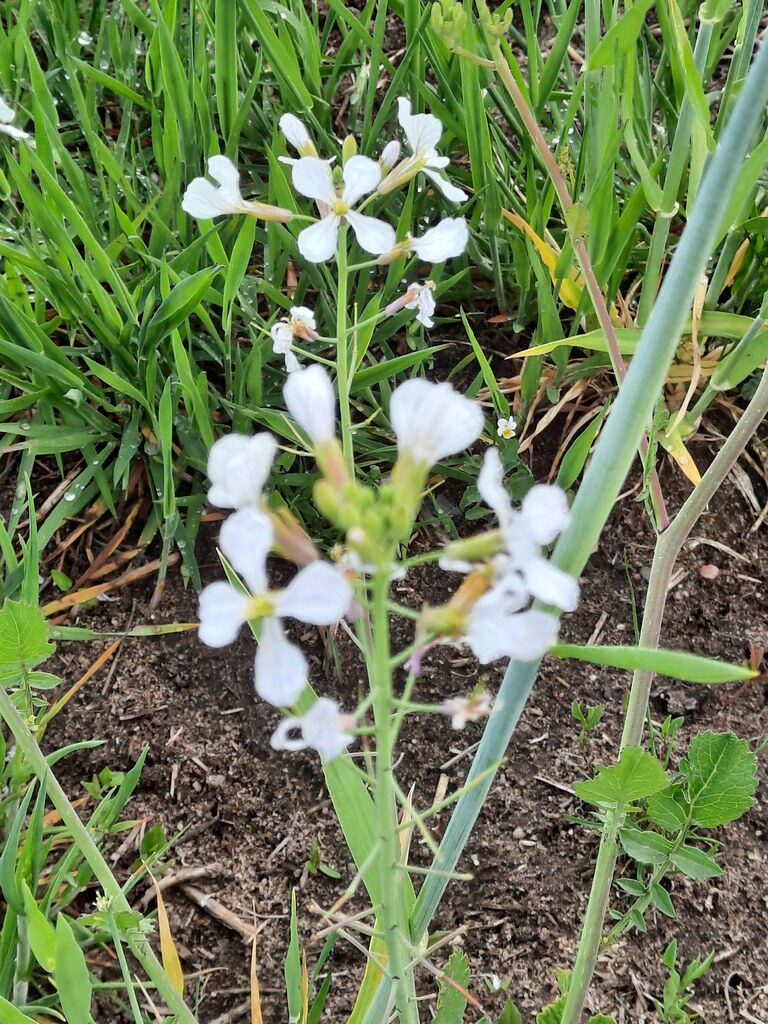
Raphanus sativus oleiformis
Fodder Radish
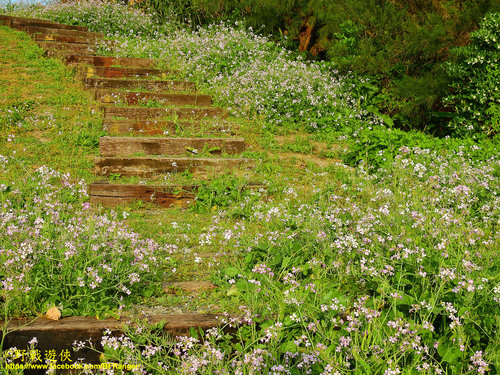
Raphanus sativus var. caudatus
Rat-tail radish, Potting radish
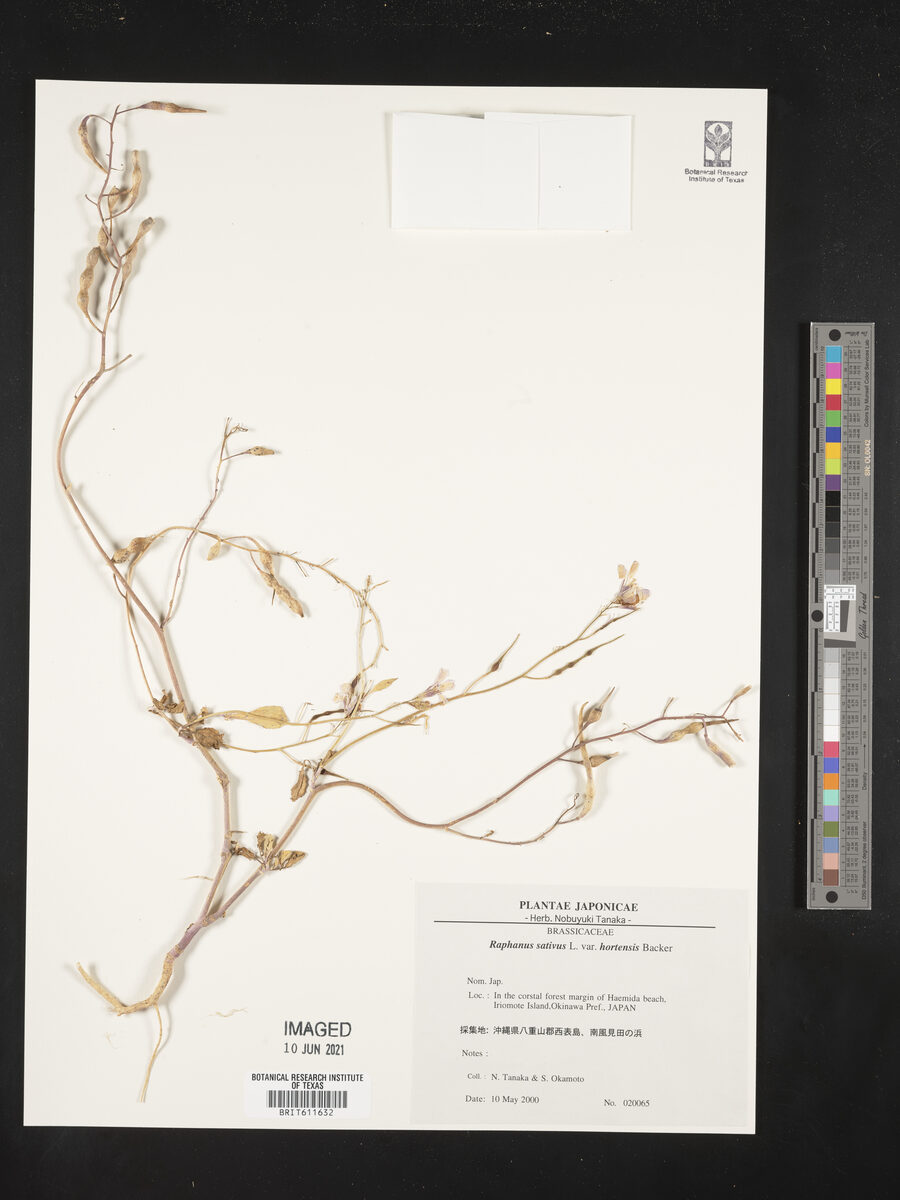
Raphanus sativus var. hortensis
Japanese winter radishes
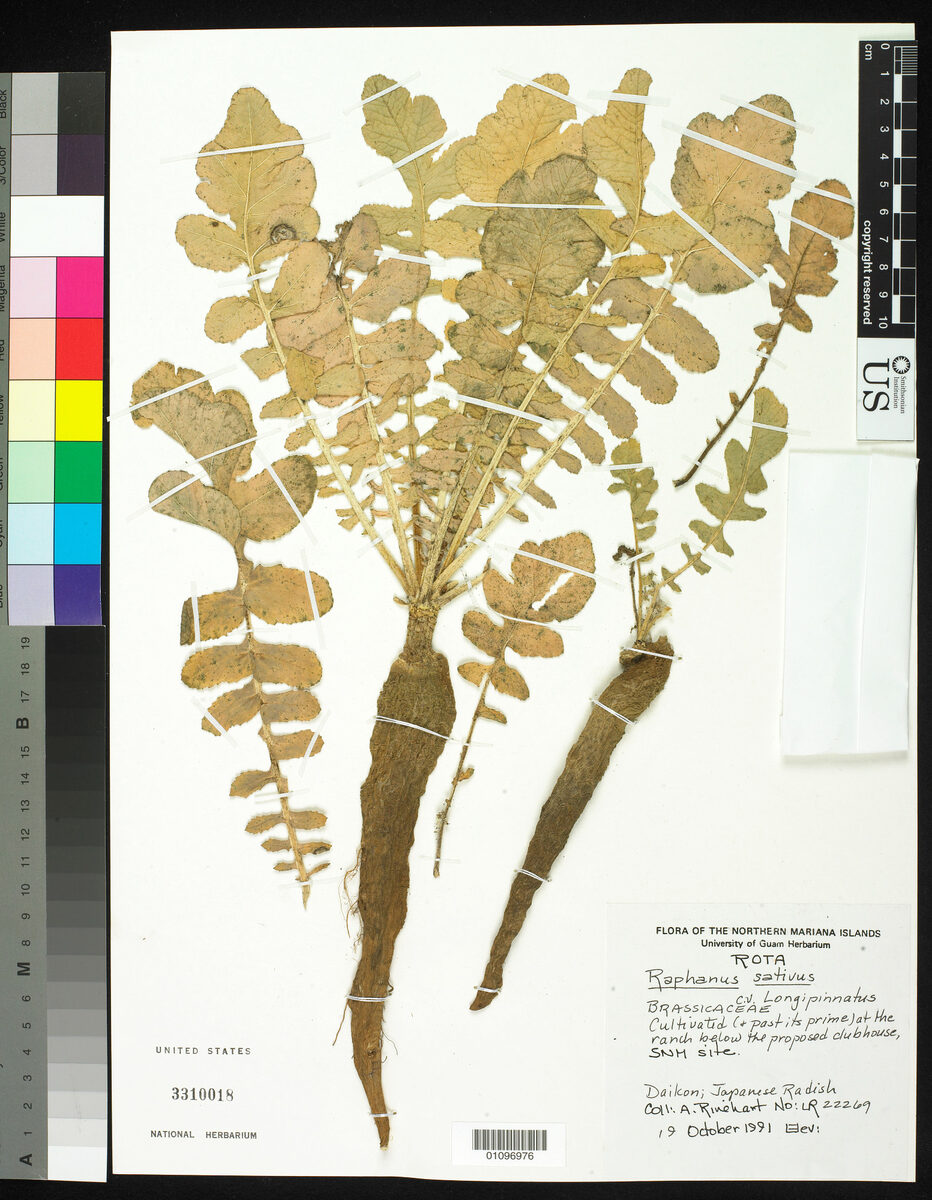
Raphanus sativus var. longipinnatus
Chinese radish, Daikon, Oriental radish
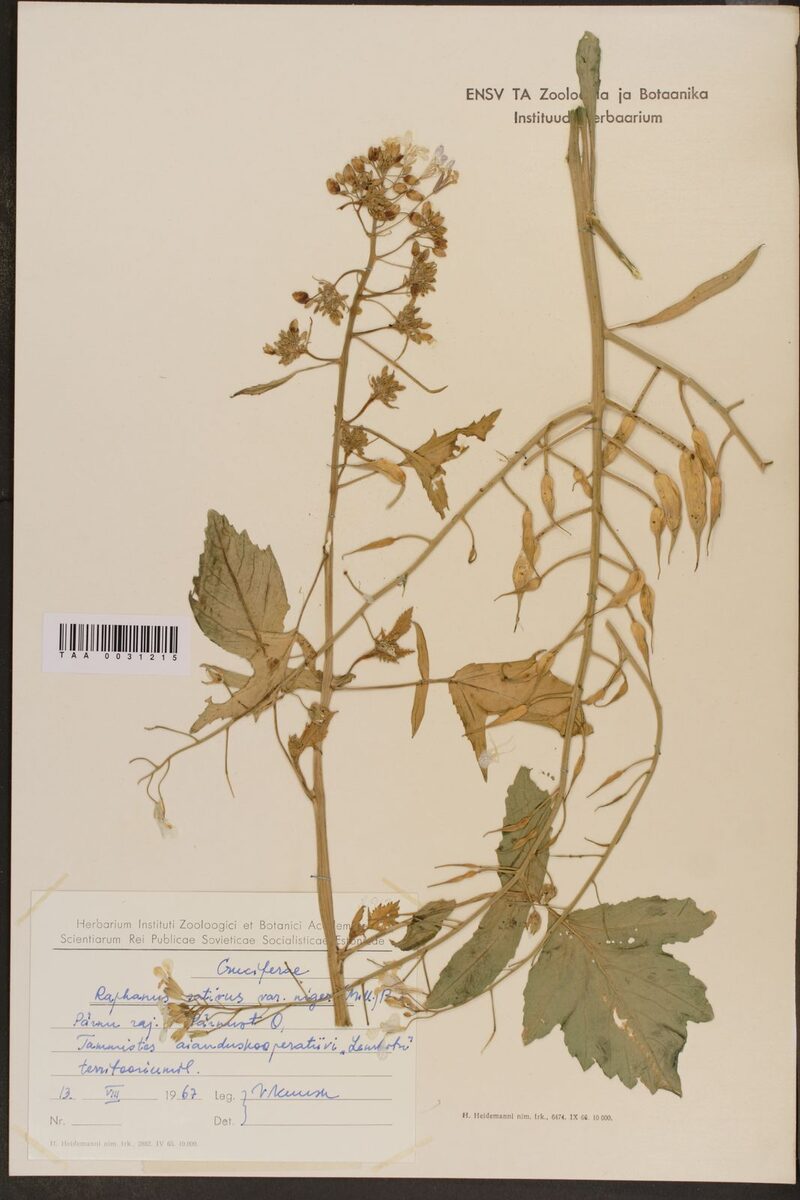
Raphanus sativus var. niger
Oriental radish, Black Spanish winter radish
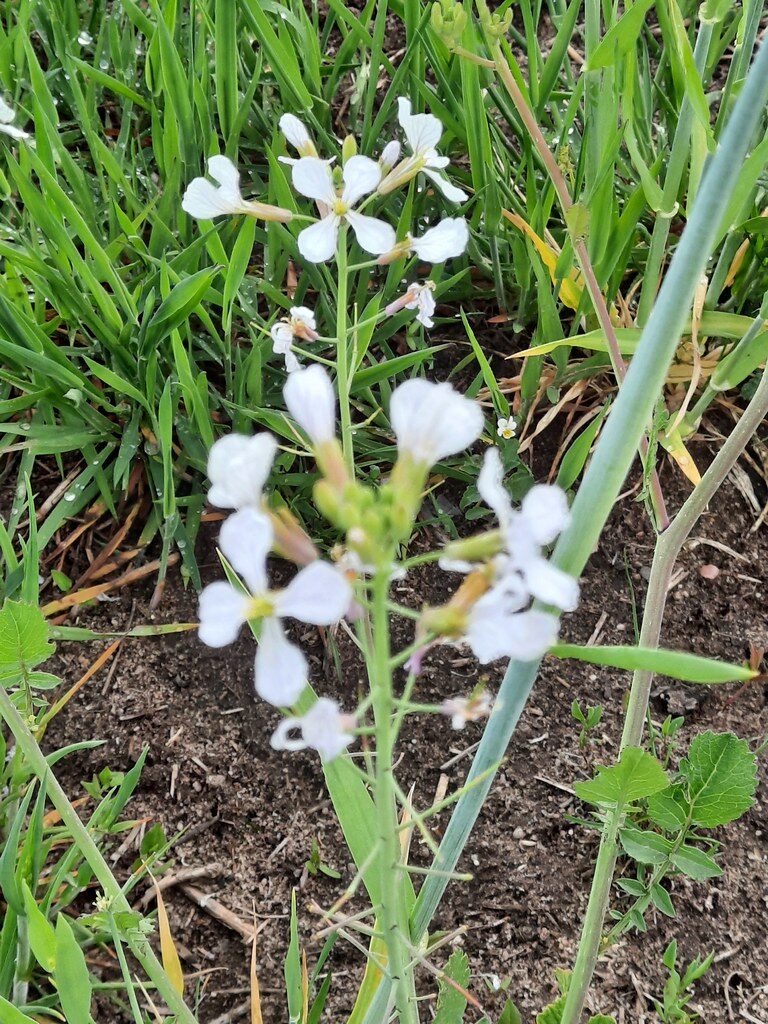
Raphanus sativus var. oleiformis
Fodder radish, Oil radish, Oilseed radish