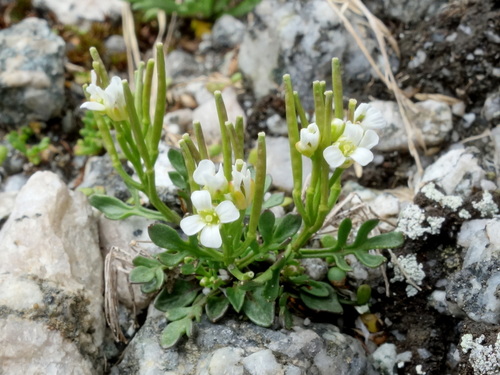
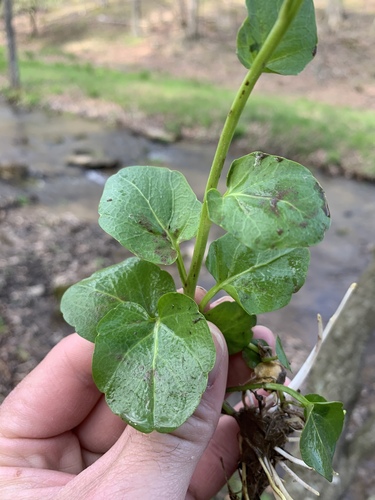
Descurainia pinnata
(Walter) Britton.
Tansy mustard, Mountain tansy mustard
iNaturalist· cc-by
(c) Sam Kieschnick, some rights reserved (CC BY)
iNaturalist· cc0
no rights reserved
iNaturalist· cc-by
(c) Sam Kieschnick, some rights reserved (CC BY)
Summary
Source: WikipediaDescurainia pinnata is a species of flowering plant in the family Brassicaceae known by the common names southeastern tansymustard and western tansymustard. It is native to North America, where it is widespread and found in varied habitats. It is especially successful in deserts. It is a hardy plant which easily becomes weedy, and can spring up in disturbed, barren sites with bad soil. This is a hairy, heavily branched, mustardlike annual which is quite variable in appearance. There are several subspecies which vary from each other and individuals within a subspecies may look different depending on the climate they endure. This may be a clumping thicket or a tall, erect mustard. It generally does not exceed 70 centimeters in height. It has highly lobed or divided leaves with pointed, toothed lobes or leaflets. At the tips of the stem branches are tiny yellow flowers. The fruit is a silique one half to two centimeters long upon a threadlike pedicel. This plant reproduces only from seed. This tansymustard is toxic to grazing animals in large quantities due to nitrates and thiocyanates; however, it is nutritious in smaller amounts. The flowers are attractive to butterflies. The seeds are said to taste somewhat like black mustard and were utilized as food by Native American peoples such as the Navajo.
Description
A cabbage family herb. It grows each year from seed. The flowers are bright yellow. The seed pods are long and slender.
This description is brief — help expand it
Edible Uses
Young leaves are cooked; they have a bitter flavour but when eaten as spring greens are said to have a salty taste. The seedpods make an interesting mustard-flavoured nibble. The seed can be eaten raw or cooked and is used as a piñole. It has a mustard flavour suitable for seasoning soups or used as a condiment with corn. Ground seed can be mixed with cornmeal to make bread or used to thicken soups. In Mexico the seeds are made into a refreshing drink with lime juice, claret, and syrup. The seeds are said to taste somewhat like black mustard and were used as food by Native American peoples including the Navajo.
Traditional Uses
The seed are used for a ground meal called pinole. They are also used to flavour soups. The leaves are boiled or roasted and eaten. They are also eaten raw. The leaves are used to make drinks with lime juice. The pods are mustard flavour and are nibbled.
Medicinal Uses
The plant has diuretic, expectorant, and poultice uses. Ground seeds have been used to treat stomach complaints. A poultice of the plant has been applied to ease toothache pain. An infusion of the leaves has been used as a wash on sores.
Distribution
It is a warm temperate of subtropical plant. It grows in the desert in SW of the USA. It can grow in arid places. In Argentina it grows below 500 m above sea level.
Where It Grows
Argentina, Asia, Korea, Mexico, North America, South America, USA,
Propagation
Sow seed in spring directly in situ.
Other Uses
The flowers are attractive to butterflies. Tansymustard is toxic to grazing animals in large quantities due to nitrates and thiocyanates, but is nutritious in smaller amounts.
Synonyms
References (12)
- Anderson, M. K., 2012, Edible Seeds and Grains of California Tribes and the Klamath Tribe of Oregon in the Phoebe Apperson Hearst Museum of Anthropology Collections, University of California, Berkeley. USDA p 41
- Beckstrom-Sternberg, Stephen M., and James A. Duke. "The Foodplant Database." http://probe.nalusda.gov:8300/cgi-bin/browse/foodplantdb.(ACEDB version 4.0 - data version July 1994) (As Sophia pinnata)
- Felger, R.S., Ancient Crops for the Twenty first century, in Rickie, G.A., (ed), 1979, New Agricultural Crops, AAAS Selected Symposium 38. Westview Press, Colarado. p 9
- Facciola, S., 1998, Cornucopia 2: a Source Book of Edible Plants. Kampong Publications, p 58
- Felger, R. S. 1980, Vegetation and Flora of the Gran Desierti, Sonora, Mexico. Desert Plants 2(2). Arizona-Sonora Desert Museum. p 9
Show all 12 references Hide references
- Hedrick, U.P., 1919, (Ed.), Sturtevant's edible plants of the world. p 607 (As Sisymbrium canescens)
- Kermath, B. M., et al, 2014, Food Plants in the Americas: A survey of the domesticated, cultivated and wild plants used for Human food in North, Central and South America and the Caribbean. On line draft. p 301
- Kiple, K.F. & Ornelas, K.C., (eds), 2000, The Cambridge World History of Food. CUP p 1866
- Martin, P. S. et al, (Eds.), 1998, Gentry's Rio Mayo Plants. The Tropical Deciduous Forest & Environs of Northwest Mexico. University of Arizona Press. p 270
- Mem. Torrey Bot. Club 5:173. 1894
- Plants for a Future database, The Field, Penpol, Lostwithiel, Cornwall, PL22 0NG, UK. http://www.scs.leeds.ac.uk/pfaf/
- Yetman, D., 2002, The Guarijios of the Sierra Madre: Hidden People of Northwestern Mexico. University of New Mexico Press. p 184