Brassica oleracea var. capitata
L. , L.
Cabbage
iNaturalist· cc-by-nc
(c) Miguel A. Casado, some rights reserved (CC BY-NC), uploaded by Miguel A. Casado
iNaturalist· cc-by-nc
(c) Peter Zika, some rights reserved (CC BY-NC)
Summary
Source: WikipediaBrassica oleracea, also known as wild cabbage in its uncultivated form, is a plant of the family Brassicaceae. The species originated from feral populations of related plants in the Eastern Mediterranean, where it was most likely first cultivated. It has many common cultivars that are used as culinary vegetables, including cabbage, broccoli, cauliflower, romanesco, kale, Brussels sprout, collard, Savoy cabbage, kohlrabi, and gai lan.
Description
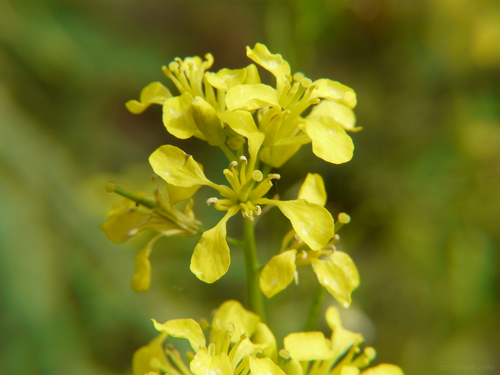
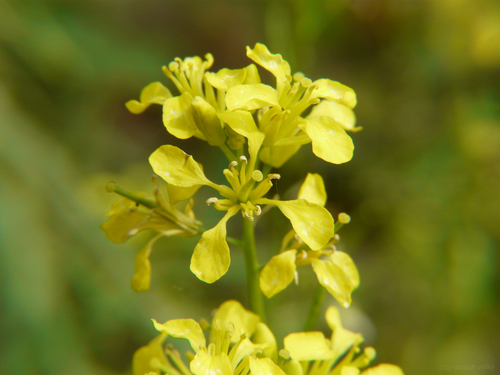
A cabbage family herb. It is a short leafy plant with a thick stalk. In cold areas it forms a thick tightly packed ball of leaves called a "head". If the plant is left growing in the ground it will later produce a flower stalk. The flowers are yellow. There are 3 main types - the white cabbage, a purple kind and one with wrinkled leaves.
Edible Uses
The leaves can be eaten raw or cooked, and are commonly used for sarma (Turkish rolled leaves with rice or meat filling). Stems can be eaten boiled or pickled, and seeds can be sprouted and eaten.
Traditional Uses
The leaves can be eaten raw or cooked. The leaves are used for sarma in Turkey. They are rolled around a filling of rice or minced meat. Stems can be eaten boiled or pickled. The seeds can be sprouted and eaten.
Distribution
It is a temperate crop. It does best at higher altitudes in the tropics where there is a greater difference between day and night temperatures. Seed germinate when soil temperature is between 13-16°C. It does not grow properly when temperatures are above 26°C. New varieties grow in warmer places. It is mostly above 1000 m altitude in the tropics. They are frost resistant. It suits hardiness zones 8-11.
Where It Grows
Africa, Albania, Andorra, Asia, Australia, Austria, Balkans, Bangladesh, Bosnia and Herzegovina, Bougainville, Brazil, Britain, Bulgaria, Burkina Faso, Cambodia, Canada, Central America, China, Cook Islands, Costa Rica, Cuba, East Africa, East Timor, Eswatini, Europe, Fiji, Finland, France, Germany, Ghana, Grenada, Guam, Guyana, Hawaii, Himalayas, India, Indochina, Indonesia, Italy, Jamaica, Japan, Kenya, Kiribati, Korea, Kosovo, Kyrgyzstan, Laos, Lithuania, Macedonia, Madagascar, Malawi, Malaysia, Mediterranean, Moldova, Myanmar, Nauru, Nepal, Netherlands, New Caledonia, Niger, Nigeria, North America, Northeastern India, Pacific, Pakistan, Papua New Guinea, PNG, Philippines, Poland, Portugal, Romania, Rotuma, Russia, Sahel, Scandinavia, SE Asia, Serbia, Sikkim, Slovenia, Solomon Islands, Somalia, South Africa, Southern Africa, South America, South Korea, Spain, Sri Lanka, St. Vincent and Grenadines, Swaziland, Sweden, Switzerland, Tasmania, Thailand, Timor-Leste, Tonga, Turkey, Türkiye, Tuvalu, Uganda, Ukraine, Uruguay, USA, Uzbekistan, Vanuatu, Vietnam, West Africa, West Indies, West Timor, Yugoslavia, Zambia, Zimbabwe,
Cultivation
Plants are normally first grown from seeds. But in most places they are re-grown from cuttings or sprouts that develop on the cut stalk.
Production
Cabbages take 5-7 months to be ready for harvest.
Other Information
It is a commercially cultivated vegetable. Cabbages are very common and popular in high altitudes areas of Papua New Guinea.
Notes
There are about 30 Brassica species and many cultivated varieties.
Nutrition
| Part | Moisture | kJ | kcal | Protein | Vit A | Vit C | Iron | Zinc |
|---|---|---|---|---|---|---|---|---|
| Leaves | 93 | 125 | 30 | 1.6 | 1 | 41 | 0.8 | 0.3 |
| Leaves - raw | 93 | 96 | 23 | 1.5 | 280 | 46 | 0.8 | 0.2 |
| Stems | — | — | — | — | — | — | — | — |
| Seed Sprouts | — | — | — | — | — | — | — | — |
Synonyms
Also Known As
Bandha-kopi, Cobaj, Col, Ghobi, Kabeji, Kapusta, Kepeje kakalu, Kaveti kovu, Kaveti olo, Kobi-htoke, Laisoa, Monla-htoke, Mon-laptus, Repoluu, Te kabeti, Thapa-bo
References (60)
- Ali, A. M. S., 2005, Homegardens in Smallholder Farming Systems: Examples from Bangladesh. Human Ecology, Vol. 33, No. 2 pp. 245-270
- Anderson, E. F., 1993, Plants and people of the Golden Triangle. Dioscorides Press. p 204
- Ara, R. I. T., 2015, Leafy Vegetables in Bangladesh. Photon eBooks. p 87
- Bernholt, H. et al, 2009, Plant species richness and diversity in urban and peri-urban gardens of Niamey, Niger. Agroforestry Systems 77:159-179
- Bianchini, F., Corbetta, F., and Pistoia, M., 1975, Fruits of the Earth. Cassell. p 64
Show all 60 references Hide references
- Brouk, B., 1975, Plants Consumed by Man. Academic Press, London. p 91
- Cheifetz, A., (ed), 1999, 500 popular vegetables, herbs, fruits and nuts for Australian Gardeners. Random House p 45
- Chin, H. F., 1999, Malaysian Vegetables in Colour. Tropical Press. p 66
- Cundall, P., (ed.), 2004, Gardening Australia: flora: the gardener's bible. ABC Books. p 255
- D'Ambrosio, U., & Puri, R. K., 2016, Foodways in transition: food plants, diet and local perceptions of change in a Costa Rican Ngäbe community. Journal of Ethnobiology and Ethnomedicine (2016) 12:3 p 22
- Dogan, Y., et al, 2015, Of the importance of a leaf: the ethnobotany of sarma in Turkey and the Balkans. Journal of Ethnobiology and Ethnomedicine, 11:56
- Ertug, F, Yenen Bitkiler. Resimli Türkiye Florası -I- Flora of Turkey - Ethnobotany supplement
- Facciola, S., 1998, Cornucopia 2: a Source Book of Edible Plants. Kampong Publications, p 54
- Flora of China. www.eFloras.org
- Foo, J.T.S.(ed), 1996, A Guide to Common Vegetables. Singapore Science Foundation. p 44
- French, B.R., 1986, Food Plants of Papua New Guinea, A Compendium. Asia Pacific Science Foundation p 112
- French, B.R., 2010, Food Plants of Solomon Islands. A Compendium. Food Plants International Inc. p 143
- Grubben, G. J. H. and Denton, O. A. (eds), 2004, Plant Resources of Tropical Africa 2. Vegetables. PROTA, Wageningen, Netherlands. p 135
- Hadfield, J., 2001, The A-Z of Vegetable Gardening in South Africa. Struik p 98
- Hedrick, U.P., 1919, (Ed.), Sturtevant's edible plants of the world. p 128
- Hu, Shiu-ying, 2005, Food Plants of China. The Chinese University Press. p 410
- Jardin, C., 1970, List of Foods Used In Africa, FAO Nutrition Information Document Series No 2.p 61
- Joyce, D., 1998, The Garden Plant Selector. Ryland, Peters and Small. p 314
- Kapelle, M., et al, 2000, Useful plants within a Campesino Community in a Costa Rican Montane Cloud Forest. Mountain Research and Development, 20(2): 162-171.
- Kays, S. J., and Dias, J. C. S., 1995, Common Names of Commercially Cultivated Vegetables of the World in 15 languages. Economic Botany, Vol. 49, No. 2, pp. 115-152
- Kumar, A., et al, 2012, Ethnobotanical Edible Plant Biodiversity of Lepcha Tribes. Indian Forester, 138 (9):798-803
- Lazarides, M. & Hince, B., 1993, Handbook of Economic Plants of Australia, CSIRO. p 38
- Macmillan, H.F. (Revised Barlow, H.S., et al), 1991, Tropical Planting and Gardening. Sixth edition. Malayan Nature Society. Kuala Lumpur. p 361
- Manandhar, N.P., 2002, Plants and People of Nepal. Timber Press. Portland, Oregon. p 121
- Martin, F.W. & Ruberte, R.M., 1979, Edible Leaves of the Tropics. Antillian College Press, Mayaguez, Puerto Rico. p 110
- Miguel, E., et al, 1989, A checklist of the cultivated plants of Cuba. Kulturpflanze 37. 1989, 211-357
- Ochse, J.J. et al, 1931, Vegetables of the Dutch East Indies. Asher reprint. p 170
- Omawale, 1973, Guyana's edible plants. Guyana University, Georgetown p 86
- Pieroni, A., 2008, Local plant resources in the ethnobotany of Theth, a village in the Northern Albanian Alps. Genet Resour Crop Evol (2008) 55:1197–1214
- Plants for a Future database, The Field, Penpol, Lostwithiel, Cornwall, PL22 0NG, UK. http://www.scs.leeds.ac.uk/pfaf/
- Purseglove, J.W., 1968, Tropical Crops Dicotyledons, Longmans. p 95
- Sharma, B.B., 2005, Growing fruits and vegetables. Publications Division. Ministry of Information and broadcasting. India. p 159
- Siemonsma, J. S. and Piluek, K. (Eds), 1994, Plant Resources of South-East Asia No. 8 Vegetables. Prosea Foundation, Bogor, Indonesia, p 117
- Sillitoe, P. 1995, An Ethnobotanical Account of the Plant Resources of the Wola Region, Southern Highlands Province, Papua New Guinea. J. Ethnobiol. 15(2): 201-235
- Small, E., 2009, Top 100 Food Plants. The world's most important culinary crops. NRC Research Press. p 146
- Sp. pl. 2:667. 1753
- Termote, C., et al, 2014, Assessing the potential of wild foods to reduce the cost of a nutritionally adequate diet: An example from eastern Baringo District, Kenya. Food and Nutrition Bulletin, vol. 35, no. 4
- Terra, G.J.A., 1973, Tropical Vegetables. Communication 54e Royal Tropical Institute, Amsterdam, p 31
- Thaman, R.R., 1976, The Tongan Agricultural System, University of the South Pacific, Suva, Fiji. p 384
- Thaman, R. R., 1987, Plants of Kiribati: A listing and analysis of vernacular names. Atoll Research Bulletin No. 296
- Thaman, R. R, 2016, The flora of Tuvalu. Atoll Research Bulletin No. 611. Smithsonian Institute p 74
- Tindall, H.D., & Williams, J.T., 1977, Tropical Vegetables and their Genetic Resources, International Board for Plant Genetic Resources, Rome, p 83
- Tindall, H.D., 1983, Vegetables in the tropics. Macmillan p. 120
- Tronickova, E. & Krejcova, Z., 1987, Ortaggi, Instituto Geografico de Agostini, Cecoslovacchia. p 16
- USDA, ARS, National Genetic Resources Program. Germplasm Resources Information Network - (GRIN). [Online Database] National Germplasm Resources Laboratory, Beltsville, Maryland. Available: www.ars-grin.gov/cgi-bin/npgs/html/econ.pl (10 April 2000)
- van der Vossen, H.A.M. & Seif, A.A., 2004. Brassica oleracea L. (headed cabbage) [Internet] Record from Protabase. Grubben, G.J.H. & Denton, O.A. (Editors). PROTA (Plant Resources of Tropical Africa), Wageningen, Netherlands. < http://database.prota.org/search.htm>. Accessed 14 October 2009.
- van Wyk, B., 2005, Food Plants of the World. An illustrated guide. Timber press. p 102
- Vickery, M.L. and Vickery, B., 1979, Plant Products of Tropical Africa, Macmillan. p 47
- Vlkova, M., et al, 2015, Edible Plants Sold on Marginal Rural Markets in Fergana Valley, Southern Kyrgyzstan. Bulgarian Journal of Agricultural Science, 21 (No 2) 2015, 243–250
- Walter, A. & Lebot, V., 2007, Gardens of Oceania. ACIAR Monograph No. 122. p 235
- Wiersema, J. H. & Leon, B., 2013, World Economic Plants. A Standard Reference CRC Press. 2nd Ed. p 114
- Williamson, J., 2005, Useful Plants of Malawi. 3rd. Edition. Mdadzi Book Trust. p 46
- Wiriadinata, H., Ethnobotany of Economic Plants in the Baliem Valley, Jayawijaya, Irian Jaya, Indonesian Institute of Science, Bogor, Indonesia
- Zhang, L., et al, 2016, Ethnobotanical study of traditional edible plants used by the Naxi people during droughts. Journal of Ethnobiology and Ethnomedicine. 12:39
- Zhou Taiyan, Lu Lianli, Yang Guang, Ihsan A. Al-Shehbaz, BRASSICACEAE (CRUCIFERAE), Flora of China.
More from Brassicaceae
Brassica juncea var. multisecta
Thousand-veined mustard
Brassica juncea var. napiformis
Large-root mustard, Root mustard, Tuberous-root mustard, Turnip-root mustard
Brassica juncea var. rugosa
Mustard cabbage, Chinese mustard, Cabbage-leaf mustard, Head mustard, Swatow mustard, Japanese red mustard, Mustard greens
Brassica juncea var. sareptana
Brown mustard, Sarepta mustard
Brassica juncea var. strumata
Chopped mustard, Horned mustard, Large-petiole mustard
Brassica juncea var. tumida
Big-stem mustard, Swollen-stem mustard, Za-tsai, Sichuan preserved vegetable