Lantana rugosa
Thunb.
Bird's Brandy, Small lantana
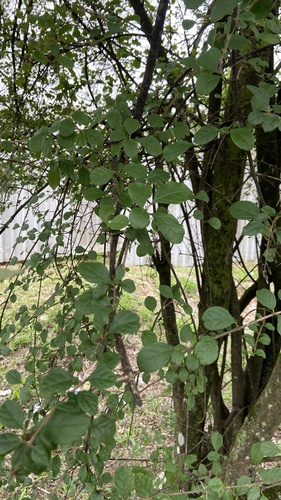
iNaturalist· cc-by-nc
(c) Troos van der Merwe, some rights reserved (CC BY-NC), uploaded by Troos van der Merwe
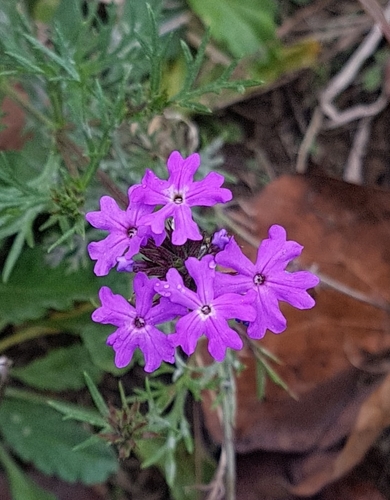
iNaturalist· cc-by-nc
(c) Tracy Robb, some rights reserved (CC BY-NC), uploaded by Tracy Robb
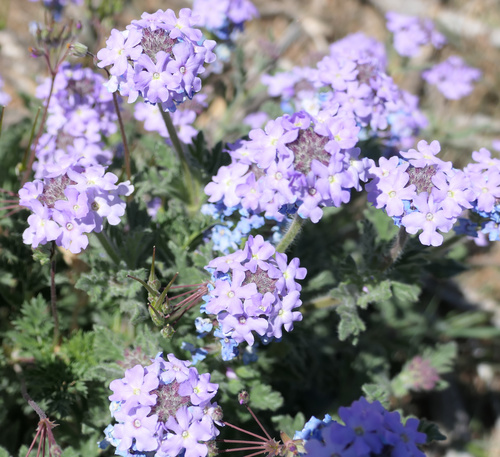
iNaturalist· cc-by-nc
(c) Troos van der Merwe, some rights reserved (CC BY-NC), uploaded by Troos van der Merwe
Description
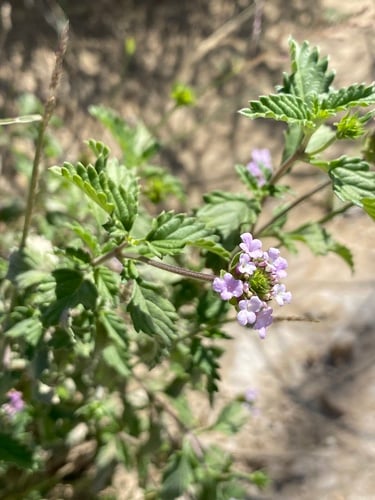
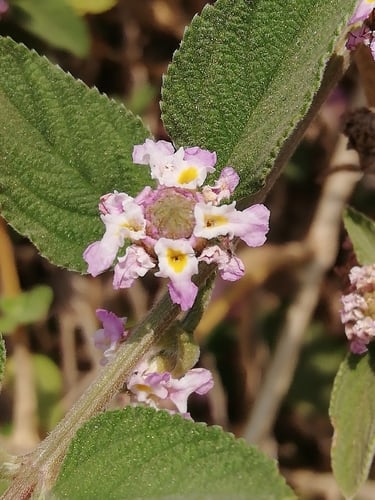
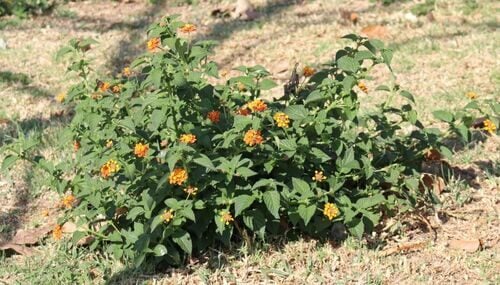
An erect shrub. The stems and leaves have a smell. It grows up to 1.8 m high. The leaves are rough. The flowers are pink. They are clustered at the ends of stems. The fruit are purple.
Edible Uses
The fruit are eaten raw, especially by children, and can be ground and mixed with sour milk. The fruit is used for flavoring food. The leaves are cooked and eaten.
Traditional Uses
The pod is eaten raw. The fruit are ground and mixed with sour milk. Used for flavouring food. The leaves are cooked and eaten. Caution: The leaves contain alkaloids.
Known Hazards
The leaves contain alkaloids.
Distribution
It is a subtropical plant. It grows in hot arid regions with a marked dry season. It grows in well drained sandy soils. It grows between 30-2,160 m above sea level. It can grow in arid places.
Where It Grows
Africa, Angola, Asia, Australia, Botswana, Central Africa, Congo, East Africa, Eswatini, India, Kenya, Lesotho, Malawi, Middle East, Mozambique, Namibia, Somalia, South Africa, Southern Africa, Swaziland, Tanzania, Yemen, Zambia, Zimbabwe, Zululand,
Other Information
It is a famine food. The fruit are eaten especially by children.
Nutrition
| Part | Moisture | kJ | kcal | Protein | Vit A | Vit C | Iron | Zinc |
|---|---|---|---|---|---|---|---|---|
| Fruit | 66.8 | 507 | 121 | 2.9 | — | 5.1 | 18.9 | 0.7 |
Synonyms
Also Known As
Bhubhubhu, Ifathia, Inkhobe, Khitchukhurwani, Khokukurwani, Klein lantana, Lauhnmhn, Luhongole, Mabelemabutjwa, Mokgotutane, Mokhukurwane, Mosunkwane, Mubanda, Nakasonde, Tantani, Tihove ta valangu, Tshidzimba, Ubuhobe, Uguguvama, Utshwalabenyoni, Utywala-bentaka, Voelbrandweyn
References (26)
- Ambasta, S.P. (Ed.), 2000, The Useful Plants of India. CSIR India. p 316 (As Lantana salviifolia)
- Bodkin, F., 1991, Encyclopedia Botanica. Cornstalk publishing, p 617 (As Lantana salviifolia)
- Cunningham, 1985,
- Fox, F. W. & Young, M. E. N., 1982, Food from the Veld. Delta Books. p 361
- Grivetti, L. E., 1980, Agricultural development: present and potential role of edible wild plants. Part 2: Sub-Saharan Africa, Report to the Department of State Agency for International Development. p 66 (As Lantana salviifolia)
Show all 26 references Hide references
- HELY-HUTCHINSON, (As Lantana salviifolia)
- INFOODS:FAO/INFOODS Databases
- Jadhav, R., et al, 2015, Forest Foods of Northern Western Ghats: Mode of Consumption, Nutrition and Availability. Asian Agri-History Vol. 19, No. 4: 293-317 (As Lantana salviifolia)
- Long, C., 2005, Swaziland's Flora - siSwati names and Uses http://www.sntc.org.sz/flora/
- Maguire, 1978,
- Magwede, K., van Wyk, B.-E., & van Wyk, A. E., 2019, An inventory of Vhavenḓa useful plants. South African Journal of Botany 122 (2019) 57–89
- Martin, F.W. & Ruberte, R.M., 1979, Edible Leaves of the Tropics. Antillian College Press, Mayaguez, Puerto Rico. p 224 (As Lantana salviifolia)
- Mashile,S. P., et al, 2019, Indigenous fruit plants species of the Mapulana of Ehlanzeni district in Mpumalanga province, South Africa. South African Journal of Botany 122 (2019) 180–183
- Ogle & Grivetti, 1985,
- Peters and Maguire, 1981,
- Peters, C. R., O'Brien, E. M., and Drummond, R.B., 1992, Edible Wild plants of Sub-saharan Africa. Kew. p 197
- Royal Botanic Gardens, Kew (1999). Survey of Economic Plants for Arid and Semi-Arid Lands (SEPASAL) database. Published on the Internet; http://www.rbgkew.org.uk/ceb/sepasal/internet [Accessed 13th June 2011]
- Ruiters-Welcome, A. K., 2019, Food plants of southern Africa. Ph.D. thesis. Univ. of Johannesburg p 107
- Schmidt, E., Lotter, M., & McCleland, W., 2007, Trees and shrubs of Mpumalanga and Kruger National Park. Jacana Media p 576
- Shackleton, S. E., et al, 1998, Use and Trading of Wild Edible Herbs in the Central Lowveld Savanna Region, South Africa. Economic Botany, Vol. 52, No. 3, pp. 251-259
- Shava, S., 2000, The Use of Indigenous Plants as Food by a Rural Community in the Eastern Cape: an Educational Exploration. Masters Thesis Rhodes University. p 65
- Syst. nat. ed. 10, 2:1116. 1759 "salvifolia" (As Lantana salviifolia)
- Wehmeyer, A. S, 1986, Edible Wild Plants of Southern Africa. Data on the Nutrient Contents of over 300 species
- Welcome, A. K. & Van Wyk, B.-E., 2019, An inventory and analysis of the food plants of southern Africa. South African Journal of Botany 122 (2019) 136–179
- World Checklist of Useful Plant Species 2020. Royal Botanic Gardens, Kew
- www.zimbabweflora.co.zw 2011