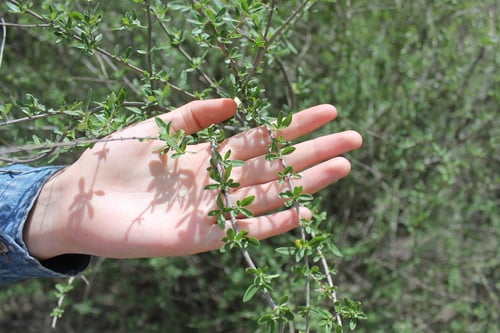
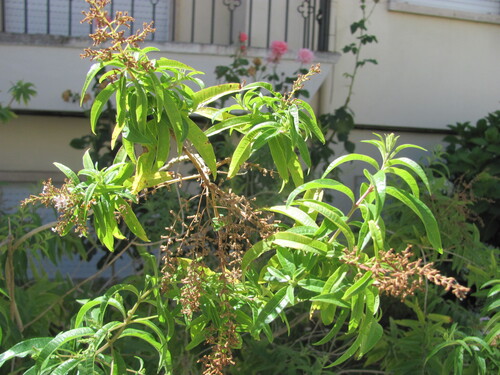
Lantana x aculeata
Moldenke
iNaturalist· cc-by-nc
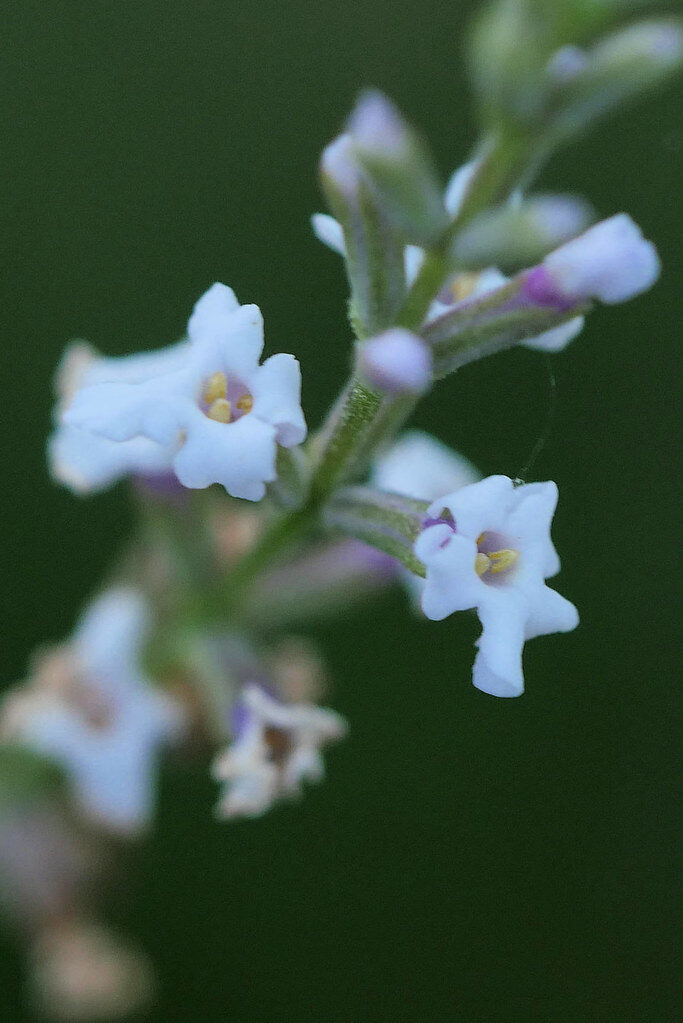
(c) Ron Stephens, some rights reserved (CC BY-NC)
iNaturalist· cc-by-nc
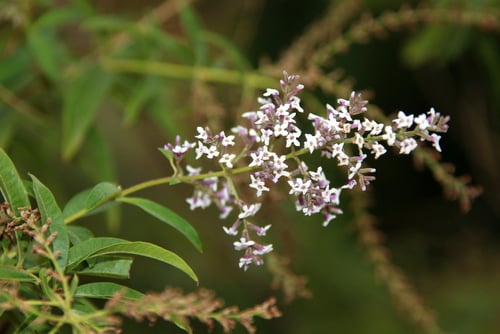
(c) Ron Stephens, some rights reserved (CC BY-NC)
iNaturalist· cc-by-nc
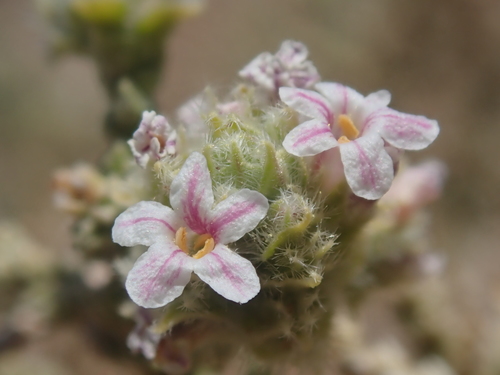
(c) Ron Stephens, some rights reserved (CC BY-NC)
Description
A shrub. It can be erect or rambling. It keeps growing from year to year. It grows 1-5 m tall. The branches can have prickles. The leaves are 2-12 cm long by 2-6 cm wide. They are opposite or in rings. The fruit are black when ripe.
Edible Uses
The ripe fruit are eaten raw.
Traditional Uses
The ripe fruit are eaten raw.
This uses section is brief — help expand it
Medicinal Uses
Studies conducted in India have found that Lantana leaves can display antimicrobial, fungicidal and insecticidal properties. L. camara has also been used in traditional herbal medicines for treating a variety of ailments, including cancer, skin itches, leprosy, chicken pox, measles, asthma and ulcers. L. camara extract has shown to reduce gastric ulcer development in rats.
Known Hazards
Lantana camara is known to be toxic to livestock such as cattle, sheep, horses, dogs and goats. The active substances causing toxicity in grazing animals are pentacyclic triterpenoids called Lantadenes, which result in liver damage and photosensitivity. L. camara also excretes allelopathic chemicals, which reduce the growth of surrounding plants by inhibiting germination and root elongation. The toxicity of L. camara to humans is undetermined, with several studies suggesting that ingesting berries can be toxic to humans, such as a study by O. P. Sharma which states "Green unripe fruits of the plant are toxic to humans". North Carolina State University's Extension Gardener website states that ingestion of the flowers, fruits, and leaves can cause vomiting, diarrhea, difficulty breathing, and liver failure, while the leaves can cause contact dermatitis. A field guide by the US Department of the Army says the plant can even be fatal. Contrarily, some studies have claimed that the species poses no risk to humans when eaten, and is in fact edible when ripe.
Distribution
It is a tropical plant.
Where It Grows
Asia, India, Kiribati, Nauru, Pacific,
Notes
There are about 150 Lantana species. They come from tropical and subtropical America.
Synonyms
Also Known As
Achinthala poola, Arippu, Chadurang, Gabbuseeki, Gangutri, Ghaneri, Kakke, Kamuni, Kesike, Koothadichipoov, Nata hu gida, Pulikampa, Raimuniya, Te kaibuaka, Unnichedi
References (7)
- Ambasta, S.P. (Ed.), 2000, The Useful Plants of India. CSIR India. p 316 (As Lantana camara var. aculeata)
- Jadhav, R., et al, 2015, Forest Foods of Northern Western Ghats: Mode of Consumption, Nutrition and Availability. Asian Agri-History Vol. 19, No. 4: 293-317 (As Lantana camara var. aculeata)
- Misra S. & Misra M., 2016, Ethnobotanical and Nutritional Evaluation of Some Edible Fruit Plants of Southern Odisha, India. International Journal of Advances in Agricultural Science and Technology, Vol.3 Issue.1, March- 2016, pg. 1-30 (As Lantana camara var. aculeata)
- Reddy, K.R., 1989, Additional Notes on the Wild Edible Plants of India. J. Econ. Tax. Bot. Vol. 13 No. 1 pp 125-127 (As Lantana camara var. aculeata)
- Sasi, R. & Rajendran, A., 2012, Diversity of Wild Fruits in Nilgiri Hills of the Southern Western Ghats - Ethnobotanical Aspects. IJABPT, 3(1) p 82-87 (As Lantana camara var. aculeata)
Show all 7 references Hide references
- Thaman, R. R., 1987, Plants of Kiribati: A listing and analysis of vernacular names. Atoll Research Bulletin No. 296 (As Lantana camara var. aculeata)
- Yesodharan, K. & Sujana, K. A., 2007, Wild edible plants traditionally used by the tribes in the Parambokulam Wildlife Sanctuary, Kerala, India. Natural Product Radiance 6(1) pp 74-80 (As Lantana camara var. aculeata)