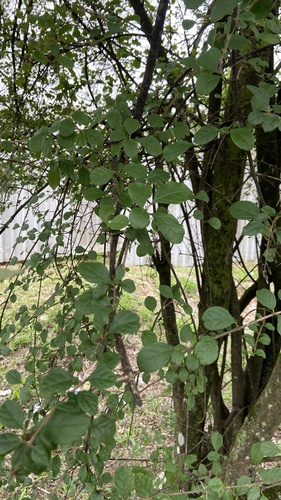
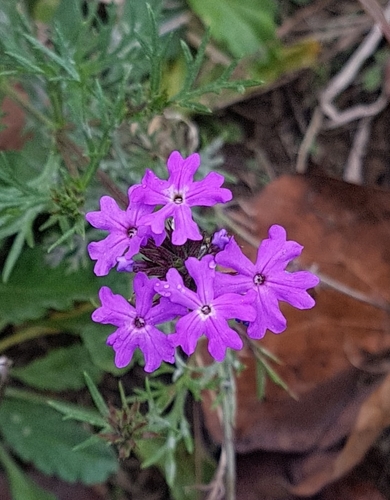
Lippia graveolens
Kunth
Mexican Oregano
wikimedia· cc-by
Dick Culbert from Gibsons, B.C., Canada (via Wikimedia Commons)
Description
Lippia graveolens is an evergreen Shrub growing to 2 m (6ft) by 2 m (6ft) at a fast rate. See above for USDA hardiness. It is hardy to UK zone 10. The flowers are pollinated by Insects. The plant is self-fertile. Suitable for: light (sandy), medium (loamy) and heavy (clay) soils and prefers well-drained soil. Suitable pH: mildly acid and neutral soils. It cannot grow in the shade. It prefers dry or moist soil.
Edible Uses
Tea. The leaves have an intense aroma of oregano and are commonly used, especially in central America, as a flavouring in tomato pastes and other dishes that require a strong oregano flavour. The leaves are often used by the food industry instead of the true oregano. Many people find them preferable to the European oregano. They are more pungent than European oregano. The dried leaves can be used to make a herbal tea.
Medicinal Uses
A decoction of the plant is credited with anti-diabetes properties, and is also used as a treatment for dysentery, as an intestinal antiseptic, a febrifuge and to regulate menstruation. If taken during pregnancy, it can cause abortion. A syrup made from the leaves is used to relieve coughs and colds..
Distribution
Central America from Costa Rica, north to Mexico and southern N. America.
Where It Grows
NORTHERN AMERICA: United States (New Mexico (south), Texas), Mexico (Chihuahua, Coahuila de Zaragoza, Durango, Nuevo León, San Luis Potosí, Sinaloa, Tamaulipas, Zacatecas, Campeche, Chiapas, Ciudad de México, Guerrero, Hidalgo, Jalisco, México, Michoacán de Ocampo, Morelos, Nayarit, Oaxaca, Puebla, Querétaro, Quintana Roo, Veracruz de Ignacio de la Llave, Yucatán) SOUTHERN AMERICA: Trinidad and Tobago (Trinidad), Costa Rica, Guatemala, Honduras, Nicaragua, Guyana, Venezuela, Brazil (Amazonas, Bahia, Ceará, Distrito Federal, Espírito Santo, Goiás, Mato Grosso, Minas Gerais, Pará, Paraná, Piauí, Rio de Janeiro, Roraima), Bolivia (Santa Cruz), Colombia, Argentina (Misiones, Salta), Paraguay (Concepción, Cordillera, Paraguarí)
Cultivation
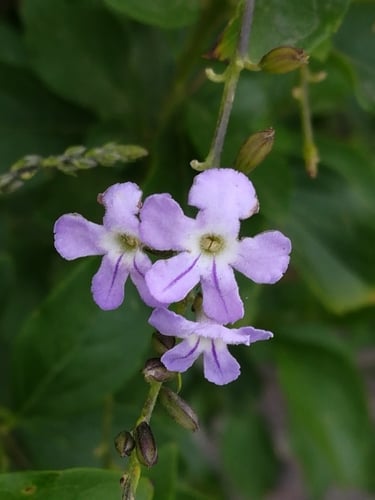
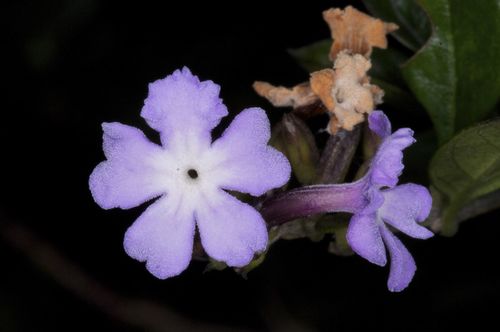
Prefers a position in full sun in any moderately fertile, well-drained soil. Prefers light soil.a very drought-tolerant plant! Hardy to around -2 °C (30 °F). Flowering Time: Late Spring/Early Summer Mid Summer. Bloom Color: White/Near White. Spacing: 36-48 in. (90-120 cm). Mexican Oregano is typically self-fertile. Leaves can be harvested throughout the growing season, but the best time to harvest for optimal flavour is in late spring to early summer, just before flowering. Mexican Oregano typically flowers in summer, producing small, tubular purple flowers. It is a fast-growing perennial herb that often reaches maturity within one season. It can grow quickly in warm climates and will spread if not contained.
Propagation
Seed - Basal or nodal softwood cuttings. Cuttings of semi-ripe wood.
Other Uses
Attracts nectar-feeding butterflies, bees and other insects, and seed-eating birds. Attractive flowers.
Synonyms
Also Known As
Mexican Oregano, Karabo, Mexican marjoram, Mexican wild sage, Te de pais, amerikanisches oregano, hierba dulce, mexican oregano, mexican sage, mexican-sage, mexikansk oregano, oregano, oregano cimmaron, origan marjolaine, orégano, redbrush lippia, scented lippia, scented matgrass.