Pouzolzia parasitica
(Forssk.) Schweinf.
Small stinging nettle
iNaturalist· cc-by-nc
(c) Troos van der Merwe, some rights reserved (CC BY-NC), uploaded by Troos van der Merwe
iNaturalist· cc-by-nc
(c) Troos van der Merwe, some rights reserved (CC BY-NC), uploaded by Troos van der Merwe
Description
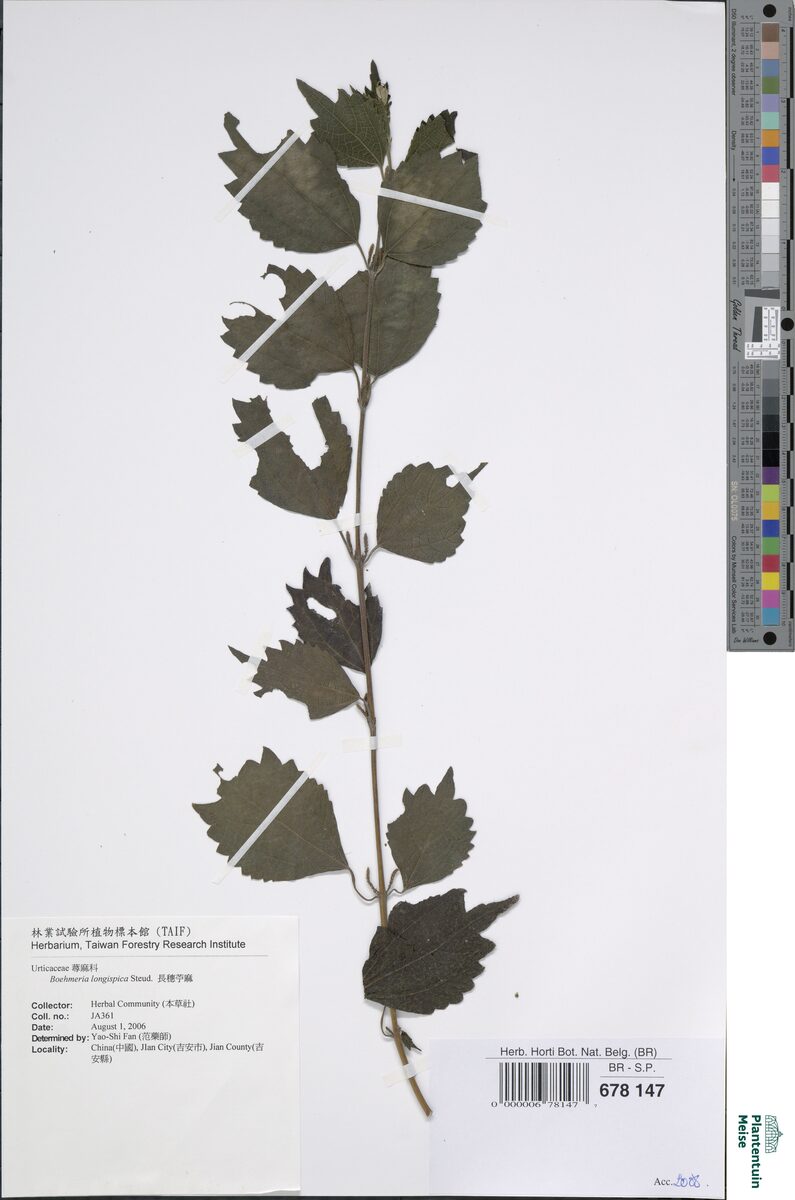
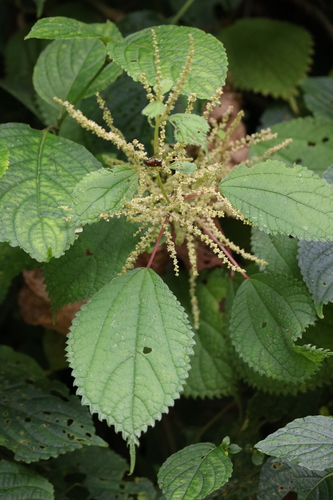
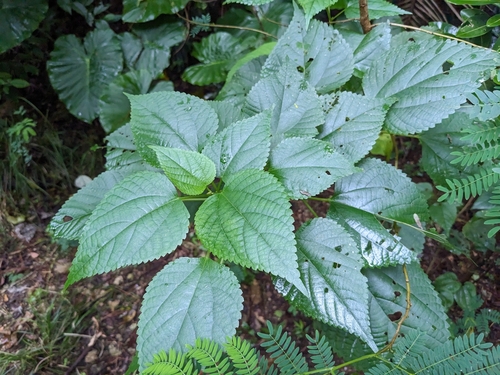
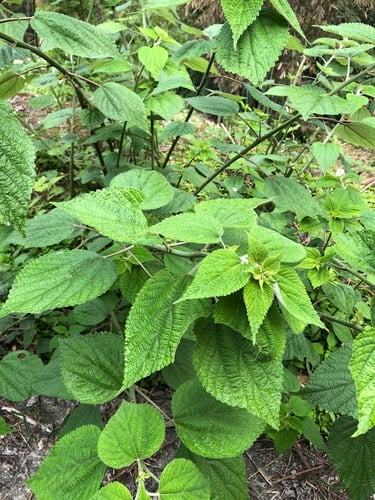
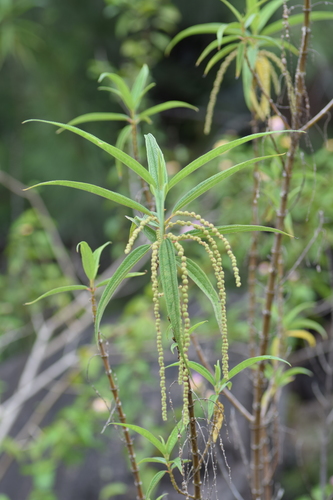
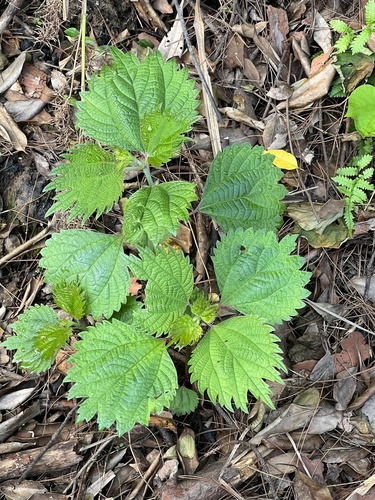
A scrambling herb or shrub. It grows 1 m tall from a woody rhizome or underground stem. It is hairy on stems and leaves. The leaf stalks are slender. They are 6 cm long. The leaf blades are oval and narrow towards the tip. There are teeth along the edge. The leaves are 13 cm long by 6 cm wide. The flowers are in dense clusters. They are in the axils of leaves.
Edible Uses
The leaves are boiled and eaten, though they are described as tasteless. Used as a famine food.
Traditional Uses
The leaves are boiled and eaten but are tasteless.
This uses section is brief — help expand it
Distribution
It is a tropical plant. It grows between 1,000-1,500 m above sea level. It is rare in Swaziland. It grows in higher rainfall woodland. It is often on termite mounds. It is often in shade.
Where It Grows
Africa, Angola, Cameroon, Central Africa, Congo, East Africa, Eswatini, Ethiopia, Kenya, Malawi, Middle East, Mozambique, Somalia, South Africa, Southern Africa, Swaziland, Tanzania, Yemen, Zambia, Zimbabwe,
Other Information
It is a famine food.
Synonyms
Also Known As
Gwikwitima, Kanyandee, Kleinbrandnetel, Makhuluwadzaluma, Qannata, Zombodze-mandundu
References (10)
- Harkonen, M. & Vainio-Mattila, K., 1998, Some examples of Natural Products in the Eastern Arc Mountains. Journal of East African Natural History 87:265-278
- Magwede, K., van Wyk, B.-E., & van Wyk, A. E., 2019, An inventory of Vhavenḓa useful plants. South African Journal of Botany 122 (2019) 57–89
- Newman, 1970,
- Ocho, D. L., et al, 2012, Assessing the levels of food shortage using the traffic light metaphor by analyzing the gathering and consumption of wild food plants, crop parts and crop residues in Konso, Ethiopia. Journal of Ethnobiology and Ethnomedicine 8:30
- Ogle, B. M. & Grivetti, L. E., 1984, Legacy of the Chameleon: Edible Wild Plants in the Kingdom of Swaziland, Southern Africa. A Cultural, Nutritional Study. Part 4 - Nutritional Analysis and Conclusions. Ecology of Food and Nutrition. Vol 17, pp 431-64
Show all 10 references Hide references
- Peters, C. R., O'Brien, E. M., and Drummond, R.B., 1992, Edible Wild plants of Sub-saharan Africa. Kew. p 196
- Ruiters-Welcome, A. K., 2019, Food plants of southern Africa. Ph.D. thesis. Univ. of Johannesburg p 106
- Swaziland's Flora Database http://www.sntc.org.sz/flora
- Vainio-Mattila, K., 2000, Wild vegetables used by the Sambaa in the Usumbara Mountains, NE Tanzania. Ann. Bot. Fennici 37:57-67
- Welcome, A. K. & Van Wyk, B.-E., 2019, An inventory and analysis of the food plants of southern Africa. South African Journal of Botany 122 (2019) 136–179