Sparrmannia ricinocarpa
(Eckl. & Zeyh.) Kuntze
Sparmannia bush, Climbing stock-rose
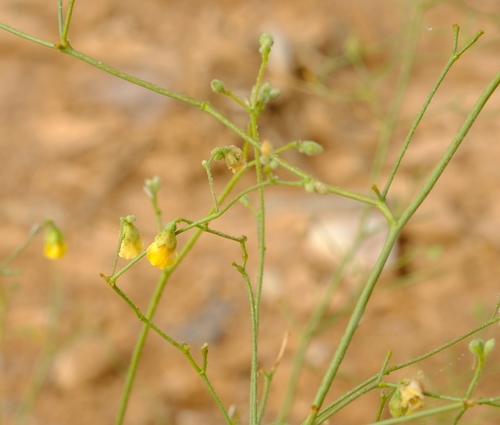
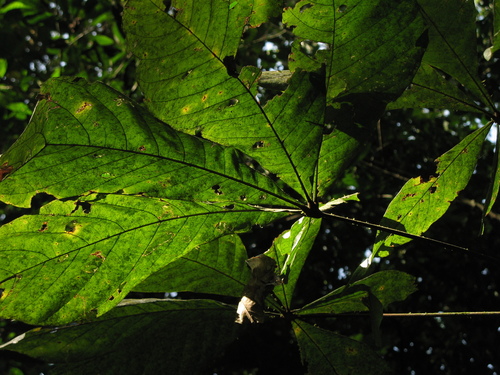
iNaturalist· cc-by-nc
(c) Kate Braun, some rights reserved (CC BY-NC), uploaded by Kate Braun
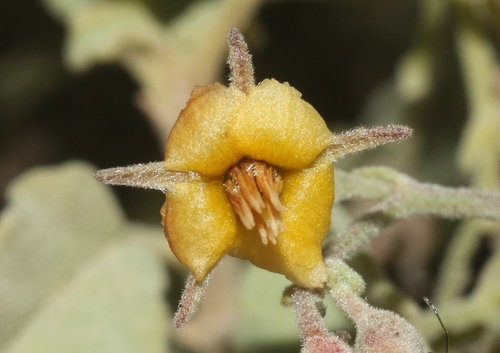
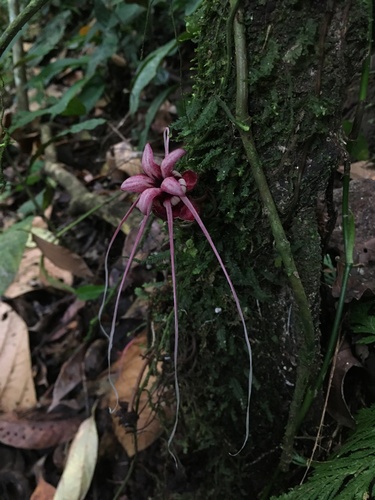
iNaturalist· cc-by-nc
(c) Troos van der Merwe, some rights reserved (CC BY-NC)
Description
A shrub. It grows 3 m high. It can be a scrambler. The petals are white. The outer stamens are sterile and yellow. The fertile filaments are purple.
Edible Uses
The leaves are eaten as a spinach, the stem bark is eaten raw (especially by children), and the fruit is consumed.
Traditional Uses
The stem bark is eaten raw. The leaves are eaten as a spinach.
This uses section is brief — help expand it
Distribution
It is a tropical plant. It grows at the edges of forests at high altitudes.
Where It Grows
Africa, Angola, Cameroon, Central Africa, Congo, East Africa, Eswatini, Ethiopia, Kenya, Madagascar, Malawi, Mozambique, South Africa, Southern Africa, Swaziland, Uganda, Zambia, Zimbabwe,
Cultivation
Plants can flower all year round.
Propagation
Seed - Cuttings of the previous season's growth.
Other Uses
The bark yields a good fibre that is locally used for making rope and textiles. It has been beaten on a mallet to obtain bark-cloth. As technology evolved, fibres were extracted by crushing the bark, after which they were combed or scutched, making them suitable for spinning and weaving.
Other Information
The stem bark is eaten especially by children.
Notes
There are only a few Sparrmannia species. They are in Africa. These have also been in the Tiliaceae.
Synonyms
Also Known As
Hayihayi, Muhaba-haba, Wulkifa
References (10)
- Addis, G., et al, 2005, Ethnobotanical Study of Edible Wild Plants in Some Selected Districts of Ethiopia. Human Ecology, Vol. 33, No. 1, pp. 83-118
- Long, C., 2005, Swaziland's Flora - siSwati names and Uses http://www.sntc.org.sz/flora/
- Lulekal, E., et al, 2011, Wild edible plants in Ethiopia: a review on their potential to combat food insecurity. Afrika Focus - Vol. 24, No 2. pp 71-121
- Molla, A., Ethiopian Plant Names. http://www.ethiopic.com/aplants.htm
- Ogle & Grivetti, 1985,
Show all 10 references Hide references
- Peters, C. R., O'Brien, E. M., and Drummond, R.B., 1992, Edible Wild plants of Sub-saharan Africa. Kew. p 194
- Ruiters-Welcome, A. K., 2019, Food plants of southern Africa. Ph.D. thesis. Univ. of Johannesburg p 77
- Schmidt, E., Lotter, M., & McCleland, W., 2007, Trees and shrubs of Mpumalanga and Kruger National Park. Jacana Media p 414
- Welcome, A. K. & Van Wyk, B.-E., 2019, An inventory and analysis of the food plants of southern Africa. South African Journal of Botany 122 (2019) 136–179
- White, F., Dowsett-Lemaire, F. and Chapman, J. D., 2001, Evergreen Forest Flora of Malawi. Kew. p 572