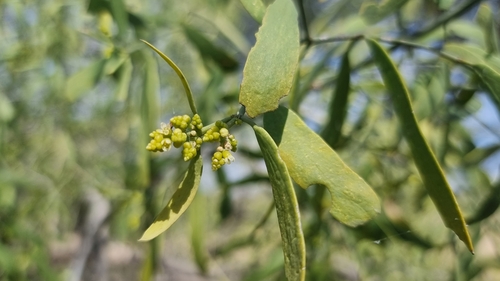
Dobera loranthifolia
(Warb.) Harms
gbif· cc-by
Meise Botanic Garden
gbif· cc-by-nc-sa
MBG
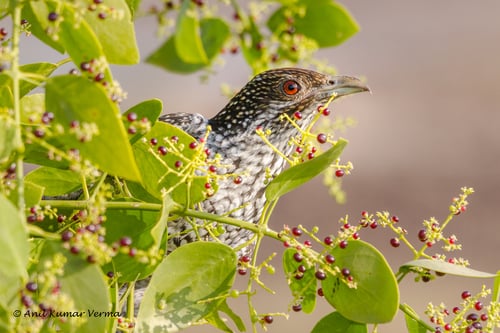
gbif· cc-by-nc-sa
MBG
Description
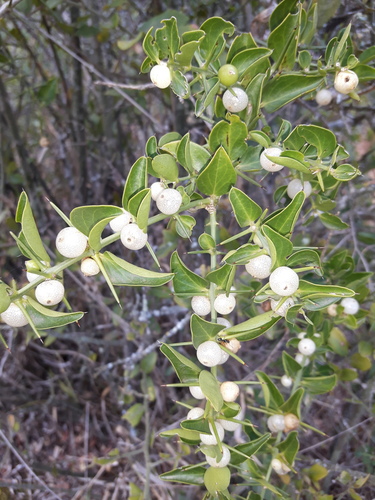
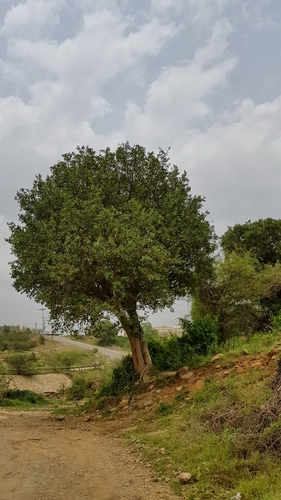
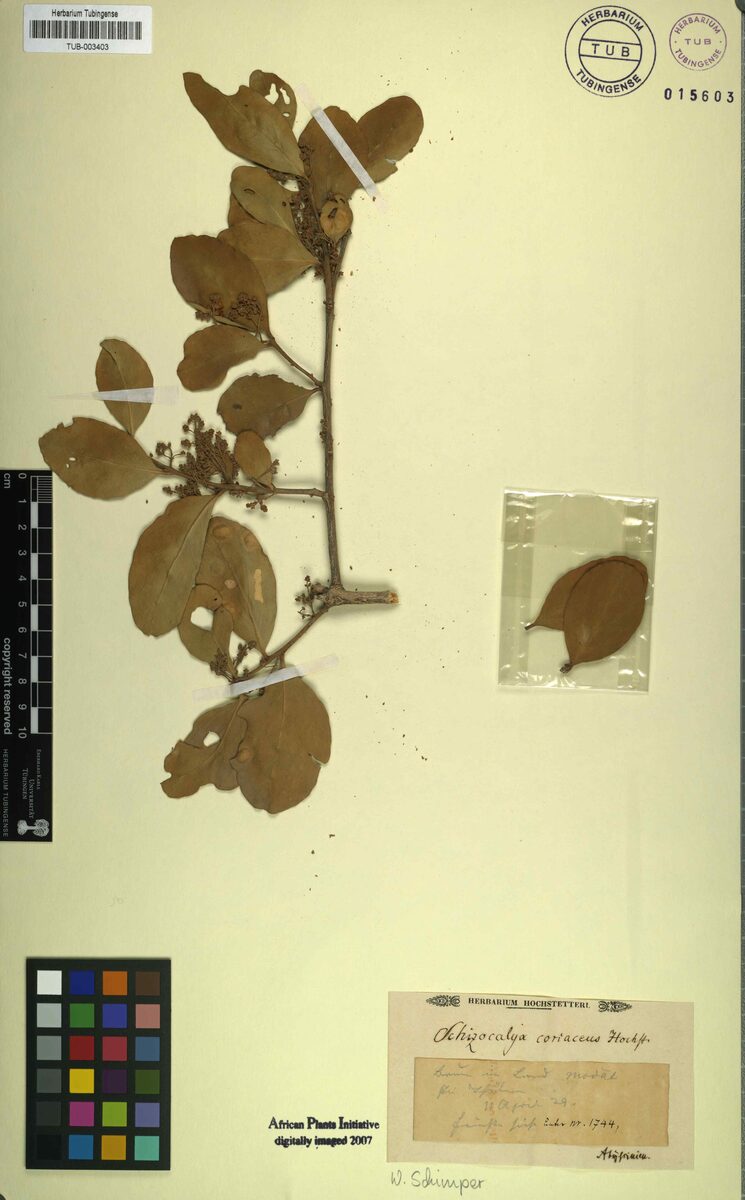
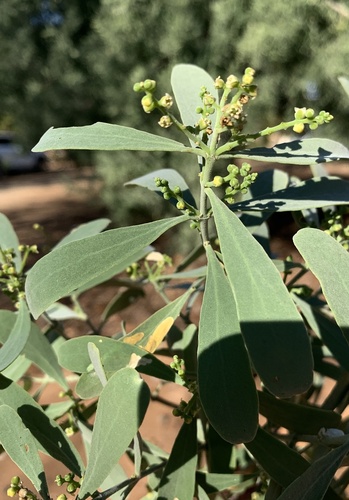
It is very similar to Dobera glabra. It is an evergreen tree. It grows 15 m tall. The bark is corky and flakes off in small patches. The leaves are grey-green and leathery. They are oval and 2-10 cm long by 1-7 cm wide. They are rounded or wedge shaped at the base. The flowers are white. They are in the axils of leaves or at the ends of branches. The fruit is oval and wrinkled. They are 1-2 cm long by 1 cm wide. They are yellow-green when ripe. The seed is oval.
Edible Uses
The fruit is eaten after repeated boiling.
Traditional Uses
The fruit are eaten after repeated boiling.
This uses section is brief — help expand it
Distribution
In Kenya it grows between sea level and 800 m altitude. It can grow in arid places.
Where It Grows
Africa, East Africa, Kenya, Mozambique, Somalia, Tanzania,
Synonyms
Also Known As
Dende, Garas, Kkuha, Kisiu, Msega, Mswaki, Turaar
References (7)
- East African Herbarium records, 1981,
- Maundu, P. et al, 1999, Traditional Food Plants of Kenya. National Museum of Kenya. 288p
- Morgan, W. T. W., 1981, Ethnobotany of the Turkana: Use of plants by a Pastoral People and Their Livestock in Kenya. Economic Botany 35(1):96-130
- Mutie, F. M., et al, 2023, Important Medicinal and Food Taxa (Orders and Families) in Kenya, Based on Three Quantitative Approaches. Plants 2023, 12, 1145
- Peters, C. R., O'Brien, E. M., and Drummond, R.B., 1992, Edible Wild plants of Sub-saharan Africa. Kew. p 178
Show all 7 references Hide references
- Royal Botanic Gardens, Kew (1999). Survey of Economic Plants for Arid and Semi-Arid Lands (SEPASAL) database. Published on the Internet; http://www.rbgkew.org.uk/ceb/sepasal/internet [Accessed 10th June 2011]
- World Checklist of Useful Plant Species 2020. Royal Botanic Gardens, Kew