Azima tetracantha
Lam.
Bee-sting bush, Fore thorn, Four-thorns
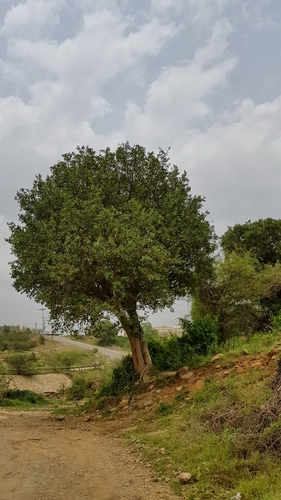
iNaturalist· cc-by-nc
(c) Craig Peter, some rights reserved (CC BY-NC), uploaded by Craig Peter
iNaturalist· cc-by-nc
(c) Craig Peter, some rights reserved (CC BY-NC), uploaded by Craig Peter
iNaturalist· cc-by-nc
(c) Craig Peter, some rights reserved (CC BY-NC), uploaded by Craig Peter
Summary
Source: WikipediaAzima tetracantha (syn. Monetia barlerioides L'Her.) is an ornamental plant in the Salvadoraceae family. Common Name: Bee Sting Bush. This plant is commonly known as 'Yashankala' in ayurveda. Its foliage is an important medicine for post-pregnancy treatments, the same is also used for 'karkidaka treatments' which is famous in Kerala.
Description
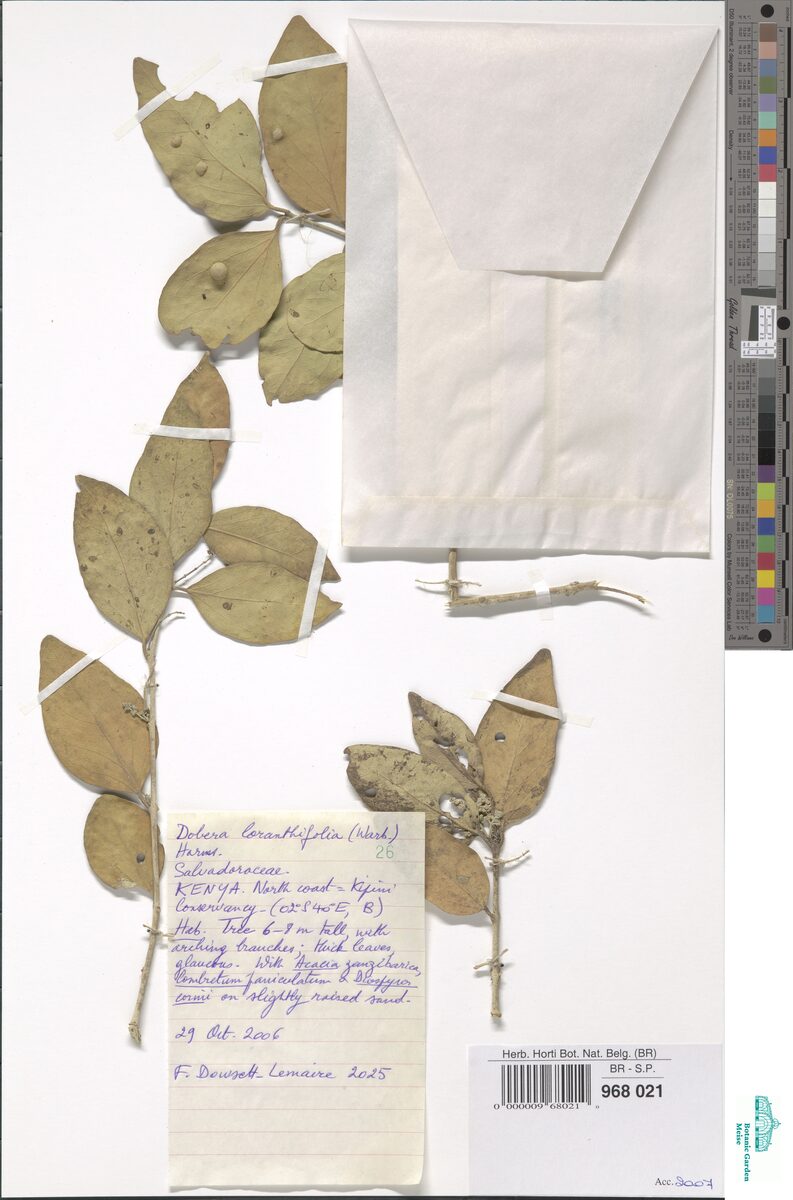
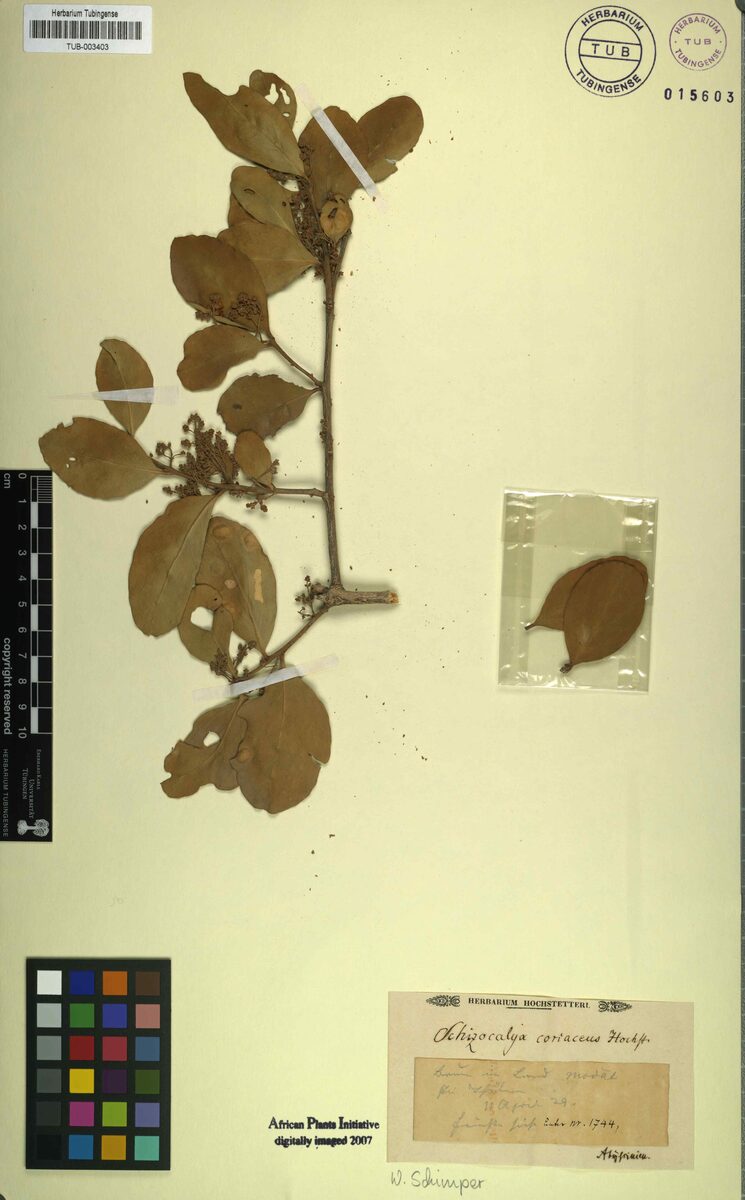
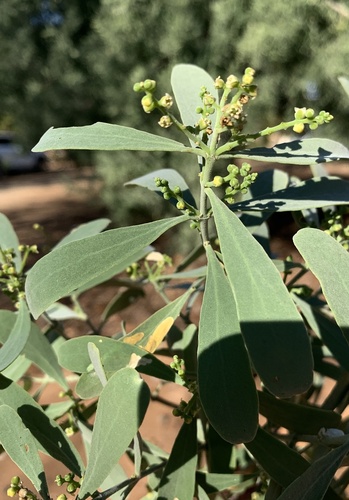
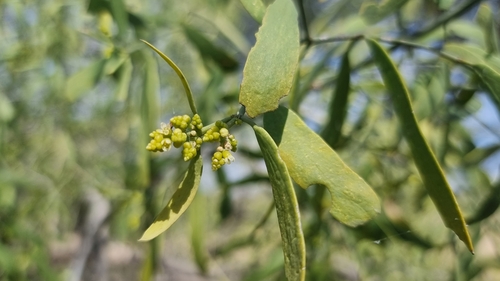
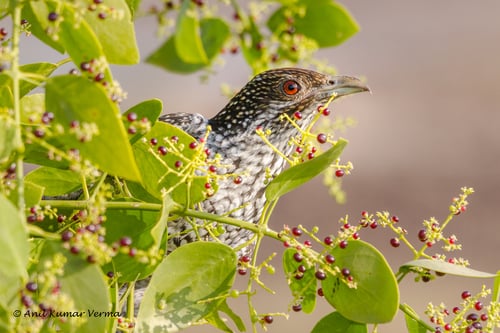
A spiny evergreen shrub. It has many tangled branches. It grows 0.6 to 8 m tall. There are 4 spines at each pair of leaves. The spines are 3.5 cm long and sharp and straight. The leaves are yellow-green. The leaf blade is oblong and 1.4 cm wide by 6 cm long. The veins show up clearly. The flowers are small and green. They are produced in the axils of leaves in loose clusters. The fruit are small berries 6-8 mm across. They are green and turn white or yellow when ripe. The seeds are black and shaped like a disk.
Edible Uses
Fruit - raw. The fruit is a globose green to white berry around 5 - 10mm in diameter, containing 1 - 2 seeds. The oil obtained from the seed contains the fatty acids myristic acid 0.2%, palmitic acid 5%, stearic acid 15%, arachidic acid 7%, behenic acid 2%, oleic acid 32%, linoleic acid 18% and eicosenoic acid 21%, indicating that the oil could be suitable as an edible oil.
Traditional Uses
The ripe fruit are eaten as a snack food.
This uses section is brief — help expand it
Medicinal Uses
The sap of the plant is applied directly to treat toothache and bleeding gums after tooth extraction and also as a disinfectant. The roots are antidote and diuretic. They are used in the treatment of rheumatism, dropsy and stomach disorders. The pounded roots are applied directly to snakebites, whilst an infusion is also taken orally as a treatment for them. The root bark is used in the treatment of rheumatism. The bark is expectorant. The leaves are stimulant. They are eaten with food as a treatment for rheumatism. The leaf juice is used in the treatment of asthma and coughs caused by phthisis. The pickled leaves are used as an appetizer and against colds. An infusion of the leaves is used to treat venereal diseases. The crushed leaves are applied directly to painful teeth, whilst the leaf juice is applied to the ears to treat earaches. The juice of the berries is applied directly into the ear to treat earache. The dimeric piperidine alkaloids azimine, azcarpine and carpaine have been isolated from all plant parts. All parts contain glucosinolates. These are hydrolyzed into thiocyanates and isothiocyanates, and the resulting compounds have anti-oxidant and sometimes anticarcinogenic activities. Terpenoids are present in the roots and the leaves. The seeds contain a complex mixture of about 25 flavonoids, predominantly as glycosides and acyl-glycosides, the most important being quercetin, isorhamnetin, rhamnetin and rhamnazin. Despite the plant's traditional uses, the leaves have tested negative in antibacterial and antifungal tests. The anti-inflammatory activity of the powdered leaf has been confirmed in tests on oedema in rats. The wound-healing activity of a methanol extract was confirmed both as ointment and when injected.
Known Hazards
Pricks from thorns produce unpleasant burning sensations comparable to bee stings.
Distribution
A tropical plant. It is commonly found on poor eroded soils. It can grow on salt affected soils. It grows from sea level to 1120 m altitude. It can grow in arid places.
Where It Grows
Africa, Angola, Arabia, Asia, Bangladesh, Burundi, Central Africa, East Africa, Comoros, Congo, East Africa, Eswatini, India, Kenya, Madagascar, Malawi, Middle East, Mozambique, Myanmar, Namibia, Pacific, Philippines, Rwanda, Saudi Arabia, SE Asia, Seychelles, Somalia, South Africa, Southern Africa, Sri Lanka, Swaziland, Tanzania, Uganda, Zambia, Zimbabwe,
Cultivation
Plants grow from seed.
Propagation
Seed - Cuttings.
Other Uses
The wood is avoided as fuel wood because the smoke is considered poisonous. The scandent, straggling growth habit of the plant, combined with its spines, makes it a useful species for hedges. The hedge tends to open up underneath but pruning will keep it in shape. The plant is grown as a living fence in India. The plant is a common, widespread pioneer and so could be used in re-forestation projects, especially within its native range. The South African Department of Agriculture considers his species to be an indicator of bush encroachment. Land users in certain areas are required to control the species to prevent deterioration and maintain the productivity of pastoral land. Overgrazing is the main reason for encroachment.
Production
The tree flowers and fruits throughout the year.
Notes
There are 4 Azima species.
Synonyms
Also Known As
Batsodli, Fantsikandilany, Goramaky, Ichanka, Kantagurkamai, Kundali, Ligumkelii, Mohnan, Mugumokei, Mutchangan, Mwele-wele, Needle bush, Ribaba, Sakapat, Sikhumekele, Stink bush, Sukka-pat, Tella-upi, Telluppi, Trikanta-gati, Umvisankunzi
References (25)
- Ambasta S.P. (Ed.), 2000, The Useful Plants of India. CSIR India. p 64
- Bircher, A. G. & Bircher, W. H., 2000, Encyclopedia of Fruit Trees and Edible Flowering Plants in Egypt and the Subtropics. AUC Press. p 50
- Dold, A.P., 2006. Azima tetracantha Lam. [Internet] Record from Protabase. Schmelzer, G.H. & Gurib-Fakim, A. (Editors). PROTA (Plant Resources of Tropical Africa / Ressources végétales de l’Afrique tropicale), Wageningen, Netherlands. < http://database.prota.org/search.htm>. Accessed 13 October 2009.
- FAO, 1988, Traditional Food Plants, FAO Food and Nutrition Paper 42. FAO Rome p 93
- Flora Zambesiaca. http://apps.kew.org/efloras
Show all 25 references Hide references
- Fowler, D. G., 2007, Zambian Plants: Their Vernacular Names and Uses. Kew. p 59
- Fox, F. W. & Young, M. E. N., 1982, Food from the Veld. Delta Books. p 330
- Global Plants JSTOR
- Harisha, R. P. & Padmavathy, S., 2013, Knowledge and Use of Wild Edible Plants in Two Communities in Malai Madeshwara Hills, Southern India. International Journal of Botany 9(2): 64-72.
- Long, C., 2005, Swaziland's Flora - siSwati names and Uses http://www.sntc.org.sz/flora/
- Ogle & Grivetti, 1985,
- Palgrave, K.C., 1996, Trees of Southern Africa. Struik Publishers. p 761
- Palmer, E and Pitman, N., 1972, Trees of Southern Africa. Vol. 2. A.A. Balkema, Cape Town p 1837
- Peters, C. R., O'Brien, E. M., and Drummond, R.B., 1992, Edible Wild plants of Sub-saharan Africa. Kew. p 178
- Reddy, K. N. et al, 2007, Traditional knowledge on wild food plants in Andhra Pradesh. Indian Journal of Traditional Knowledge. Vol. 6(1): 223-229
- Royal Botanic Gardens, Kew (1999). Survey of Economic Plants for Arid and Semi-Arid Lands (SEPASAL) database. Published on the Internet; http://www.rbgkew.org.uk/ceb/sepasal/internet [Accessed 10th June 2011]
- Ruiters-Welcome, A. K., 2019, Food plants of southern Africa. Ph.D. thesis. Univ. of Johannesburg p 99
- Schatz, G.E., 2001, Generic Tree Flora of Madagascar. Royal Botanical Gardens, Kew and Missouri Botanical Garden. p 359
- Schmidt, E., Lotter, M., & McCleland, W., 2007, Trees and shrubs of Mpumalanga and Kruger National Park. Jacana Media p 532
- Singh, H.B., Arora R.K.,1978, Wild edible Plants of India. Indian Council of Agricultural Research, New Delhi. p 50
- Swaziland's Flora Database http://www.sntc.org.sz/flora
- Tamil herbs, 2007, Edible Plants of the Tropical Dry Evergreen Forest.
- Welcome, A. K. & Van Wyk, B.-E., 2019, An inventory and analysis of the food plants of southern Africa. South African Journal of Botany 122 (2019) 136–179
- Wright, C. H., 1909, Flora Capensis Vol. 4 p 488
- World Checklist of Useful Plant Species 2020. Royal Botanic Gardens, Kew