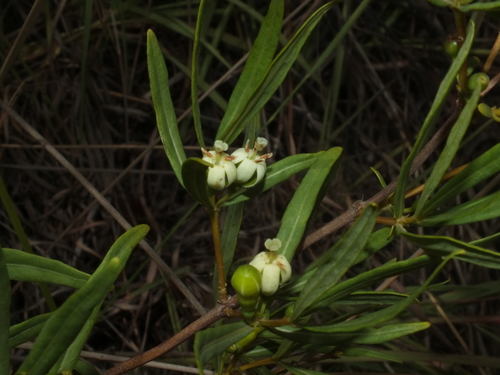
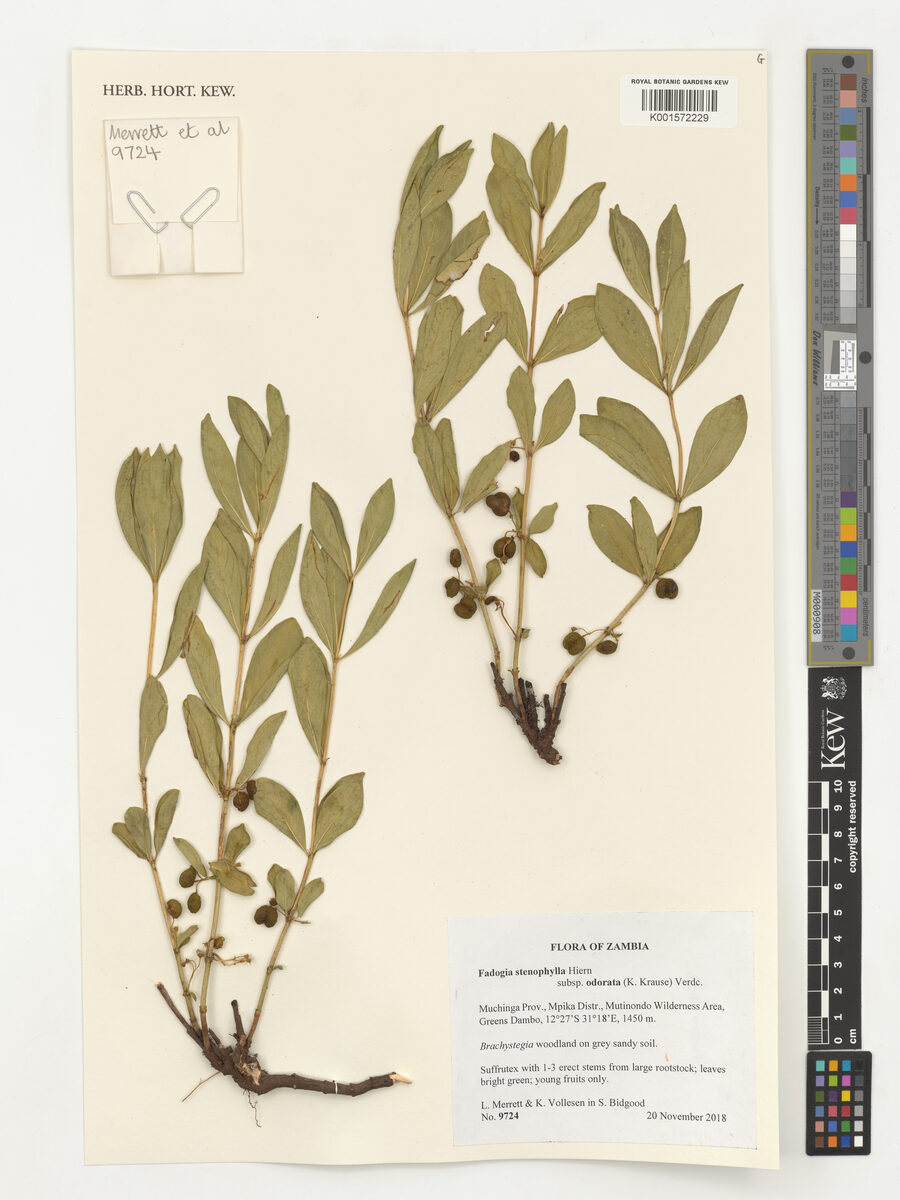
Psychotria eminiana
(Kuntze) E. M. A. Petit
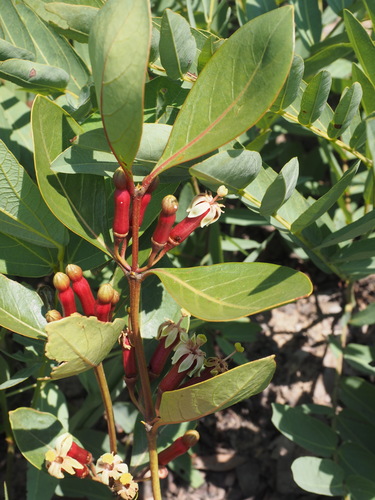
iNaturalist· cc-by-nc
(c) Bart Wursten, some rights reserved (CC BY-NC)
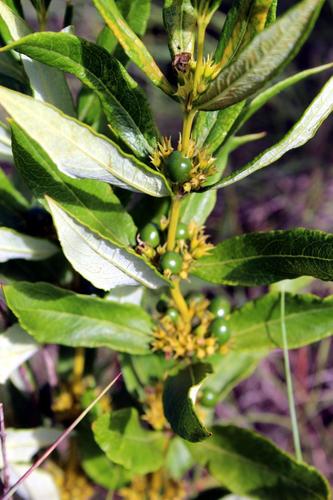
iNaturalist· cc-by-nc
(c) Bart Wursten, some rights reserved (CC BY-NC)
iNaturalist· cc-by-nc
(c) Bart Wursten, some rights reserved (CC BY-NC)
Description
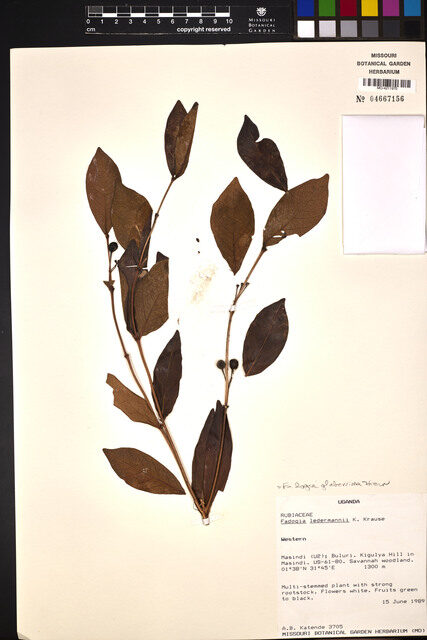
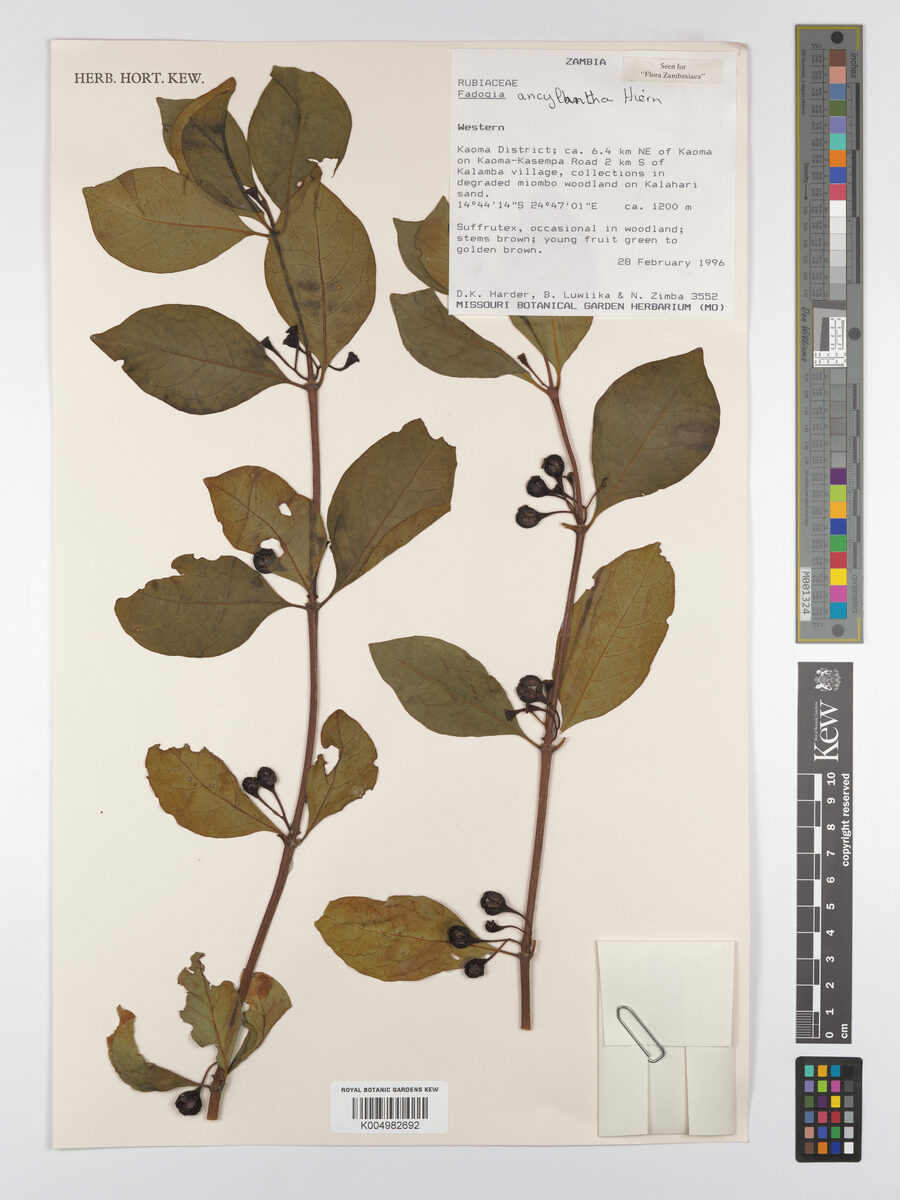
A shrub or small tree. It has a woody rhizome. It grows 2-4 m tall. The leaves are opposite and simple. They are velvety underneath. The leaves are oval to round and 3-25 cm long by 2-13 cm wide. There are many flowers in a group. The fruit is round, 2 lobed and fleshy. It is 5-7 mm long by 7-10 mm wide. The seeds are a flattened round shape and 4.5 mm across. They are dark brown. It is a variable plant.
Edible Uses
The leaves are cooked with ashes to produce a slimy vegetable and are a minor vegetable locally important in the dry season.
Traditional Uses
The leaves are cooked with ashes to produce a slimy vegetable.
This uses section is brief — help expand it
Medicinal Uses
The plant is used in the treatment of intestinal diseases and worms. The rhizomes are used to treat snakebites; fresh rhizomes are chewed and the juice swallowed, or they may be pounded and the infusion used both orally and externally on the wound.
Distribution
It is a tropical plant. It grows in woodland. It is usually on dry burnt ground or stony hills. It grows between 480-1,650 m altitude.
Where It Grows
Africa, Angola, Burundi, Cameroon, Central Africa, Central African Republic, CAR, Congo, East Africa, Malawi, Mozambique, Nigeria, Southern Africa, Sudan, Tanzania, West Africa, Zambia,
Cultivation
This is a rather variable species, and several distinct varieties have been described. Most of this habit variation seems to be caused by differences in the frequency that an area is burnt, and the extent of the damage caused. Plants that are protected from fire for some years become much woodier than other ones.
Other Information
It is a minor vegetable locally important in the dry season.
Synonyms
Also Known As
Chisukunthu, Mchenjedi, Mhala
References (9)
- East African Herbarium records, 1981,
- Flora Zambesiaca. http://apps.kew.org/efloras
- Fowler, D. G., 2007, Zambian Plants: Their Vernacular Names and Uses. Kew. p 57
- Grubben, G. J. H. and Denton, O. A. (eds), 2004, Plant Resources of Tropical Africa 2. Vegetables. PROTA, Wageningen, Netherlands. p 438
- Jardin, C., 1970, List of Foods Used In Africa, FAO Nutrition Information Document Series No 2.p 79 (As Grumilea ungoniensis)
Show all 9 references Hide references
- Martin, F.W. & Ruberte, R.M., 1979, Edible Leaves of the Tropics. Antillian College Press, Mayaguez, Puerto Rico. p 216 (As Grumilea ungoniensis)
- Peters, C. R., O'Brien, E. M., and Drummond, R.B., 1992, Edible Wild plants of Sub-saharan Africa. Kew. p 173
- Williamson, 1972,
- Williamson, J., 2005, Useful Plants of Malawi. 3rd. Edition. Mdadzi Book Trust. p 211 (As Psychotria eminiana var. stolzii)