Elephantorrhiza elephantina
(Burch.) Skeels
Dwarf elephant root, Eland's bean
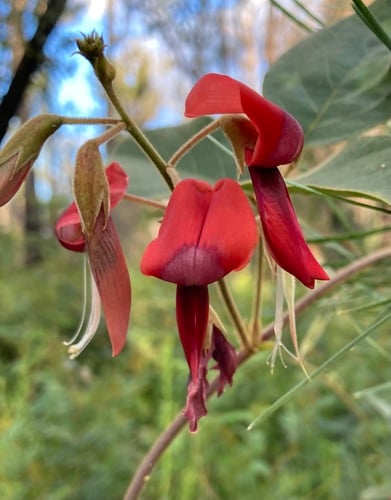
iNaturalist· cc-by-nc
(c) robertbarclay7, some rights reserved (CC BY-NC)
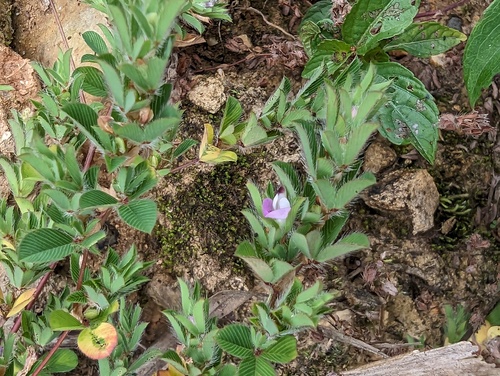
iNaturalist· cc-by-nc
(c) keanumrc, some rights reserved (CC BY-NC)
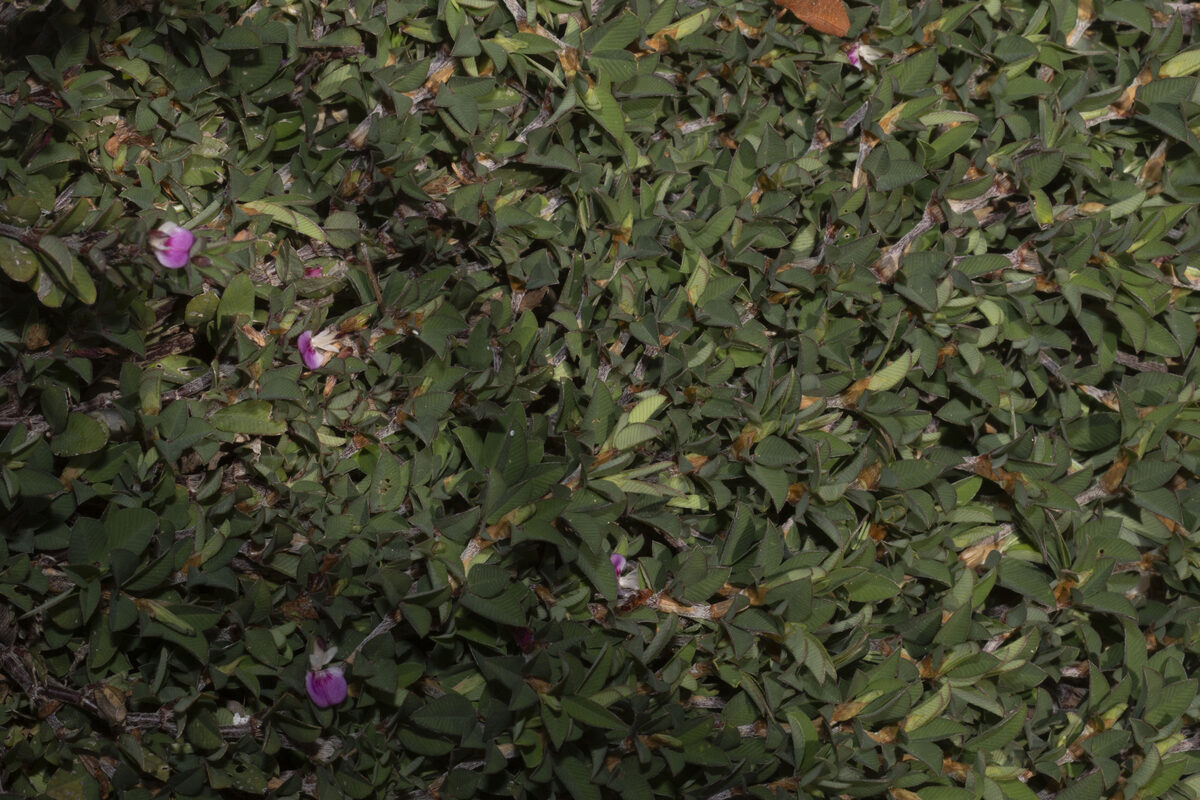
iNaturalist· cc-by-nc
(c) keanumrc, some rights reserved (CC BY-NC)
Description
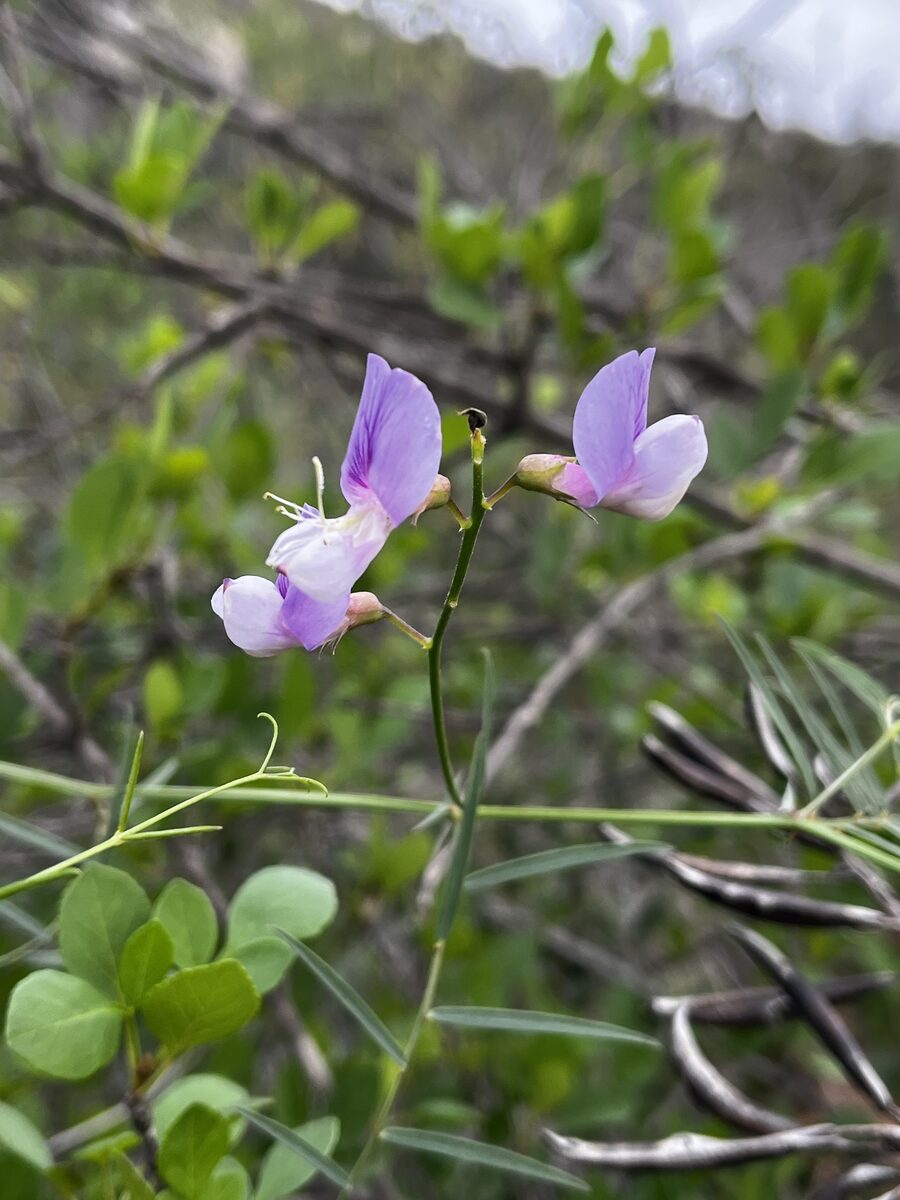
A low shrub. It has a large woody rootstock. Several leafy shoots arise from this each year. They can be 1 m high. The leaves are twice divided. They can be 15 cm long. There are 10 pairs of pinnae and 40 pairs of leaflets. These are 5 mm long by 1 mm wide. They are pointed. The flower spikes arise from near the base of the shoots. They are erect and 8 cm long with many flowers. They are cream or white. The fruit is woody and flattened.
Edible Uses
The pods are burnt and used as a coffee substitute, while roasted beans are used as coffee. Young leaves are made into a relish.
Traditional Uses
The pods are burnt and used as a coffee substitute. The roasted beans are used for coffee. The young leaves are used to make a relish.
This uses section is brief — help expand it
Medicinal Uses
The rhizome is used as a general remedy for intestinal and abdominal complaints such as diarrhoea, dysentery and stomach-ache. It is also used to treat painful menstruation, infertility in women and as a relief for heart troubles. Externally, it is used to treat haemorrhoids, and to cure skin diseases and acne. The face is held in the vapour arising from a warm infusion to treat acne. The root is steeped in water for 24 hours or longer, after which it is strained and ready for external use. For internal use, the infusion has to be boiled for 10 minutes first.
Known Hazards
The seed is toxic to sheep (lethal dose 250 g), rabbits (lethal dose 5 - 7.5 g/kg) and guinea-pigs, causing gastro-enteritis and pulmonary oedema.
Distribution
It is a tropical and subtropical plant. It grows in shrubland and grassland. It grows between 250-1,800 m above sea level. In Swaziland it is in the high veld only. It grows in areas with a rainfall above 200 mm. It can grow in arid places.
Where It Grows
Africa, Botswana, East Africa, Eswatini, Lesotho, Mozambique, Namibia, South Africa, Southern Africa, Swaziland, Zimbabwe,
Cultivation
Succeeds in the drier areas of tropical and subtropical climates. This species has a symbiotic relationship with certain soil bacteria, these bacteria form nodules on the roots and fix atmospheric nitrogen. Some of this nitrogen is utilized by the growing plant but some can also be used by other plants growing nearby.
Other Uses
The bark of the tuberous rhizome (usually including the roots), is a popular source of tanning and dyeing materials. To obtain the tannins, the rhizomes, or their bark only, are crushed, some water is added and the resulting paste is used. The rhizome contains 6 - 22% tannin and 17% sugar. The bark contains 25 - 30% tannin. The rhizome extract contains too much sugar for commercial exploitation as it tends to ferment. To dye grass for mat and basket weaving, the pounded rhizomes are boiled with the grass for several hours, giving a khaki, brown or reddish brown colour. Dye experiments on wool with a rhizome extract gave different colours according to the mordants used; for example, a yellow was obtained with stannous chloride; golden to orange with chromium chloride; orange-brown with ammonium molybdate; black with ammonium vanadate; and salmon with sodium wolfram or zinc sulphate. The seed yields 10% of a fixed oil.
Notes
Also as Mimosaceae.
Nutrition
| Part | Moisture | kJ | kcal | Protein | Vit A | Vit C | Iron | Zinc |
|---|---|---|---|---|---|---|---|---|
| Roots | 77.7 | 208 | 50 | 0.9 | — | 8.4 | 3.7 | 0.4 |
Synonyms
Also Known As
Chizezepasi, Intfolwane, Intolwane encinyane, Looiersbossie, Mositsane, Umdzafu
References (15)
- Fox, F. W. & Young, M. E. N., 1982, Food from the Veld. Delta Books. p 208
- Guillarmod, 1966, 1971,
- Long, C., 2005, Swaziland's Flora - siSwati names and Uses http://www.sntc.org.sz/flora/
- Peters, C. R., O'Brien, E. M., and Drummond, R.B., 1992, Edible Wild plants of Sub-saharan Africa. Kew. p 129
- Plowes, N. J. & Taylor, F. W., 1997, The Processing of Indigenous Fruits and other Wildfoods of Southern Africa. in Smartt, L. & Haq. (Eds) Domestication, Production and Utilization of New Crops. ICUC p 190
Show all 15 references Hide references
- Rankoana, S. A., 2017, Subsistence Food Production Practices: An Approach to Food Security and Good Health. International Journal of Environmental Research and Public Health. 14, 1184
- Royal Botanic Gardens, Kew (1999). Survey of Economic Plants for Arid and Semi-Arid Lands (SEPASAL) database. Published on the Internet; http://www.rbgkew.org.uk/ceb/sepasal/internet [Accessed 28th April 2011]
- Ruiters-Welcome, A. K., 2019, Food plants of southern Africa. Ph.D. thesis. Univ. of Johannesburg p 57
- Schmidt, E., Lotter, M., & McCleland, W., 2007, Trees and shrubs of Mpumalanga and Kruger National Park. Jacana Media p 176
- Swaziland's Flora Database http://www.sntc.org.sz/flora
- van Wyk, Ben-Erik, 2019, The diversity and multiple uses of southern African legumes. Australian Systematic Botany, 2019, 32, 519–546
- Wehmeyer, A. S, 1986, Edible Wild Plants of Southern Africa. Data on the Nutrient Contents of over 300 species
- Welcome, A. K. & Van Wyk, B.-E., 2019, An inventory and analysis of the food plants of southern Africa. South African Journal of Botany 122 (2019) 136–179
- World Checklist of Useful Plant Species 2020. Royal Botanic Gardens, Kew
- www.zimbabweflora.co.zw 2011