Prosopis juliflora
(Sw.) DC.
Honey mesquite
iNaturalist· cc0
no rights reserved
iNaturalist· cc0
no rights reserved
iNaturalist· cc-by-nc
(c) eduplant, some rights reserved (CC BY-NC)
Summary
Source: WikipediaProsopis juliflora is an evergreen tree reaching 10 m tall with a 12 m spread, growing at a fast rate and hardy to UK zone 8. Establishes in light sandy and medium loamy soils preferring good drainage and thriving in poor soil. Tolerates mildly acidic through basic soil pH, very alkaline, and saline conditions. Requires full sun and cannot grow in shade. Prefers dry to moist soil. Bee-pollinated flowers support self-fertility and nitrogen fixation with wildlife appeal.
Description
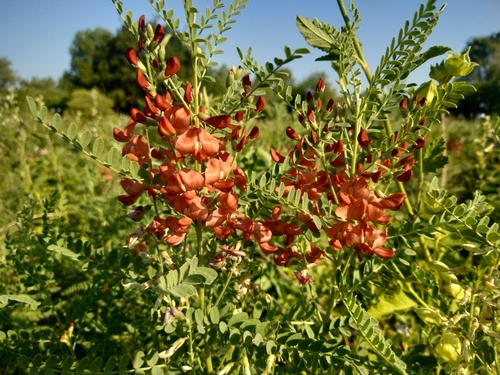
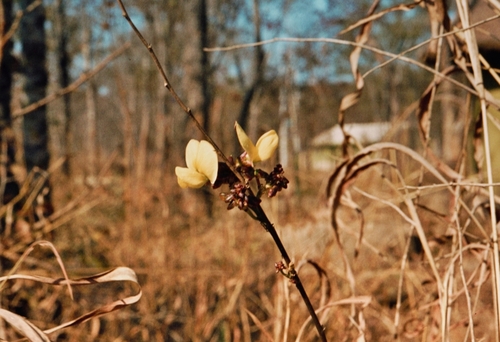
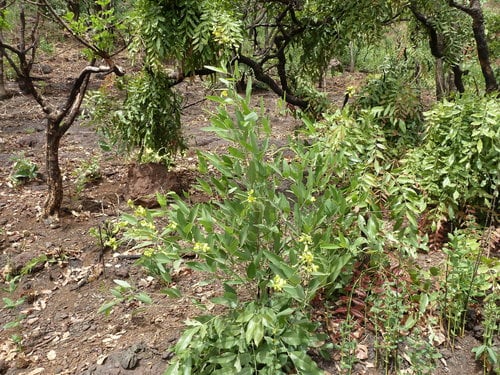
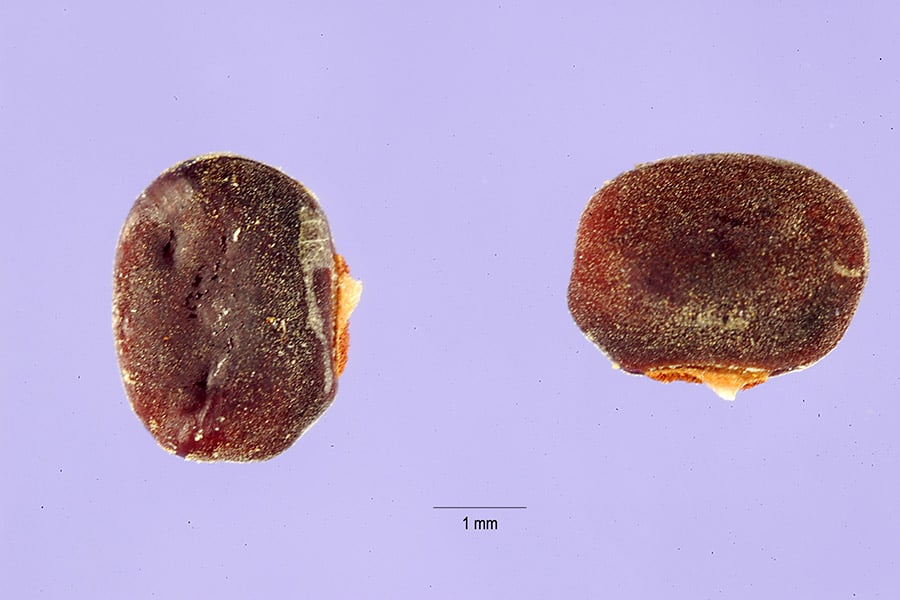
A small tree up to 15- 20 m tall with long cracks in the bark. It is often a smaller tree about 3-5 m high. It is spiny and deciduous. Some kinds have thorns 5 cm long. The young branches are smooth and green. The bark is thick and rough grey-green. The leaves are twice divided. The leaflets are oblong and narrow. They are 1.5 cm long. There is no leaflet at the end. The flowers are golden yellow and crowded into dense spikes. These are 5-10 cm long and have a smell. The fruit is a yellow pod 10-20 cm long. The pod is brittle. It has brown seeds embedded in a whitish pulp. There are 10-20 seeds inside. It is a legume.
Edible Uses
Seedpods can be eaten raw or cooked — roasted, chewed, or ground into powder. A rich flour can be made from pulverized pods with seeds removed, which can be mixed with water to make a refreshing drink consumed immediately, made into a pudding, or fermented into a kind of beer. Mature seeds can be soaked overnight and baked like kidney beans. The cotyledons and embryos, when pulverized, yield a flour rich in protein and sugar that is considered suitable for people with diabetes. Flowers are sweet-flavoured and can be eaten raw, roasted, or made into a tea. A sweet gum exuded from the trunk is used in making sweets. The wood can be used to smoke and flavour foods.
Traditional Uses
The sweetish white pulp of the pod is eaten raw. They are also ground into meal and mixed with water to make a drink. This is drunk immediately but is also allowed to form a pudding or be fermented into beer. The ripe beans can be soaked overnight and baked with molasses and salt pork. The flowers can be eaten raw, roasted or made into tea. The trunks yield a sweet gum used in candy making.
Medicinal Uses
A syrup prepared from ground pods is given to children with weight deficiency or delayed motor development, and is believed to increase lactation. The pod syrup is also used to prepare various medicinal preparations, particularly expectorants. A tea made from the plant is considered beneficial for digestive disturbances and skin lesions.
Known Hazards
The seed pods contain neurotoxic alkaloids which are toxic when eaten excessively by livestock.
Distribution
A tropical plant. It grows well in arid regions. It can grow on poor, sandy or rocky soil and can grow on salty soils. It grows in the Sahel. It has been introduced and is grown in some coastal areas of Papua New Guinea. It has also become self sown. It grows in areas with an annual rainfall between 150-750 mm. It grows between 600-2,400 m above sea level. It is wind resistant. It can grow in arid places.
Where It Grows
Africa, Antilles, Arabia, Argentina, Asia, Australia, Bahamas, Bahrain, Barbados, Belize, Bolivia, Brazil, Brunei, Burkina Faso, Cambodia, Cape Verde, Central America*, Chile, China, Colombia, Costa Rica, Cuba, Curacao, Dominica, Dominican Republic, East Africa, Ecuador, Egypt, El Salvador, Ethiopia, Grenada, Guatemala, Haiti, Hawaii, Honduras, India, Indochina, Indonesia, Iran, Iraq, Israel, Jamaica, Kenya, Kuwait, Laos, Lesser Antilles, Madagascar, Malawi, Malaysia, Maldives, Mali, Mediterranean, Mexico*, Middle East, Myanmar, Nicaragua, Niger, Nigeria, North Africa, North America, Oman, Pacific, Pakistan, Panama, Papua New Guinea, PNG, Paraguay, Peru, Philippines, Puerto Rico, Reunion, Sahel, Saudi Arabia, SE Asia, Senegal, Somalia, South America*, Sri Lanka, St Lucia, St Vincent and the Grenadines, Sudan, Taiwan, Tanzania, Thailand, Trinidad and Tobago, Uganda, United Arab Emirates, UAE, Uruguay, USA, Venezuela, Vietnam, Virgin Islands, West Africa, West Indies*, Yemen,
Cultivation
It grows from seeds. Seeds are sown directly where they are to grow. Seeds are hard to extract from the pod but this can be done by soaking them in water. Seed are easy to store. They can be stored in the pod. It can also be grown by cuttings and suckers.
Propagation
Seeds can be stored for several years at ambient temperatures. The very hard seed coat can prevent germination for several years without pre-treatment. On a small scale, carefully nick the seed coat without damaging the embryo. On a larger scale, soak seeds in nearly boiling water for a few minutes, then continue soaking in warm water for 24 hours. Sow in a sunny nursery bed or individual pots. Treated seed germinates rapidly, with 80–90% sprouting within 4–6 days. Aerial seeding is effective for covering remote and inaccessible areas. Inoculation with Rhizobium and mycorrhizal fungi is beneficial. Propagation is also possible by root cuttings and grafting.
Other Uses
Plants are used for erosion control, dune stabilization, shelterbelts, windbreaks, and living fences in arid and semi-arid climates. The species is widely planted for land reclamation due to its aggressive colonizing habit and tolerance of poor, degraded, saline, and alkaline soils. Aerial seeding of a mix including this species, Nicotiana glauca, and several Eucalyptus species has been used to revegetate abandoned copper mines. The heartwood contains significant polyphenolic compounds from which a unique flavonol compound can be isolated for use in phenol-formaldehyde polymeric resins. A reddish-amber gum similar to gum arabic exudes from stems and older branches, forming an adhesive mucilage. Tannin or dyestuff can be extracted from wood and bark at around 10% yield, or as a by-product of other wood processing. There is significant potential for the wood as a fibre source for paper, paperboard, and hardboard production. The heartwood is dark brown to red or yellowish; the sapwood is light yellow. The wood is close-grained, moderately hard, heavy, tough, strong, and durable in the soil, though susceptible to drywood termites. Seasoned wood is used for rail ties, fence posts, furniture, crafts, and corrals. The crooked stems and branches make excellent firewood and charcoal, widely used in the USA as barbecue fuel. Flowers attract bees and other pollinators. Pods are eaten by birds and mammals, and the tree provides shelter and nesting habitat. Bark, fallen pods, and leaf litter provide shelter and overwintering sites for invertebrates.
Production
The plant is fast growing. It can be lopped, pruned or shaped. Plants set seed after 3-4 years.
Notes
Also as Mimosaceae.
Nutrition
| Part | Moisture | kJ | kcal | Protein | Vit A | Vit C | Iron | Zinc |
|---|---|---|---|---|---|---|---|---|
| Leaves dry | — | — | 19 | — | — | — | — | — |
| Flowers dry | — | — | 21 | — | — | — | — | — |
| Pods dry | — | — | 13.9 | — | — | — | — | — |
| Fruit pulp | — | — | 12.9 | — | — | — | — | — |
| Seeds | — | — | 65.2 | — | — | — | — | — |
Synonyms
Also Known As
Algaroba, Algarrobo blando, Angrezi babur, Asuaja, Cuihi, Eterai, Gadasein, Ghawiaf, Giulhilaashi, Guaranga, Jangalee, Jungli kikar, Kikar, Kuhi, Kuigi, Kwida, Kwihi, Meskeet, Mesquite, Nisache, Phari kikar, Pile, Pohon nyamuk madu, Screw bean, Sindhi kikar, Trupillo, Velayti kikar, Velvet mesquite, Weyane, Woyane zaf, Woyane
References (57)
- Ambasta, S.P. (Ed.), 2000, The Useful Plants of India. CSIR India. p 491
- Asfaw, Z. and Tadesse, M., 2001, Prospects for Sustainable Use and Development of Wild Food Plants in Ethiopia. Economic Botany, Vol. 55, No. 1, pp. 47-62
- Bahru, T., et al, 2013, Wild Edible Plants: Sustainable Use and Management by Indigenous Communities in and the Buffer Area of Awah National Park, Ethiopia. Ethiop. J. Sci., 36(2): 93-108
- Bekele-Tesemma A., Birnie, A., & Tengnas, B., 1993, Useful Trees and Shrubs for Ethiopia. Regional Soil Conservation Unit. Technical Handbook No 5. p 370
- Bernholt, H. et al, 2009, Plant species richness and diversity in urban and peri-urban gardens of Niamey, Niger. Agroforestry Systems 77:159-179
Show all 57 references Hide references
- Blamey, M and Grey-Wilson, C., 2005, Wild flowers of the Mediterranean. A & C Black London. p 80
- Bunderson, W. T. et al, 2002, Common Agroforestry Species in Malawi. Malawi Agroforestry Extension Project, Pubication No. 46, Lilongwe. p 21
- Condit, R., et al, 2011, Trees of Panama and Costa Rica. Princeton Field Guides. p 210
- Dharani, N., 2002, Field Guide to common Trees & Shrubs of East Africa. Struik. p 253
- Facciola, S., 1998, Cornucopia 2: a Source Book of Edible Plants. Kampong Publications, p 153
- Flora of Australia Volume 12, Mimosaceae (excl. Acacia) Caesalpiniaceae. Melbourne: CSIRO Australia (1998) p 9
- Flora of Pakistan. www.eFloras.org
- FAO, 2012, Forest Genetic Resources Situation in Mexico. Final Report of Project TCP/ 3301 p 287
- Forest Genetic Resources Situation in Mexico, FAO 2012 Annex 15 p 287
- French, B.R., 1986, Food Plants of Papua New Guinea, A Compendium. Asia Pacific Science Foundation p 379
- Grandtner, M. M., 2008, World Dictionary of Trees. Wood and Forest Science Department. Laval University, Quebec, Qc Canada. (Internet database http://www.wdt.qc.ca)
- Grandtner, M. M. & Chevrette, J., 2013, Dictionary of Trees, Volume 2: South America: Nomenclature, Taxonomy and Ecology. Academic Press p 534
- Grubben, G. J. H. and Denton, O. A. (eds), 2004, Plant Resources of Tropical Africa 2. Vegetables. PROTA, Wageningen, Netherlands. p 564
- Hall, N. et al, 1972, The Use of Trees and Shrubs in the Dry Country of Australia, AGPS, Canberra. p 414
- Hedrick, U.P., 1919, (Ed.), Sturtevant's edible plants of the world. p 517
- Karim, F. M. & Dakheel, A, J., 2006, Salt-tolerant plants of the United Arab Emirates. 2006. International Center for Biosaline Agriculture, Dubai, UAE. p 116
- Katende, A.B., Birnie, A & Tengnas B., 1995, Useful Trees and Shrubs for Uganda. Identification, Propagation and Management for Agricultural and Pastoral Communities. Technical handbook No 10. Regional Soil Conservation Unit, Nairobi, Kenya. p 512
- Kebebew, M. & Leta, G., 2016, Wild Edible Plant Bio-diversity and Utilization System in Nech Sar National Park, Ethiopia. International Journal of Bio-resource and Stress Management 2016, 7(4):885-896
- Kermath, B. M., et al, 2014, Food Plants in the Americas: A survey of the domesticated, cultivated and wild plants used for Human food in North, Central and South America and the Caribbean. On line draft. p 704
- Kiple, K.F. & Ornelas, K.C., (eds), 2000, The Cambridge World History of Food. CUP p 1813
- Krishen P., 2006, Trees of Delhi, A Field Guide. DK Books. p 278
- Lazarides, M. & Hince, B., 1993, Handbook of Economic Plants of Australia, CSIRO. p 198
- Loughmiller, C & L., 1985, Texas Wildflowers. A Field Guide. University of Texas, Austin. p 135
- Lulekal, E., et al, 2011, Wild edible plants in Ethiopia: a review on their potential to combat food insecurity. Afrika Focus - Vol. 24, No 2. pp 71-121
- Mahony, D., 1991, Trees of Somalia. A Field Guide for Development Workers. Oxfam Research Paper 3. p 9
- Majeed, M., et al, 2021, Gathered Wild Food Plants among Diverse Religious Groups in Jhelum District, Punjab, Pakistan. Foods 2021, 10, 594.
- Martin, F. W., et al, 1987, Perennial Edible Fruits of the Tropics. USDA Handbook 642 p 99
- Massal, E. and Barrau, J., 1973, Food Plants of the South Sea Islands. SPC Technical Paper No 94. Noumea, New Caledonia. p 42
- Maydell, H. von, 1990, Trees and shrubs of the Sahel: their characteristics and uses. Margraf. p 357
- Mbuya, L.P., Msanga, H.P., Ruffo, C.K., Birnie, A & Tengnas, B., 1994, Useful Trees and Shrubs for Tanzania. Regional Soil Conservation Unit. Technical Handbook No 6. p 410
- Menninger, E.A., 1977, Edible Nuts of the World. Horticultural Books. Florida p 99
- Mutie, F. M., et al, 2023, Important Medicinal and Food Taxa (Orders and Families) in Kenya, Based on Three Quantitative Approaches. Plants 2023, 12, 1145
- Paczkowska, G . & Chapman, A.R., 2000, The Western Australian Flora. A Descriptive Calatogue. Western Australian Herbarium. p 330
- Phillips, D.C., 1988, Wild Flowers of Bahrain. A Field Guide to Herbs, Shrubs, and Trees. Privately published. p 41
- Piedra-Malagón, E. M., et al, 2022, Edible native plants of the Gulf of Mexico Province. Biodiversity Data Journal 10: e80565 p 23
- Plants of Haiti Smithsonian Institute http://botany.si.edu/antilles/West Indies
- Prodr. 2:447. 1825
- Roa, J. A. G. & Boada, D. S. G., 2018, Fundación para el Fortalecimiento de la Fruticultura y Plantas Alimenticias no Convencionales en Colombia.
- Royal Botanic Gardens, Kew (1999). Survey of Economic Plants for Arid and Semi-Arid Lands (SEPASAL) database. Published on the Internet; http://www.rbgkew.org.uk/ceb/sepasal/internet [Accessed 28th April 2011]
- Sasi, R. & Rajendran, A., 2012, Diversity of Wild Fruits in Nilgiri Hills of the Southern Western Ghats - Ethnobotanical Aspects. IJABPT, 3(1) p 82-87
- Saunders, C.F., 1948, Edible and Useful Wild Plants. Dover. New York. p 61
- Segura, S., et al, 2018, The edible fruit species in Mexico. Genet Resour Crop Evol (2018) 65:1767–1793
- Staples, G.W. and Herbst, D.R., 2005, A tropical Garden Flora. Bishop Museum Press, Honolulu, Hawaii. p 323
- Sujanapal, P., & Sankaran, K. V., 2016, Common Plants of Maldives. FAO & Kerala FRI, p 220
- Sukarya, D. G., (Ed.) 2013, 3,500 Plant Species of the Botanic Gardens of Indonesia. LIPI p 471
- Timyan, J., 1996, Bwa Yo: Important Trees of Haiti. South-East Consortium for International Development. Washington. p 3
- Torre, de la, L., et al, 2008, Enciclopedia de las Plantas Útiles del Ecuador. Herbario QCA. Pontificia Universidad Católica del Ecuador. p 358
- Ugalde, P. C., et al, 2020, 13,000 years of sociocultural plant use in the Atacama Desert of northern Chile. Vegetation History and Archaeobotany. Springer
- Ulian, T., et al, 2020, Unlocking plant resources to support food security and promote sustainable agriculture. Plants, People, Planet. 2020;2:421–445.
- Van den Eynden, V., et al, 2003, Wild Foods from South Ecuador. Economic Botany 57(4): 576-603
- Verdcourt, B., 1979, Manual of New Guinea Legumes. Botany Bulletin No 11, Division of Botany, Lae, Papua New Guinea. p 141
- www.worldagroforestrycentre.org/treedb/