Vachellia nebrownii
(Burtt Davy) Seigler & Ebinger
Water acacia
iNaturalist· cc0
no rights reserved, uploaded by lallen
iNaturalist· cc-by-nc
(c) Troos van der Merwe, some rights reserved (CC BY-NC)
Description
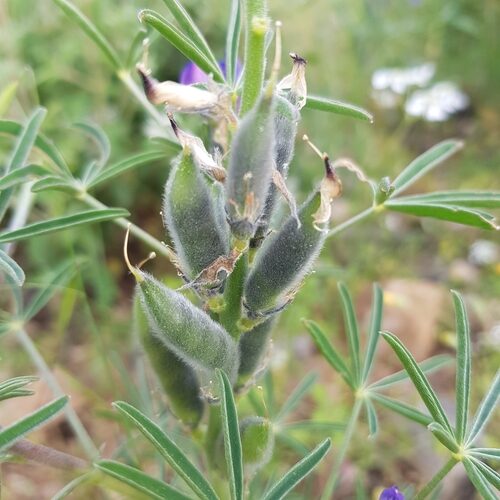
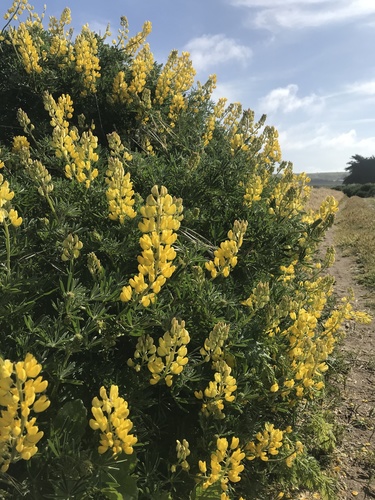
A shrub or small tree. It has several stems. It loses its leaves during the year. It forms thickets. The stems are spiny. The spines are straight and white. It grows 1-8 m high. The bark is smooth and red and does not flake off. The leaves usually have 1 but occasionally 2-3 pairs of pinnae. These have 3-5 pairs of leaflets. The flowers are bright yellow and in round heads. The fruit are small pods that are curved and 5 cm long by 1 cm wide. The seeds are greenish brown.
Edible Uses
The plant gum is palatable and nutritious, eaten especially by children. The roots provide a liquid used to quench thirst.
Traditional Uses
The roots provide a liquid used to quench thirst. The gum is palatable and nutritious.
This uses section is brief — help expand it
Distribution
It is a subtropical plant. It grows in hot arid areas. It can tolerate frost. It can tolerate drought. It grows in areas with an annual rainfall between 150-200 mm. It grows between 550-1,435 m above sea level. It can grow in arid places.
Where It Grows
Africa, Botswana, East Africa, Namibia, South Africa, Southern Africa, Zimbabwe,
Other Information
The gum is eaten especially by children.
Notes
There are about 1,350 Acacia species. Over 1,000 occur in Australia. Also as Mimosaceae.
Synonyms
Also Known As
Gomdoring, Kaldoring, K'ar, Lerwana, Omhalohela, Slapdoring, Usonge, Waterdoring, Water thorn
References (10)
- Fox, F. W. & Young, M. E. N., 1982, Food from the Veld. Delta Books. p 200 (As Acacia nebrownii)
- ILDIS Legumes of the World http:www;ildis.org/Legume/Web (As Acacia nebrownii)
- Peters, C. R., O'Brien, E. M., and Drummond, R.B., 1992, Edible Wild plants of Sub-saharan Africa. Kew. p 127 (As Acacia nebrownii)
- Roodt, V., 1998, Trees & Shrubs of the Okavango Delta. Medicinal Uses and Nutritional value. The Shell Field Guide Series: Part 1. Shell Botswana. p 193 (As newbrownii)
- Royal Botanic Gardens, Kew (1999). Survey of Economic Plants for Arid and Semi-Arid Lands (SEPASAL) database. Published on the Internet; http://www.rbgkew.org.uk/ceb/sepasal/internet [Accessed 26th April 2011] (As Acacia nebrownii)
Show all 10 references Hide references
- Ruiters-Welcome, A. K., 2019, Food plants of southern Africa. Ph.D. thesis. Univ. of Johannesburg p 62
- Tanaka, 1980, (As Acacia nebrownii)
- van Wyk, Ben-Erik, 2019, The diversity and multiple uses of southern African legumes. Australian Systematic Botany, 2019, 32, 519–546
- Welcome, A. K. & Van Wyk, B.-E., 2019, An inventory and analysis of the food plants of southern Africa. South African Journal of Botany 122 (2019) 136–179
- World Checklist of Useful Plant Species 2020. Royal Botanic Gardens, Kew