Acacia macdonnelliensis
Maconochie
Irrara
wikimedia· cc-by-sa
Mark Marathon (via Wikimedia Commons)
wikimedia· cc-by-sa
Mark Marathon (via Wikimedia Commons)
wikimedia· cc-by-sa
Mark Marathon (via Wikimedia Commons)
Description
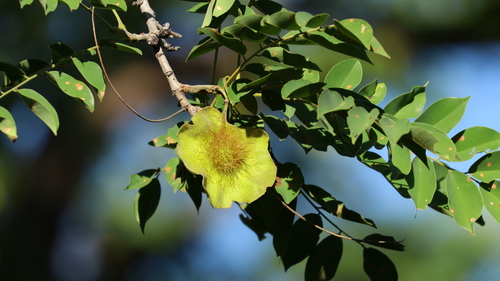
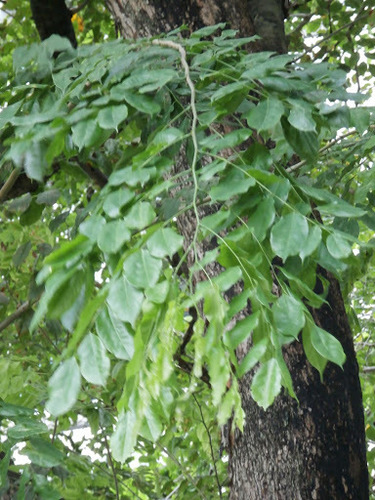
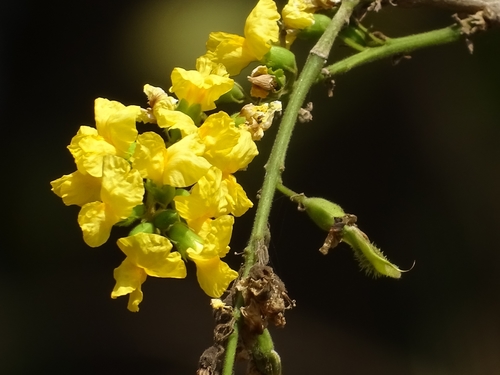
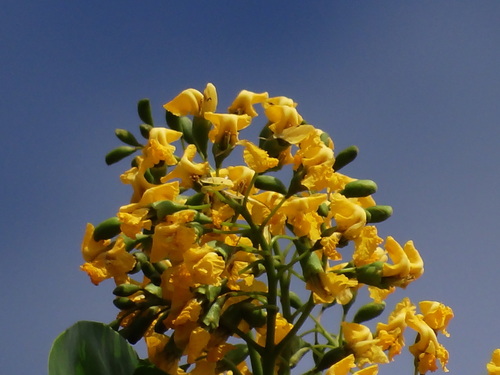
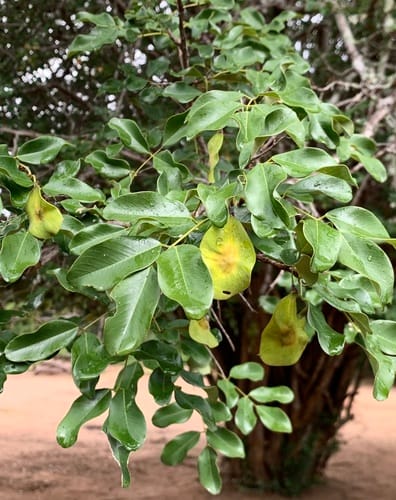
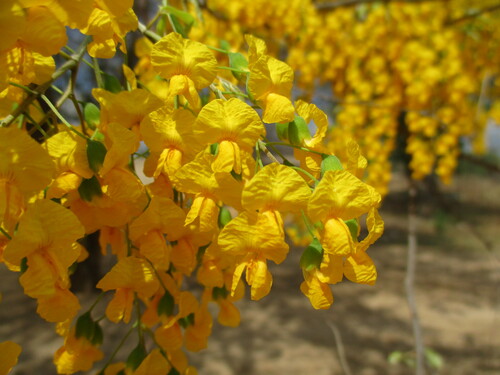
A shrub or small tree. It grows 5 m tall. There are prickles along the stem. The leaves are twice divided and there are 8-18 pairs of pinnae. There are up to 50 pairs of pinnules on each pinnae. The flowers are yellow. They are in large clusters at the ends of branches. The pods are flattened.
Edible Uses
The seeds are eaten.
Traditional Uses
The seed is eaten.
This uses section is brief — help expand it
Distribution
It grows in hot arid places in inland Australia. It grows on sandstone and quartz hills. It can survive some fires. It is very drought tolerant. It can tolerate heavy frosts. It grows on low fertility acid soils. It can grow in arid places.
Where It Grows
Australia*,
Notes
There are about 1,350 Acacia species. Over 1,000 occur in Australia. Also as Mimosaceae.
Synonyms
Also Known As
Irrkuwartaka
References (8)
- Cherikoff V. & Isaacs, J., The Bush Food Handbook. How to gather, grow, process and cook Australian Wild Foods. Ti Tree Press, Australia p 42, 188
- Doran, J.C., & Turnbull, J.W. (Eds), 1997, Australian Trees and Shrubs: species for land rehabilitation and farm plantings in the tropics. ACIAR Monograph No 24. p 349
- J. Adelaide Bot. Gard. 1:183. 1978
- Latz, P., 1996, Bushfires and Bushtucker. IAD. p 107
- Lister, P.R., P. Holford, T. Haigh, and D.A. Morrison, 1996, Acacia in Australia: Ethnobotany and potential food crop. p. 228-236. In: J. Janick (ed.), Progress in new crops. ASHS Press, Alexandria, VA.
Show all 8 references Hide references
- Paczkowska, G . & Chapman, A.R., 2000, The Western Australian Flora. A Descriptive Catalogue. Western Australian Herbarium. p 315
- Pennock, A., et al, Australian Dry-zone Acacias for Human Food: Proceedings of a Workshop.
- World Checklist of Useful Plant Species 2020. Royal Botanic Gardens, Kew