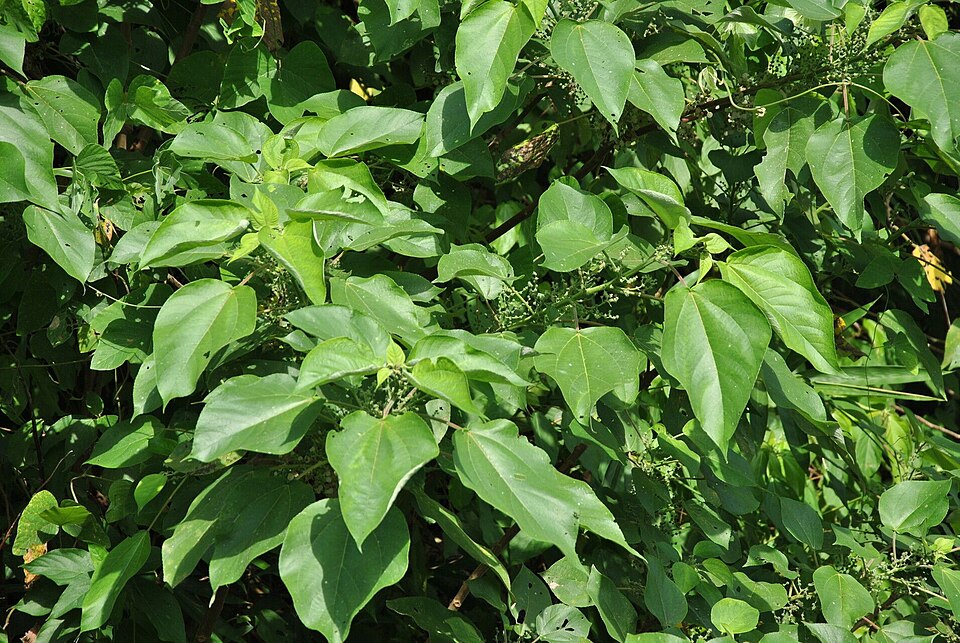
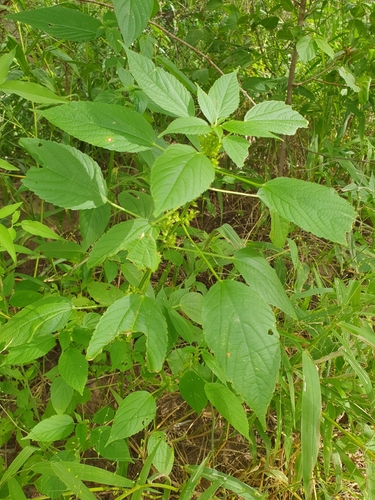
Endospermum peltatum
Merr.
Gubas
iNaturalist· cc-by
(c) pbsg, some rights reserved (CC BY), uploaded by pbsg
iNaturalist· cc-by
(c) pbsg, some rights reserved (CC BY)
Description
A tree. It can grow up to 35 m tall. The lowest branches are often 20 m above the ground. The trunk is 60 cm across. It can have buttresses. The leaves are narrowly oval. They are 11-25 cm long and 9-18 cm wide. They are rounded at the base. Male and female flowers are separate.
Edible Uses
The seeds are eaten and also processed for their oil.
Distribution
It is a tropical plant. It grows from sea level up to 1,000 m above sea level. It grows in the humid tropics and often in disturbed areas.
Where It Grows
Andaman Islands, Asia, Brunei, Indochina, Indonesia, Malaysia, Philippines, SE Asia, Thailand,
Cultivation
Plants are grown from seeds. The fruit are soaked in water and then squashed to remove the seeds. The seeds are then sun dried for 2-3 days. Before sowing, seeds are soaked in water fro 24 hours. Seeds germinate in about 24 days. Plants are best grown from fresh seeds.
Propagation
Seed - the fruits are soaked in water for 24 hours and then macerated to separate the seeds. These are sun dried for 2 - 3 days. Before sowing, the seeds are soaked in water overnight. The seeds are broadcast in raised seed-beds. The highest germination rate (80%) was obtained when using a 1 : 3 mixture of sand and organic topsoil. After sowing, the seeds are covered with about 2 cm of soil, and the seed-bed is mulched with dry grass, and subsequently watered. Usually the seeds start to germinate after about 24 days. Seedlings are potted when they have 2 - 4 leaves (about 20 days after germination) in a sterilized mixture of 50% organic topsoil and 50% sandy loam. Only vigorous seedlings of 20 - 30 cm tall should be planted into the field The seeds can be stored in polyethylene bags at a temperature of 15.5°c. If stored for more than one month, the seeds become dormant and can only be used for sowing in the next season. Seeds buried 30 cm deep retain their viability for more than 9 months.
Other Uses
The heartwood is creamy white to bright yellow; it is not demarcated from the sapwood. The texture is coarse; the grain straight or interlocked, sometimes wavy; the surface lustrous. The wood is very soft; very light in weight; not durable, being susceptible to fungi, dry wood borers and termites. It seasons quickly, with only a slight risk of checking or distortion; once dry it is stable in service. The wood works well with ordinary tools, though the presence of tension wood can cause overheating and blunting of sawblades; there is a risk of woolly surfaces so tools need to be kept sharp; nailing and screwing are poor; gluing is correct. It is an important source of the timber sesendok and is one of the favourite timbers for clogs, pattern making, trays, furniture parts, plywood chests, low grade coffins, disposable chop-sticks and other small articles; and is also used for matchboxes, match splints, drawing boards, black boards and toys. Spiral shavings of the wood are used as core material in the manufacture of a panel locally known in the Philippines as 'placarol' because of their resistance to compression perpendicular to the direction of the spiral The tree is used in reforestation projects.
Also Known As
Buah icras, Bunkul tekaya, Kejo luk long, Ma-poopo, Maram pangi, Takaliu
References (3)
- Fern, K., 2012, Tropical Species Database http://theferns.info/tropical/
- Soerianegara, I. & Lemmens, R. H. M. L., (Eds.) 1993, Timber trees: Major commercial timbers. Plant Resources of South-East Asia. Wageningen. No. 5(1). p 164
- www.worldagroforestrycentre.org/sea/products/afdbases/af/asp/SpeciesInfo.asp?SpID=18152