Cephalocroton mollis
Klotzsch
iNaturalist· cc-by-nc
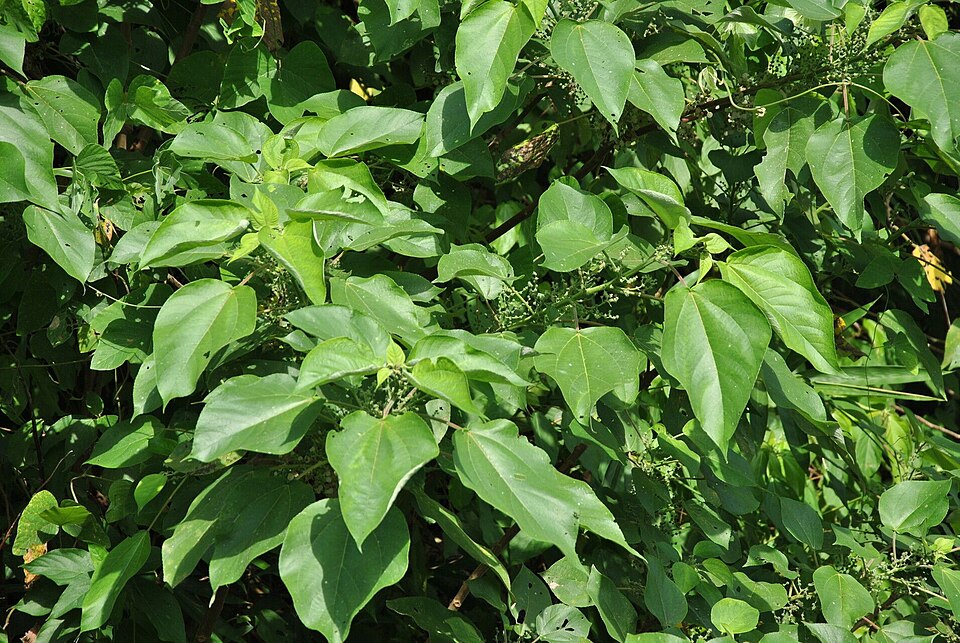
(c) Riana Fourie, some rights reserved (CC BY-NC), uploaded by Riana Fourie
iNaturalist· cc-by-nc
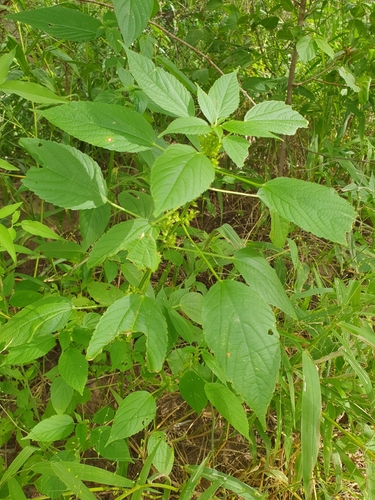
(c) Judy Flatt, some rights reserved (CC BY-NC)
Description
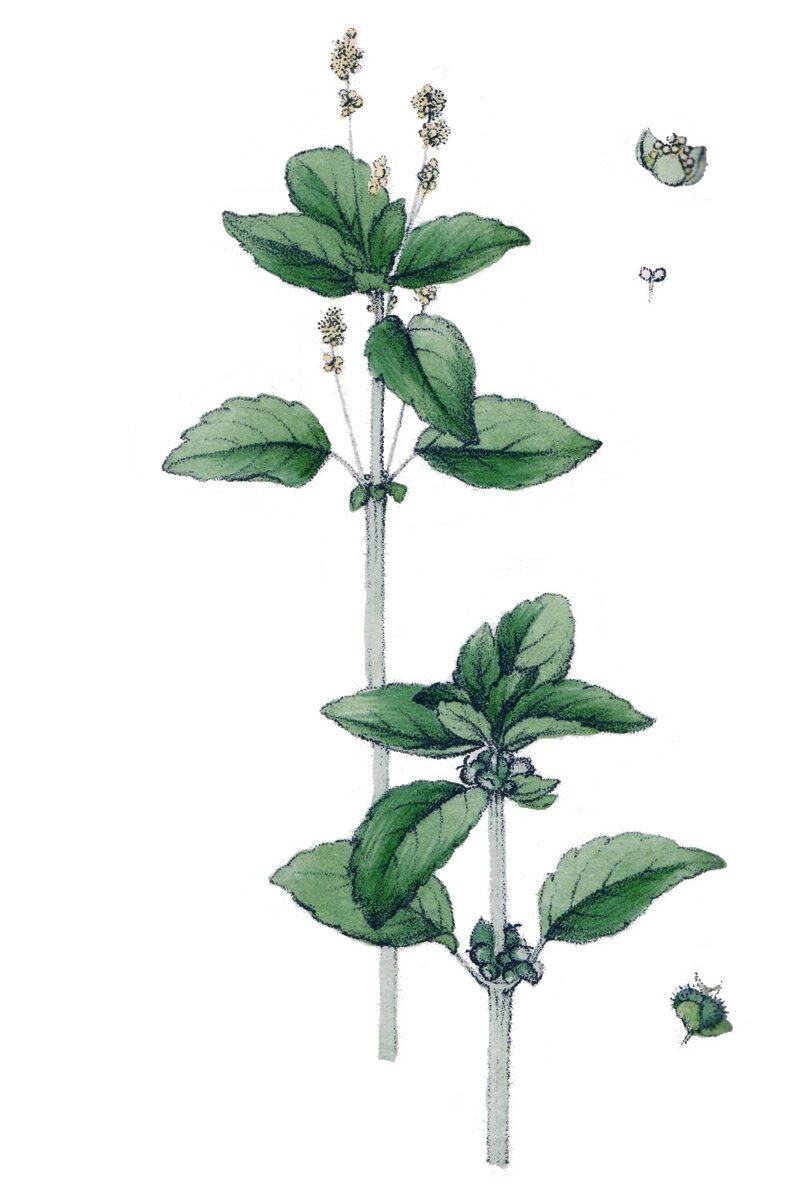
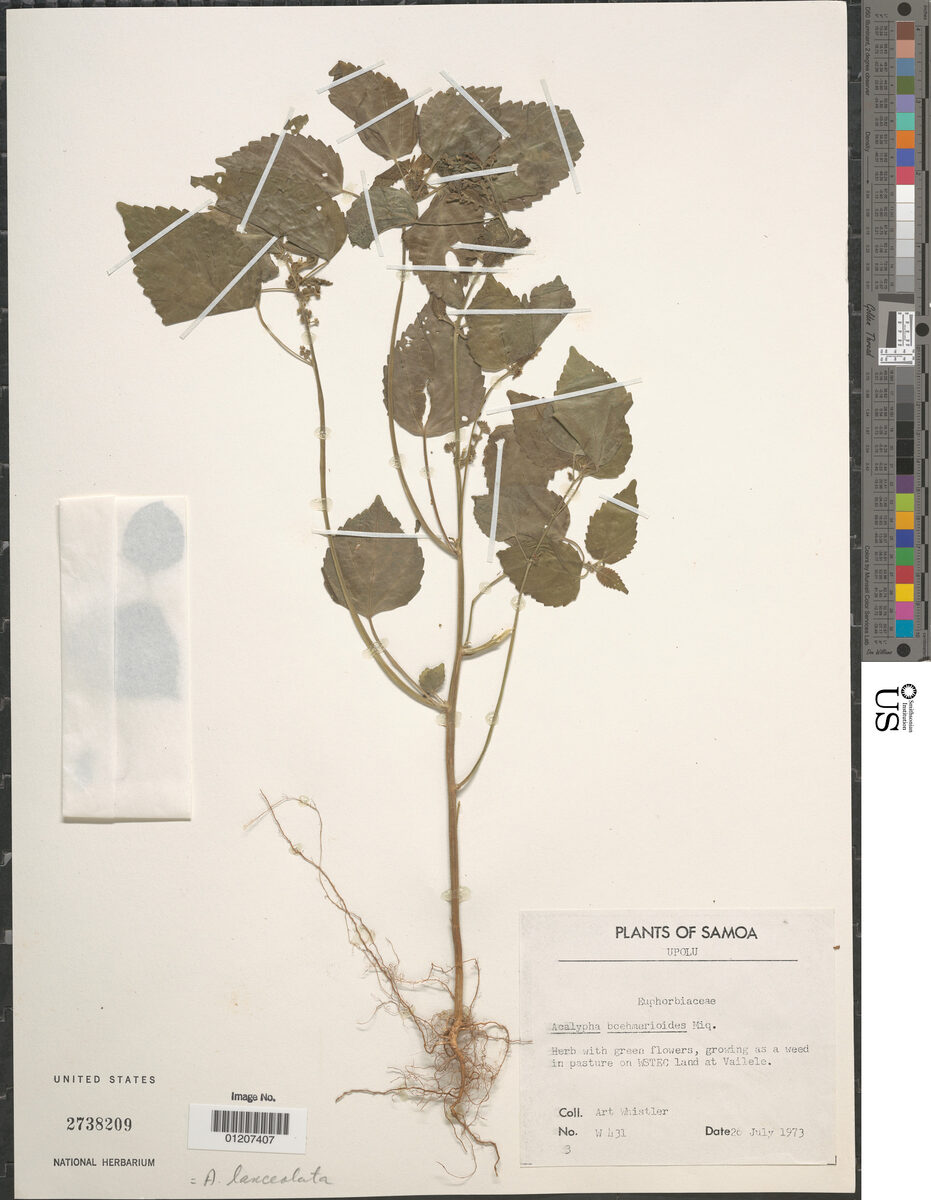
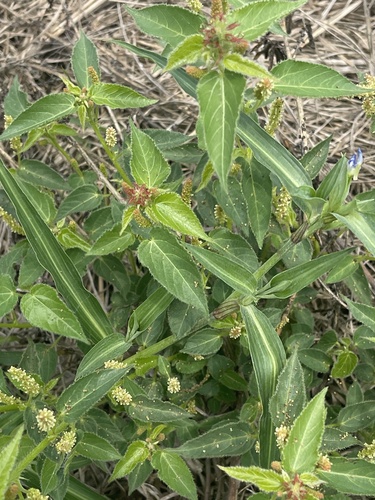
A herb. It can be a small shrub with several stems. It has underground stems or rhizomes. It can grow 3.6 m high. It has a woody rootstock. The new stems have hairs. The leaf blades can be 1-11 cm long by 1-5 cm wide. They are narrowly oval. The flowers are in clusters at the ends of branches. They are white with yellow stamens. The male flower head is 2 cm across. There is a ring of 1-4 female flowers at its base. The fruit are 1 cm long by 1.5 cm wide. It is a woody capsule. They are green and hairy. The seeds are 6-8 mm across and light brown.
Edible Uses
Seed - raw. The papery seedcoat is usually removed. The whitish kernel has a flavour somewhat like peanuts. The small sed is eaten as a wayside nibble.
Traditional Uses
The kernel of the seeds is eaten raw. The root tubers are occasionally eaten.
This uses section is brief — help expand it
Medicinal Uses
A decoction of the root is used to induce menstruation in young women whose first menstruation is considered to be overdue.
Distribution
It is a subtropical plant. It grows in hot arid areas. It needs deep, well-drained sandy soils or loams. It grows between 25-1,100 m above sea level. It can grow in arid places.
Where It Grows
Africa, Botswana, East Africa, Malawi, Mozambique, Namibia, South Africa, Southern Africa, Tanzania, Zimbabwe,
Cultivation
A plant of drier areas in the tropics and subtropics, where it can be found at elevations from 335 - 1,066 metres. Requires a sunny position. The plant is found in the wild mainly in sandy soils.
Other Information
The seeds have a pleasant nutty flavour and are a valued snack.
Synonyms
Also Known As
Mogehu, n/enagu, Ondete
References (10)
- Fox, F. W. & Young, M. E. N., 1982, Food from the Veld. Delta Books. p 197
- Lee, 1979,
- Maguire, 1978,
- Peters, C. R., O'Brien, E. M., and Drummond, R.B., 1992, Edible Wild plants of Sub-saharan Africa. Kew. p 109
- Royal Botanic Gardens, Kew (1999). Survey of Economic Plants for Arid and Semi-Arid Lands (SEPASAL) database. Published on the Internet; http://www.rbgkew.org.uk/ceb/sepasal/internet [Accessed 16th April 2011]
Show all 10 references Hide references
- Ruiters-Welcome, A. K., 2019, Food plants of southern Africa. Ph.D. thesis. Univ. of Johannesburg p 54
- Tanaka, 1980,
- Welcome, A. K. & Van Wyk, B.-E., 2019, An inventory and analysis of the food plants of southern Africa. South African Journal of Botany 122 (2019) 136–179
- Wild, 1975,
- World Checklist of Useful Plant Species 2020. Royal Botanic Gardens, Kew