Momordica boivinii
Baill.
iNaturalist· cc-by-nc
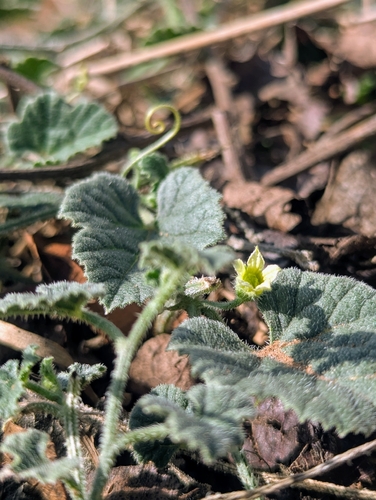
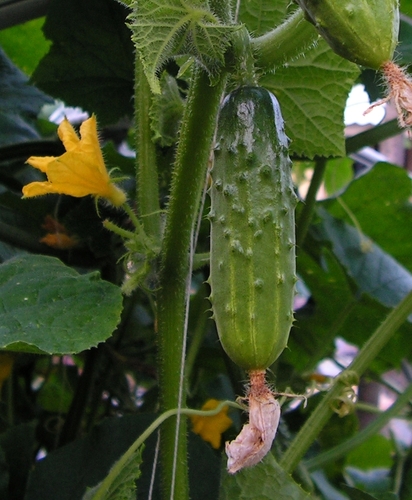
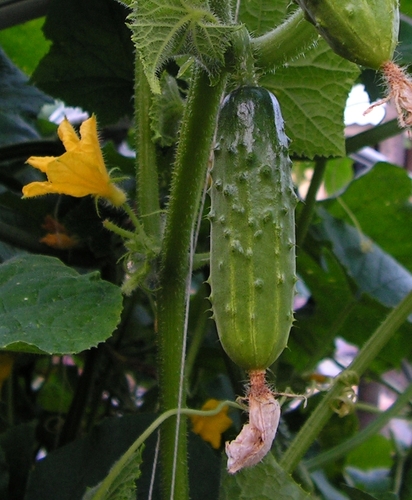
(c) Troos van der Merwe, some rights reserved (CC BY-NC), uploaded by Troos van der Merwe
iNaturalist· cc-by-nc
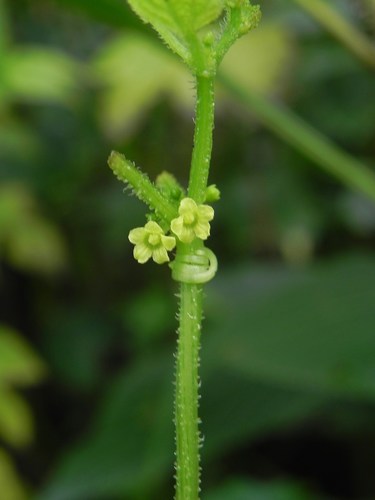
(c) Moira FitzPatrick, some rights reserved (CC BY-NC)
iNaturalist· cc-by-nc
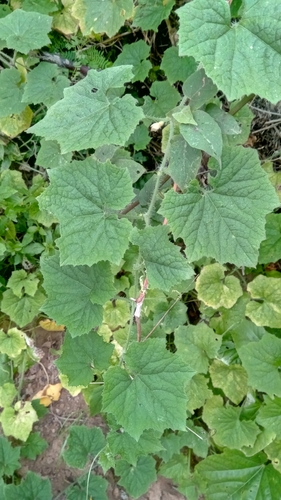
(c) rguinness, some rights reserved (CC BY-NC)
Description
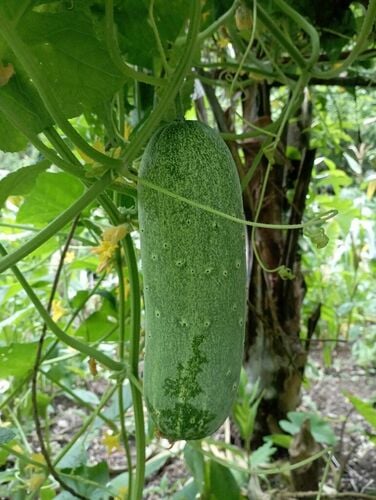
An annual herb. It climbs by tendrils. These are not branched It grows from a tuberous rootstock. The stems can be 5 m long. The leaves are alternate. They are about 3 cm long by 3 cm wide. They are shallowly divided into 3 lobes. Male and female flowers can be on the same plant or on separate plants. The flowers are orange. There are 1 or 2 female flowers in the axils of leaves. The male flowers are in clusters of 2-5. The fruit is cylinder shaped and 3 cm long by 4 mm wide. It has 2 seeds.
Edible Uses
The leaves are used as a flavouring and as a potherb.
Traditional Uses
The leaves are used as a flavouring and as a potherb. They are also considered a medicine.
This uses section is brief — help expand it
Medicinal Uses
The leaves are considered a medicine.
Distribution
It is a tropical plant. It can grow in stony or sandy soils as well as clays and loams. It grows in woodland. It grows between 300-1,950 m above sea level. It can grow in arid places.
Where It Grows
Africa, Angola, Botswana, Central Africa, East Africa, Eswatini, Ethiopia, Kenya, Malawi, Mozambique, Namibia, Somalia, South Africa, Southern Africa, Swaziland, Tanzania, Uganda, Zambia, Zimbabwe,
Synonyms
Also Known As
Mbandatshilale, Namgoneka, Nyapiringulule
References (11)
- East African Herbarium records, 1981,
- Fowler, D. G., 2007, Zambian Plants: Their Vernacular Names and Uses. Kew. p 22
- Glover, et al, 1969,
- Magwede, K., van Wyk, B.-E., & van Wyk, A. E., 2019, An inventory of Vhavenḓa useful plants. South African Journal of Botany 122 (2019) 57–89
- Njoroge, G. & Newton, L. E. 1994, Edible and Poisonous Species of Cucurbitaceae in the Central Highlands of Kenya. Journal of East African Natural History. 83:101-115
Show all 11 references Hide references
- Peters, C. R., O'Brien, E. M., and Drummond, R.B., 1992, Edible Wild plants of Sub-saharan Africa. Kew. p 102
- Royal Botanic Gardens, Kew (1999). Survey of Economic Plants for Arid and Semi-Arid Lands (SEPASAL) database. Published on the Internet; http://www.rbgkew.org.uk/ceb/sepasal/internet [Accessed 16th April 2011]
- Ruiters-Welcome, A. K., 2019, Food plants of southern Africa. Ph.D. thesis. Univ. of Johannesburg p 50
- Swaziland's Flora Database http://www.sntc.org.sz/flora
- Welcome, A. K. & Van Wyk, B.-E., 2019, An inventory and analysis of the food plants of southern Africa. South African Journal of Botany 122 (2019) 136–179
- World Checklist of Useful Plant Species 2020. Royal Botanic Gardens, Kew