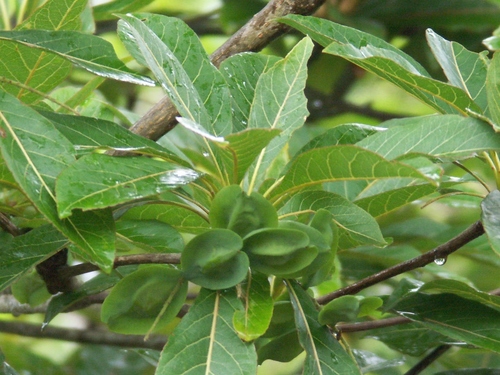
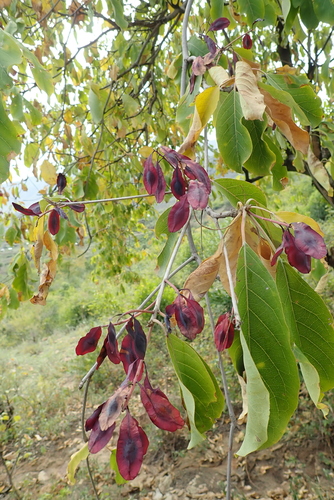
Combretum mossambicense
(Klotzsch) Engl.
Knobbly bushwillow, Shaving-brush combretum
iNaturalist· cc-by
(c) Ryan van Huyssteen, some rights reserved (CC BY), uploaded by Ryan van Huyssteen
iNaturalist· cc-by-nc
(c) Troos van der Merwe, some rights reserved (CC BY-NC)
iNaturalist· cc-by-nc
(c) Troos van der Merwe, some rights reserved (CC BY-NC)
Summary
Source: WikipediaCombretum mossambicense is a climbing shrub occurring in Eastern Zambia, Zimbabwe and Mozambique.
Description
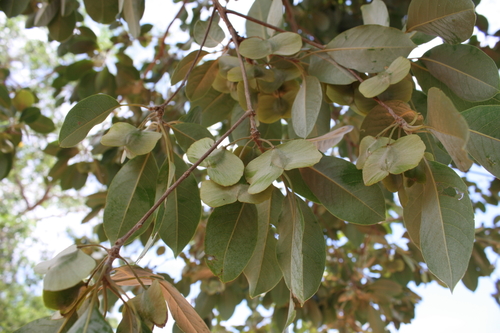
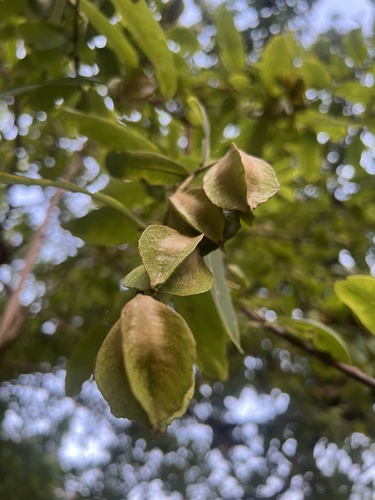
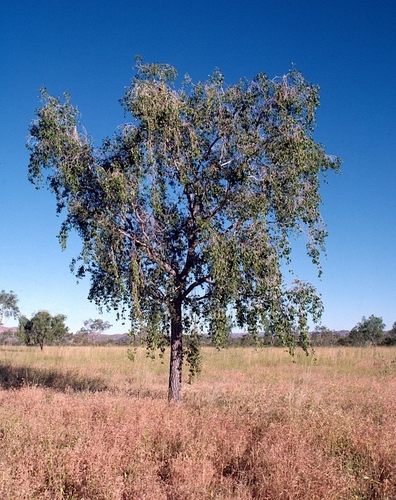
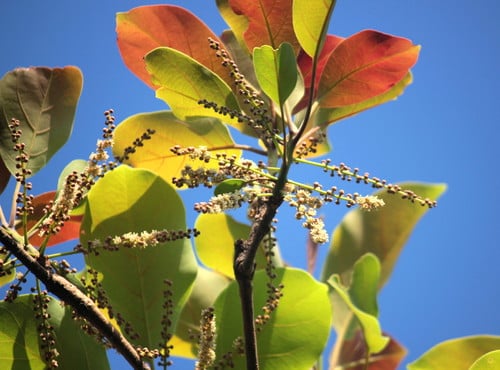
A small tree or a woody climber. It loses its leaves during the year. The flowers usually develop before the leaves. The bark is grey to brown. The small branches are often pale. The leaves are opposite. The leaf blade can be 20 cm long by 11 cm wide. It is often smaller. It is papery to leathery. They are oval and hairy when young. They taper to the tip and are rounded at the base. There is a curved spine on the leaf stalk. The flowers are in spikes in the axils of the leaves. These are 5 cm long. The flowers are pink or white. The fruit have 5 wings and are 2-3 cm long by 2-2.5 cm wide. They are oval and hairy.
Edible Uses
The fruit is eaten raw.
Traditional Uses
The fruit is eaten raw.
This uses section is brief — help expand it
Medicinal Uses
The roots and leaves, combined with the roots and leaves of Acalypha villicaulis, are crushed and boiled in plenty of water - the extract produced is used to steam the face to reduce swelling caused by a tooth abscess, or for eye inflammations. Hot compresses are also made from the dregs. The extract is also used for gargling or eye baths, or it is tossed onto red-hot coals and the steam is used to ease swollen body parts. The liquid can also be rubbed into small scratches over the affected areas.
Distribution
It is a tropical plant. It grows in dry shrub savanna. In Zimbabwe it grows up to 1,200 m above sea level. It grows on termite mounds in hot dry areas. It can grow in arid places.
Where It Grows
Africa, Angola, Botswana, Central Africa, East Africa, Malawi, Mozambique, Namibia, South Africa, Southern Africa, Zambia, Zimbabwe,
Cultivation
Found mainly in the drier areas of the tropics and subtropics, where it can be found at elevations up to 1,675 metres. Plants can tolerate at lease some frost. They can tolerate temperatures ranging from about -4°c up to 40°c, perhaps even higher. Grows best in a sunny position. Prefers a fertile, well-drained soil that is rich in organic matter. Established plants are fairly drought resistant. A moderately fast-growing plant. Plants can be pruned back heavily into the old wood if required.
Propagation
Seed - The seed of most, if not all, species can be stored inside the fruit for several years without losing viability.
Synonyms
Also Known As
Ecotamo, Fune-funte, Marorwe, Mubondorokoto
References (8)
- Flora Zambesiaca. http://apps.kew.org/efloras
- Grivetti, L. E., 1980, Agricultural development: present and potential role of edible wild plants. Part 2: Sub-Saharan Africa, Report to the Department of State Agency for International Development. p 71
- Peters, C. R., O'Brien, E. M., and Drummond, R.B., 1992, Edible Wild plants of Sub-saharan Africa. Kew. p 86
- Pickering, H., & Roe, E., 2009, Wild Flowers of the Victoria Falls Area. Helen Pickering, London. p 50
- Roodt, V., 1998, Trees & Shrubs of the Okavango Delta. Medicinal Uses and Nutritional value. The Shell Field Guide Series: Part 1. Shell Botswana. p 107
Show all 8 references Hide references
- Scudder, 1971,
- World Checklist of Useful Plant Species 2020. Royal Botanic Gardens, Kew
- www.zimbabweflora.co.zw 2011