Capparis cartilaginea
Decne
iNaturalist· cc-by
(c) Helena, some rights reserved (CC BY)
iNaturalist· cc-by-nc
(c) Morten Ross, some rights reserved (CC BY-NC), uploaded by Morten Ross
iNaturalist· cc-by
(c) Helena, some rights reserved (CC BY)
Description
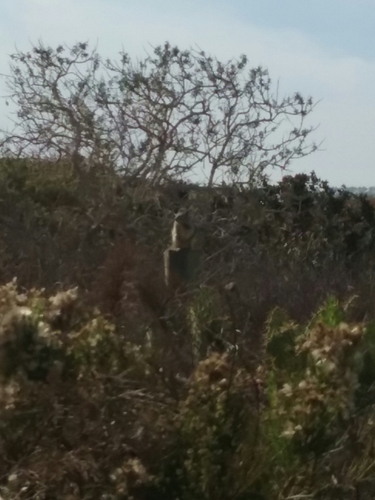
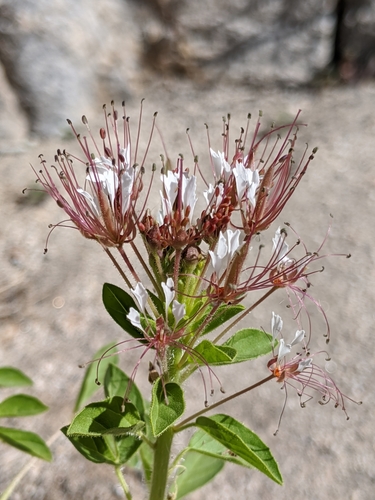
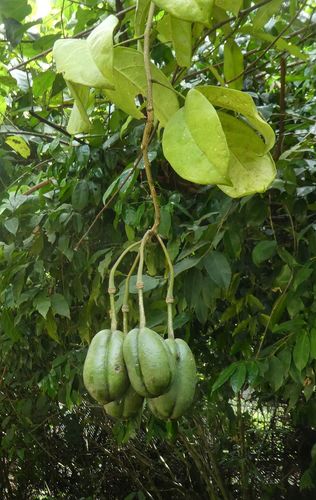
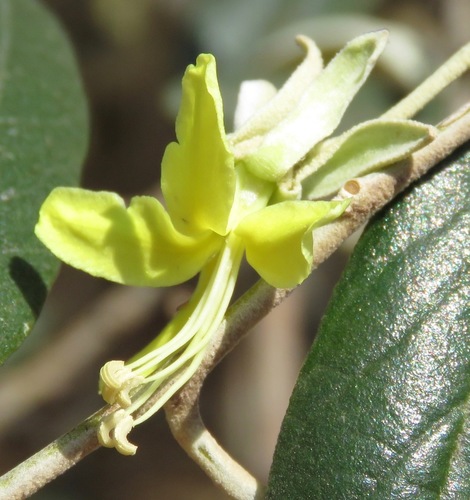
A scrambling shrub. It can hang from rocks. It is fleshy with short crooked branches. It can grow to 4 m high. The leaves are oval and 2-6 cm long by 2-6 cm wide. They are fleshy. The flowers occur singly in the axils of leaves. They are large and white and unequal. The flowers stalk is stout and 4-5 cm long. The fruit is oval and 3-5 cm long and 2-3 cm wide. It can be reddish and ribbed. It has many seeds in a pulp.
Edible Uses
The fruit is eaten raw after removing the bitter skin. The flowers are cooked as a vegetable. The sweet seeds provide sugar.
Traditional Uses
The fruit are eaten raw. The bitter skin is removed. The flowers are cooked as a vegetable. The seeds are sweet and provide sugar.
This uses section is brief — help expand it
Distribution
A Mediterranean plant. It grows near the coast. It grows from sea level to 1,800 m altitude. It can grow in alkaline soil. It can grow in salty soils. It can grow in arid places.
Where It Grows
Africa, East Africa, Egypt - Sinai, Eritrea, Ethiopia, India, Iran, Iraq, Israel, Kenya, Mediterranean, Middle East, North Africa, Oman, Pakistan, Saudi Arabia, Seychelles, Sinai, Somalia, Sudan, Tanzania, Yemen,
Notes
There are about 250 Capparis species. There are about 50 Capparis species in tropical America.
Synonyms
Also Known As
Ankuyis, Delensisa, Gorra, Jarra, Lasaf, Lassaf, Lokapilak
References (9)
- Asfaw, Z. and Tadesse, M., 2001, Prospects for Sustainable Use and Development of Wild Food Plants in Ethiopia. Economic Botany, Vol. 55, No. 1, pp. 47-62
- Bahru, T., et al, 2013, Wild Edible Plants: Sustainable Use and Management by Indigenous Communities in and the Buffer Area of Awah National Park, Ethiopia. Ethiop. J. Sci., 36(2): 93-108
- Bailey, C. and Danin, A., 1981, Bedouin Plant Utilization in Sinai and the Negev. Economic Botany 35(2): 145-162
- East African Herbarium records, 1981,
- Miller, A. G., Morris, M. & Stuart-Smith, S., 1988, Plants of Dhofar. The Southern Region of Oman, Traditional, Economic and Medicinal Uses. Sultanate of Oman. p 92
Show all 9 references Hide references
- Peters, C. R., O'Brien, E. M., and Drummond, R.B., 1992, Edible Wild plants of Sub-saharan Africa. Kew. p 76
- Royal Botanic Gardens, Kew (1999). Survey of Economic Plants for Arid and Semi-Arid Lands (SEPASAL) database. Published on the Internet; http://www.rbgkew.org.uk/ceb/sepasal/internet [Accessed 7th April 2011]
- Seidemann J., 2005, World Spice Plants. Economic Usage, Botany, Taxonomy. Springer. p 79 (Synonyms confused)
- World Checklist of Useful Plant Species 2020. Royal Botanic Gardens, Kew