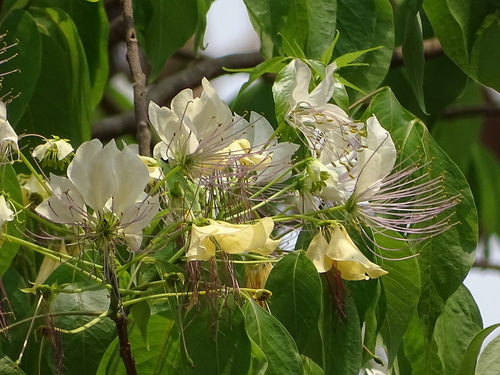
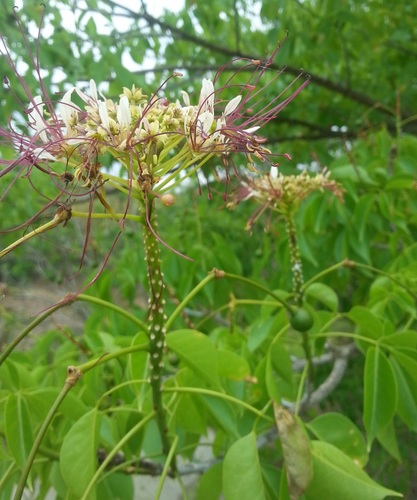
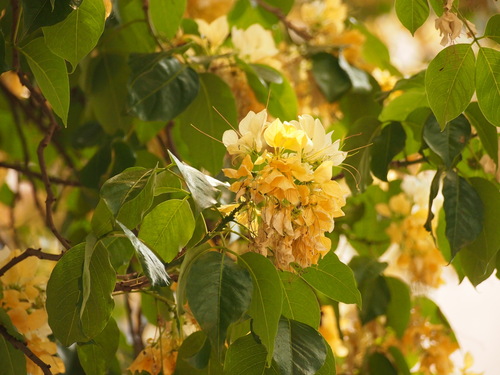
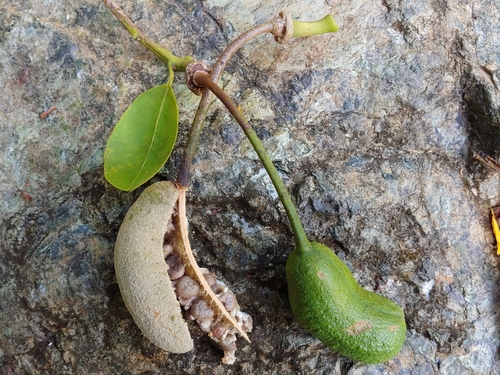
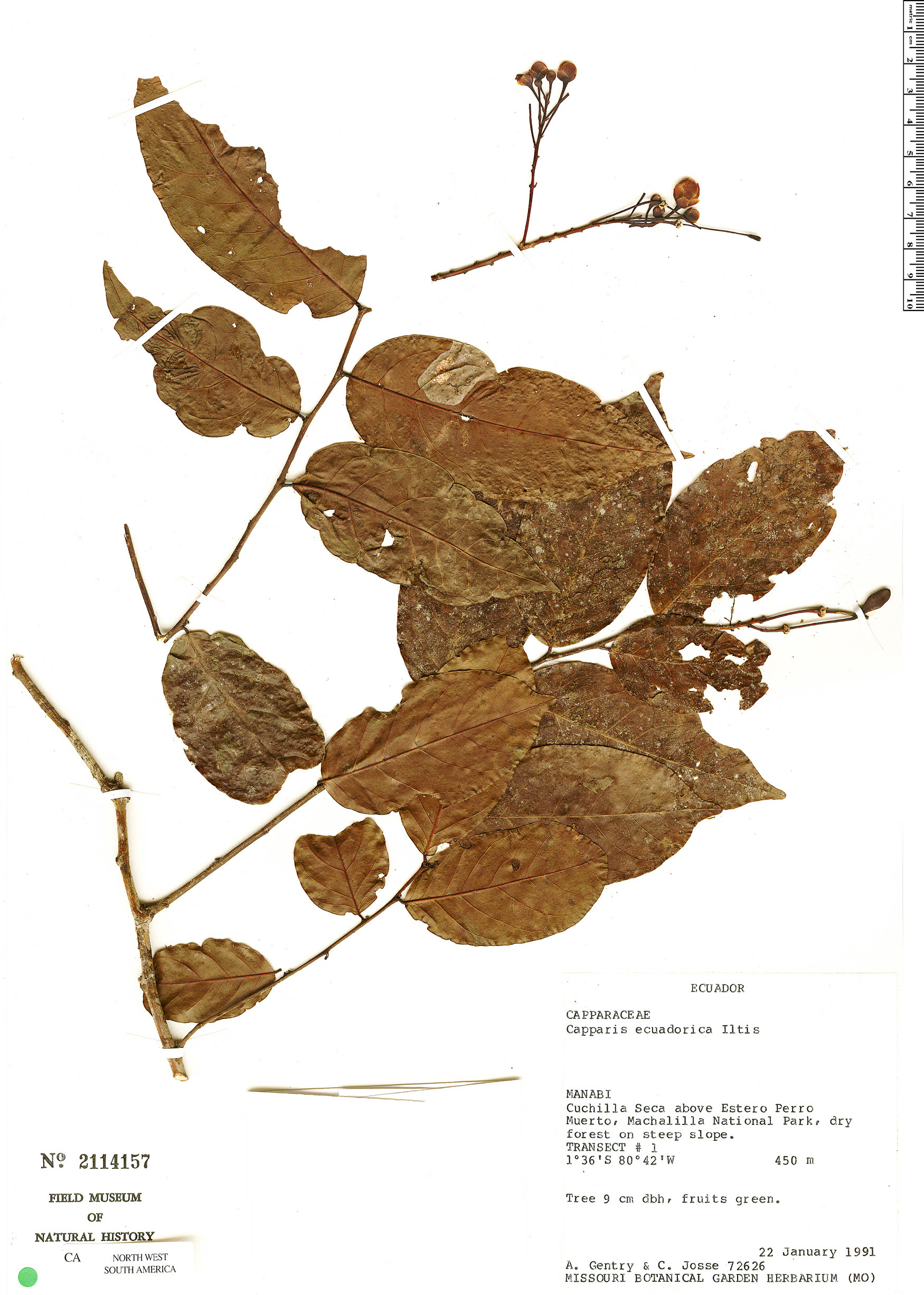
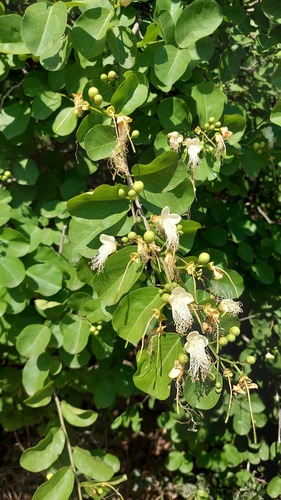
Capparis petiolaris
Kunth
Achora, Shora
Capparaceae Edible: Fruit
gbif· cc-by-nc
Pablo Carrillo-Reyes
gbif· cc-by-nc
Pablo Carrillo-Reyes
gbif· cc-by-nc
Pablo Carrillo-Reyes
Description
A small tropical tree in the Capparaceae family that grows 5–8 m tall. It is a cultivated food plant and can be used as a living fence or hedge.
This description is brief — help expand it
Edible Uses
The sweet fruit pulp is eaten raw.
Traditional Uses
The fruit pulp is sweet and is eaten raw.
This uses section is brief — help expand it
Distribution
It is a tropical plant.
Where It Grows
Andes, Bolivia, Ecuador, Peru, South America,
Cultivation
It can be used for a living fence or hedge.
Other Information
It is a cultivated food plant.
Notes
There are about 250 Capparis species. There are about 50 Capparis species in tropical America.
Synonyms
Baccapparis petiolaris (Kunth) H. H. IltisCapparidastrum petiolare (Kunth) Hutch.Capparis laurina KunthCapparis macrocarpa Ruiz & Pav. ex DC.Capparis millei Standl.Capparis prisca J. F. Macbr.
Also Known As
Achora, Anona de monte, Arasa, Bentsele, Chora, Illa, Pacobilla, Urana
References (7)
- Carretero, A. L., 2005, Useful Plants and traditional knowledge in the Tucumano-Boliviano Forest. M. Sc. Thesis Institute of Biological Science University of Aarhus, Denmark p 53 (As Capparis prisca)
- Kermath, B. M., et al, 2014, Food Plants in the Americas: A survey of the domesticated, cultivated and wild plants used for Human food in North, Central and South America and the Caribbean. On line draft. p 175
- Smith, N., Mori, S.A., et al, 2004, Flowering Plants of the Neotropics. Princeton. p 83 (As Capparis prisca)
- Torre, de la, L., et al, 2008, Enciclopedia de las Plantas Útiles del Ecuador. Herbario QCA. Pontificia Universidad Católica del Ecuador. p 274
- Van den Eynden, V., et al, 2003, Wild Foods from South Ecuador. Economic Botany 57(4): 576-603
Show all 7 references Hide references
- Van den Eynden, V., 2004, Use and management of edible non-crop plants in southern Ecuador, Ph D dissertation. p 108
- Vasquez, Roberto Ch. & Coimbra, German S., 1996, Frutas Silvestres Comestibles de Santa Cruz. p 82 (As Capparis prisca)