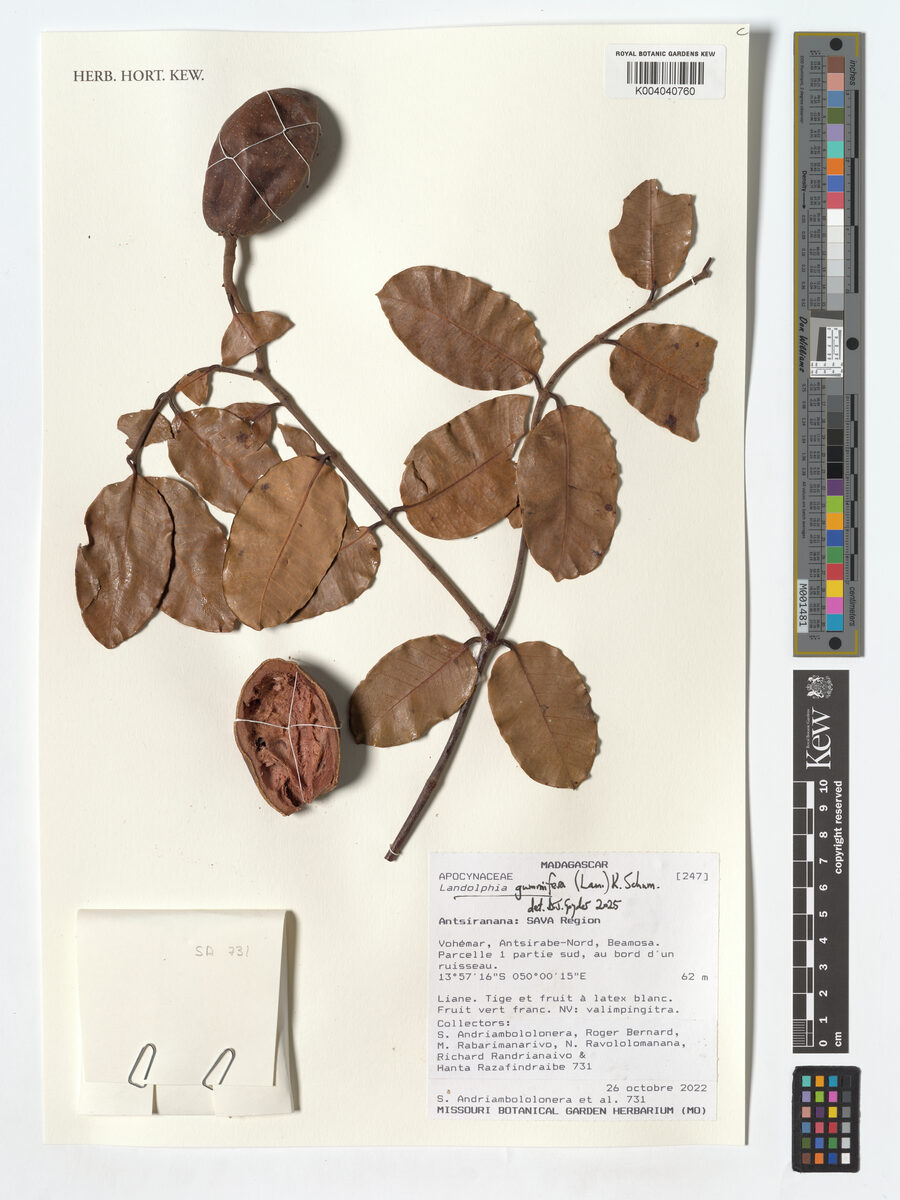
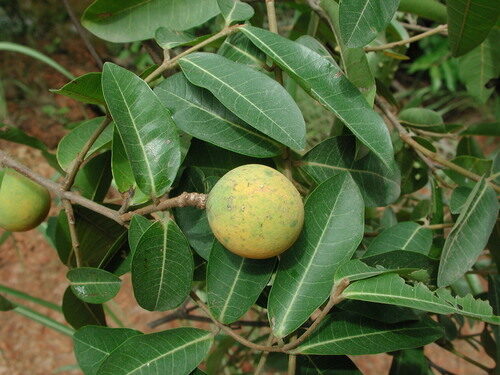
Cynanchum hastifolium subsp. hastifolium
N. E. Br., (N. E. Br.) Liede
Gesuriat
Apocynaceae Edible: Fruit
gbif· cc-by
Royal Botanic Gardens, Kew
gbif· cc-by
Royal Botanic Gardens, Kew
gbif· cc-by
Royal Botanic Gardens, Kew
Description
A twining climbing plant. It can grow up to 1 m tall. The flower buds are 3-4 mm long. The flower follicles hang down and are 6-10 cm long by 1-1.5 cm wide.
Edible Uses
The fruit are boiled in milk.
Traditional Uses
The fruit are boiled in milk.
This uses section is brief — help expand it
Distribution
It is a tropical plant. It grows in West Africa between 200-1,600 m altitude in bushland.
Where It Grows
Africa, Burkina Faso, East Africa, Eritrea, Ethiopia, Kenya, Mali, Mauritania, Niger, Sahel, Senegal, Somalia, Tanzania, Uganda, West Africa,
Notes
Also put in the family Asclepiadaceae.
Synonyms
Cynanchum clavidens N. E. Br.Cynanchum hastifolium N. E. Br.
Also Known As
Shubkax
References (3)
- Liede, S., 1996, A revision of the Cynanchum (Asclepiadaceae) in Africa. Annals of the Missouri Botanical Gardens. 83(3): 306 (As Cynanchum clavidens subsp. hastifolium)
- Morgan, W. T. W., 1981, Ethnobotany of the Turkana: Use of plants by a Pastoral People and Their Livestock in Kenya. Economic Botany 35(1):96-130 (As Cynanchum clavidens subsp. hastifolium)
- Peters, C. R., O'Brien, E. M., and Drummond, R.B., 1992, Edible Wild plants of Sub-saharan Africa. Kew. p 63 (As Cynanchum clavidens subsp. hastifolium)