Anisophyllea boehmii
Engl.
Mufungo
gbif· cc-by
Meise Botanic Garden
gbif· cc-by
Royal Botanic Gardens, Kew
gbif· cc-by
Royal Botanic Gardens, Kew
Description
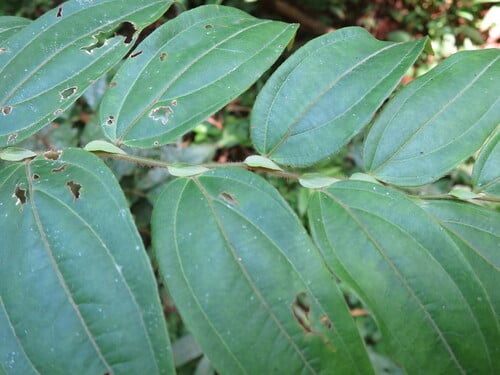
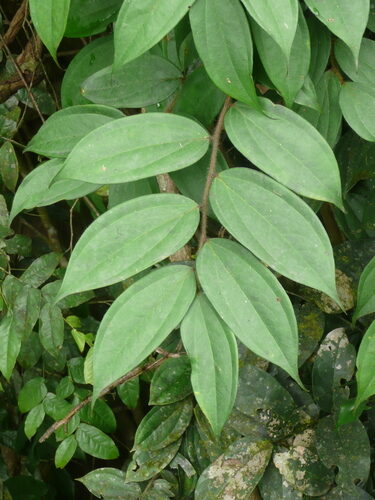
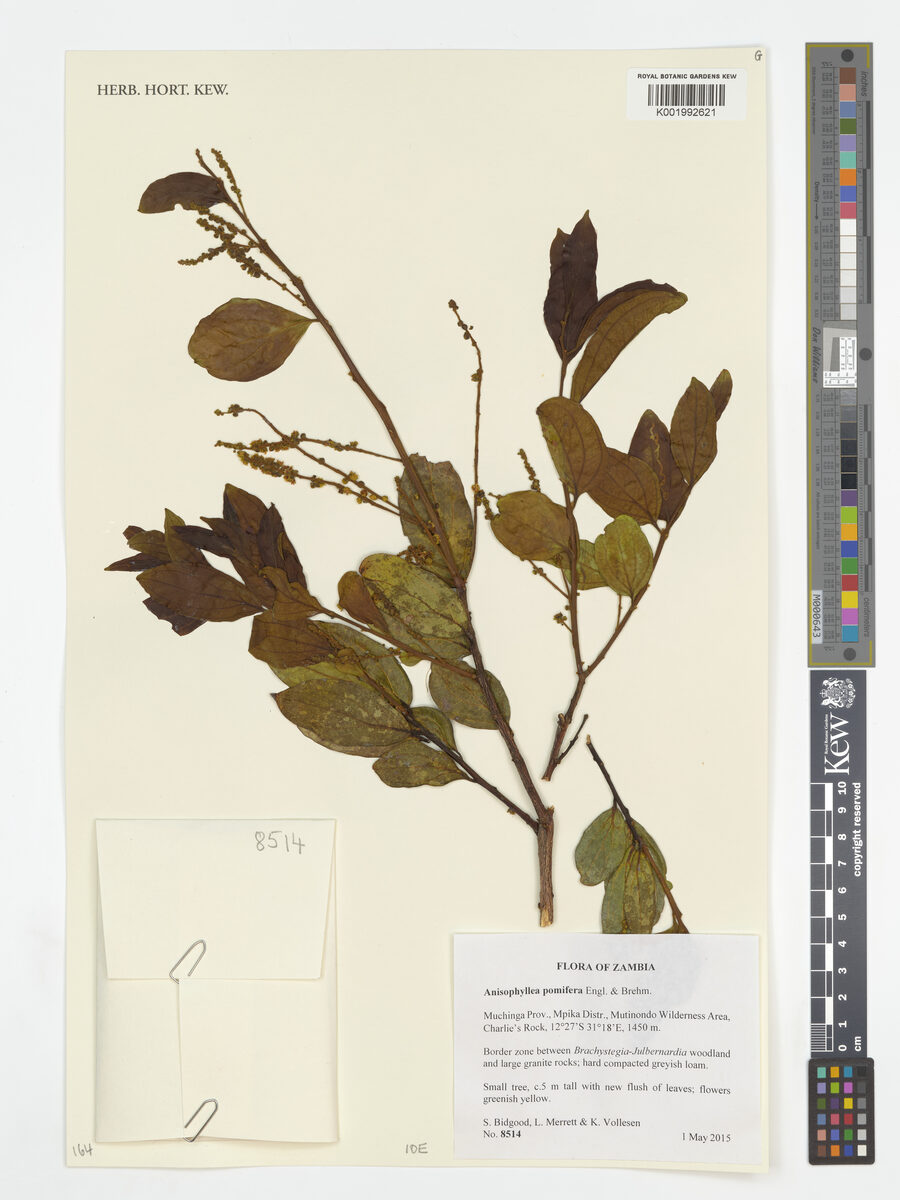
An evergreen shrub or tree. It can grow 10 m high. The trunk is short and crooked. The young branches are bright red. The crown is round and heavy. The bark becomes cracked and flaky. The leaves and thin and leathery. There are fine hairs on both sides. The leaf blade is 5-10 cm long by 2-5 cm wide. They are usually oval. The flowers are bisexual and have 4-5 flower parts. They are cream coloured. The fruit is 3.5 cm long by 2 cm wide. They are narrowly oval and edible. They are red coloured.
Edible Uses
Fruit - raw. The fully ripe fruits are sweet and are often eaten by travellers to quench the thirst and ease hunger. The ellipsoid, plum-coloured fruit is about 35mm long and 20mm in diameter. It has a pale yellow flesh that contains a hard stone around a single seed.
Traditional Uses
The flesh of the ripe fruit is eaten but not the seeds.
This uses section is brief — help expand it
Distribution
It is a tropical plant. It grows on sandy or corky soils in woodland. It grows at about 1,300 m altitude. It grows in Miombo woodland. In Tanzania it grow between 900-1,100 m above sea level in areas with 800-1,000 mm rainfall.
Where It Grows
Africa, Angola, Central Africa, Congo, Congo DR, East Africa, Malawi, Mozambique, Tanzania, Zambia, Zimbabwe,
Cultivation
It can be grown from seeds but seeds are difficult to germinate. It can be grown from root suckers.
Propagation
Seed - it germinates with difficulty. Root suckers are an easy way of propagating the plant.
Other Uses
Ash from the wood is used as an insecticide for stalk borers. The wood is used for tool handles and poles. The wood is used for fuel.
Production
Fruit are collected between April and June in Tanzania.
Other Information
Fruit are occasionally sold in local markets.
Notes
It has also been put in the family Rhizophoraceae.
Nutrition
| Part | Moisture | kJ | kcal | Protein | Vit A | Vit C | Iron | Zinc |
|---|---|---|---|---|---|---|---|---|
| Fruit | 74 | 322 | 77 | 0.6 | — | — | — | — |
Also Known As
Kifukufuku, Lusindwi, Mnemvi, Mnyemvi, Mshindwi, Mufungo, Mufungu, Umushindwi, Umusindwe
References (14)
- Akinnifesi, F. K., et al, 2006, Towards the development of Miombo fruit trees as commercial crops in Southern Africa. Forests, Trees and Livelihoods. Vol. 16 pp 1-3-121
- Flora Zambesiaca. http://apps.kew.org/efloras
- Fowler, D. G., 2007, Zambian Plants: Their Vernacular Names and Uses. Kew. p 8
- Global Plants JSTOR
- Kakeya. 1976,
Show all 14 references Hide references
- Le Houerou, H. N., (Ed.), 1980, Browse in Africa. The current state of knowledge. International Livestock Centre for Africa, Ethiopia. p 163
- Malaisse, F., 1997, Se nourrir en floret claire africaine. Approche ecologique et nutritionnelle. CTA., p 57
- Malaisse, F., 2010, How to live and survive in Zambezian open forest (Miombo Ecoregion). Les Presses Agronomiques de Gembloux.
- Mpasiwakomu, R. A., 2017, The Diversity and Utilization of Wild Edible and Medicinal Plant Species found in Uvinza Miombo Woodlands, Tanzania. M. Sc. thesis University of Tanzania.
- Peters, C. R., O'Brien, E. M., and Drummond, R.B., 1992, Edible Wild plants of Sub-saharan Africa. Kew. p 53
- Ruffo, C. K., Birnie, A. & Tengnas, B., 2002, Edible Wild Plants of Tanzania. RELMA p 130
- The Digital Flora of Central Africa, 2013, (Democratic Republic of Congo, Rwanda & Burundi) Botanical Garden Meise
- Williamson, 1972,
- World Checklist of Useful Plant Species 2020. Royal Botanic Gardens, Kew