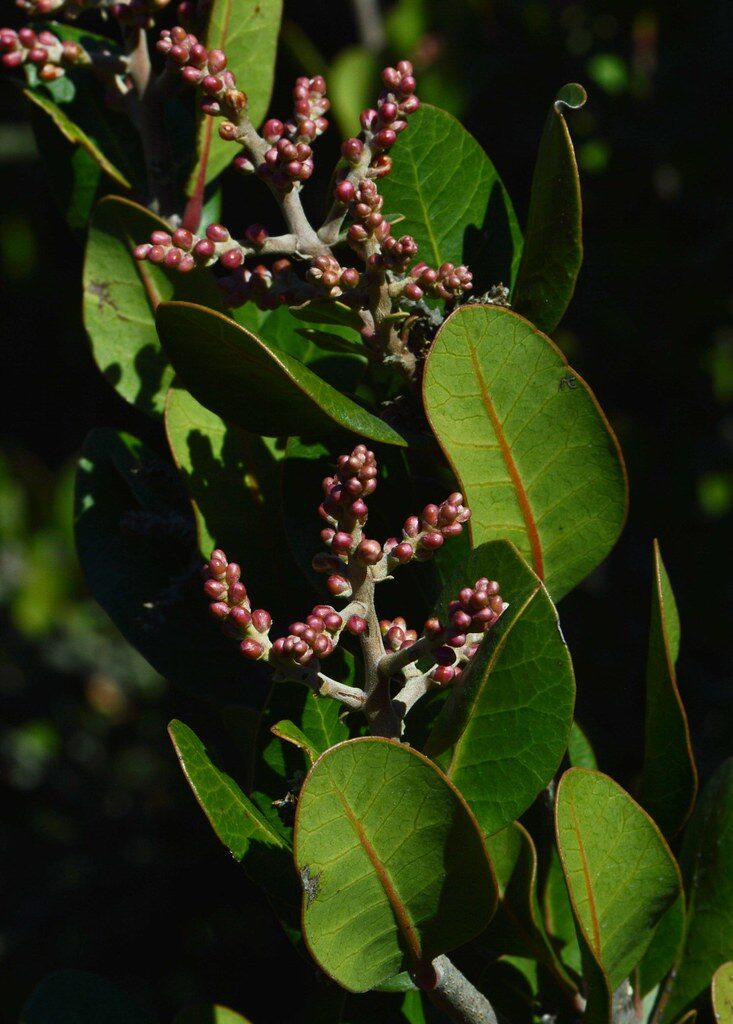
Searsia ruspolii
(Engl.) Moffett
Tami
iNaturalist· cc-by-nc
(c) Odile Weber, some rights reserved (CC BY-NC), uploaded by Odile Weber
iNaturalist· cc-by-nc
(c) Odile Weber, some rights reserved (CC BY-NC)
Description
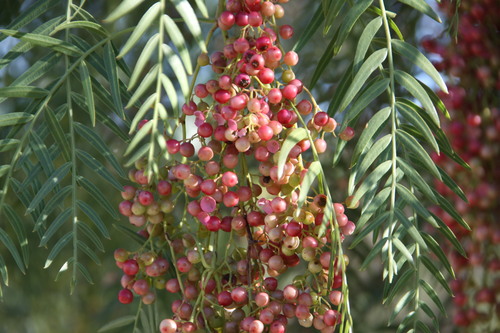
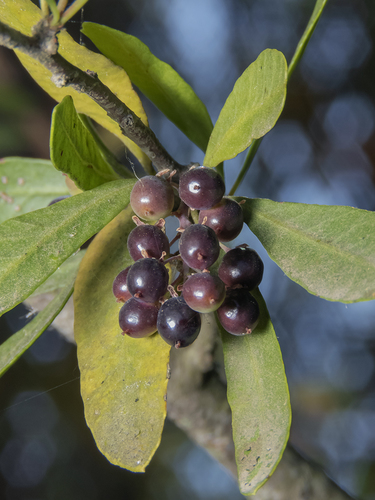
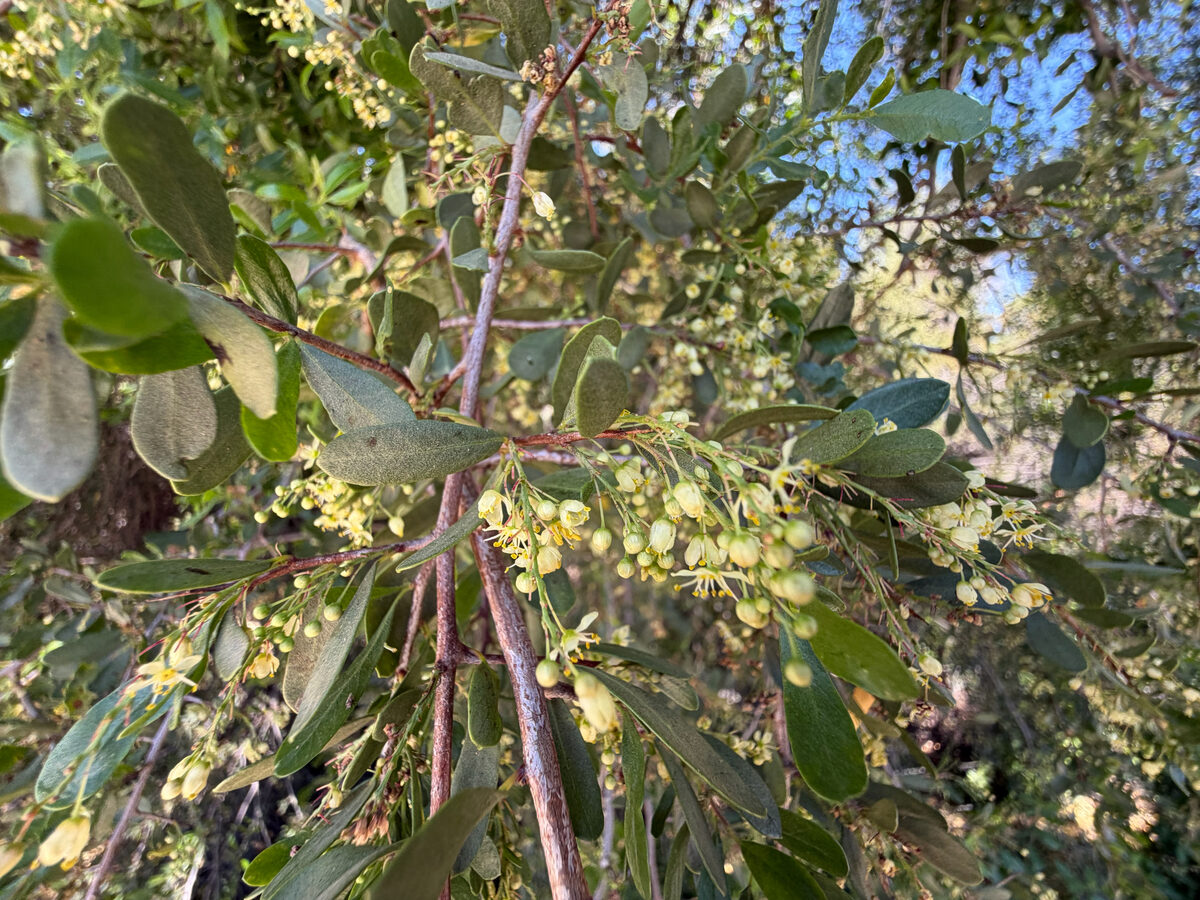
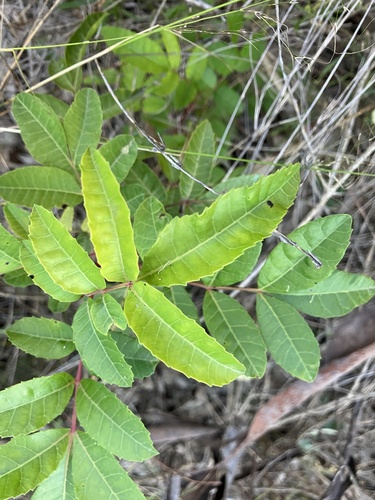
A shrub or small tree. It grows 3-8 m high. The twigs are stout. They are reddish-brown. The leaves are broadly oval but not equal on either side. There are broad teeth along the edges of the leaves. The flowering clusters are usually at the ends of branches. The male flowers are grouped into clusters. The fruit is round and 4 mm across. It is pink and shiny.
Edible Uses
The fruit and seeds are eaten. It is used as a famine food.
Distribution
It is a tropical plant. In Ethiopia it grows at the lower edges of mountain forests between 1,200-2.150 m altitude.
Where It Grows
Africa, East Africa, Ethiopia, Kenya, Uganda,
Cultivation
Plants can be grown from seeds. They are usually self-sown.
Other Information
It is a famine food.
Synonyms
Also Known As
Dodobay, Mucako, Picha oraya, Pichi oraya, Qacawuleteta, Shawshini
References (15)
- Addis, G., Asfaw, Z & Woldu, Z., 2013, Ethnobotany of Wild and Semi-wild Edible Plants of Konso Ethnic Community, South Ethiopia. Ethnobotany Research and Applications. 11:121-141 (As Rhus ruspolii)
- Addis, G., et al, 2013, The Role of Wild and Semi-wild Edible Plants in Household Food Sovereignty in Hamer and Konso Communities, South Ethiopia. Ethnobotany Research & Applications. 11:251-271 (As Rhus ruspolii)
- Ashagre, M., et al, 2016, Ethnobotanical study of wild edible plants in Burji District, Segan Area Zone of Southern Nations, Nationalities and Peoples Region (SNNPR), Ethiopia. Journal of Ethnobiology and Ethnomedicine (2016) 12:32 (As Rhus ruspolii)
- Balemie, K., & Kebebew, F., 2006, Ethnobotanical study of wild edible plants in Derashe and Kucha Districts, South Ethiopia. Journal of Ethnobiology and Ethnomedicine. 2:53 (As Rhus ruspolii)
- Bussman, R. W., 2006, Ethnobotanyof the Samburu of Mt Nyiru, South Turkana, Kenya. Journal of Ethnobiology and Ethnomedicine. 2:35 (As Rhus ruspolii)
Show all 15 references Hide references
- Ethiopia: Famine Food Field Guide. http://www.africa.upenn.edu/faminefood/category1.htm (As Rhus ruspolii)
- Goode, P., 1989, Edible Plants of Uganda. FAO p 30 (As Rhus ruspolii)
- Herb., E. A., 1981, (As Rhus ruspolii)
- Kidane, B., et al, 2014, Ethnobotany of Wild and Semi-wild Edible Fruit Species used by Maale and Ari Ethnic Communities in South Ethiopia. Ethnobotany Research and Applications. Vol. 12, 1546-3465-12-455 (As Rhus ruspolii)
- Lulekal, E., et al, 2011, Wild edible plants in Ethiopia: a review on their potential to combat food insecurity. Afrika Focus - Vol. 24, No 2. pp 71-121 (As Rhus ruspolii)
- Maundu, P. et al, 1999, Traditional Food Plants of Kenya. National Museum of Kenya. 288p (As Rhus ruspolii)
- Moffett, R. O., 2007, Name changes in the Old World Rhus and recognition of Searsia (Anacardiaceae). Bothalia 37,2: 165-175 (2007)
- Mutie, F. M., et al, 2023, Important Medicinal and Food Taxa (Orders and Families) in Kenya, Based on Three Quantitative Approaches. Plants 2023, 12, 1145
- Ojelel, S., et al, 2019, Wild edible plants used by communities in and around selected forest reserves of Teso-Karamoja region, Uganda. Journal of Ethnobiology and Ethnomedicine (2019) 15:3
- Peters, C. R., O'Brien, E. M., and Drummond, R.B., 1992, Edible Wild plants of Sub-saharan Africa. Kew. p 52 (As Rhus ruspolii)