Aloe schweinfurthii
Baker
iNaturalist· cc-by-nc-sa
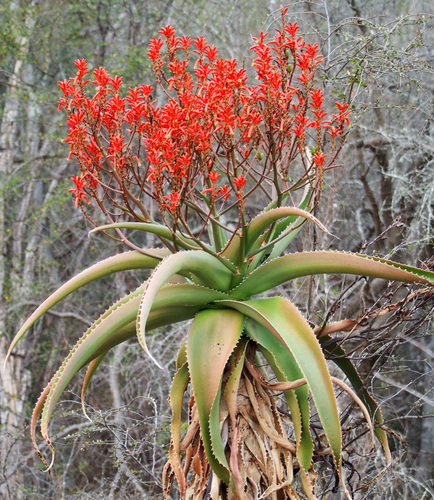
(c) Marco Schmidt, some rights reserved (CC BY-NC-SA), uploaded by Marco Schmidt
iNaturalist· cc-by
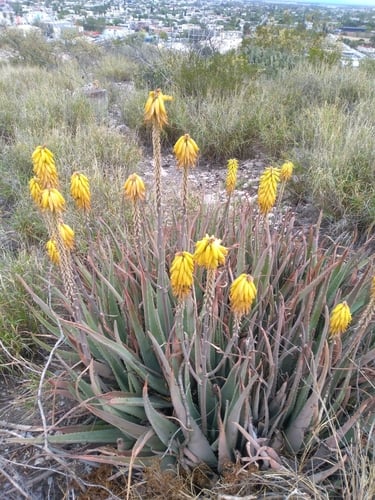
(c) Lucky Okpanachi Atabo, some rights reserved (CC BY)
iNaturalist· cc-by-nc
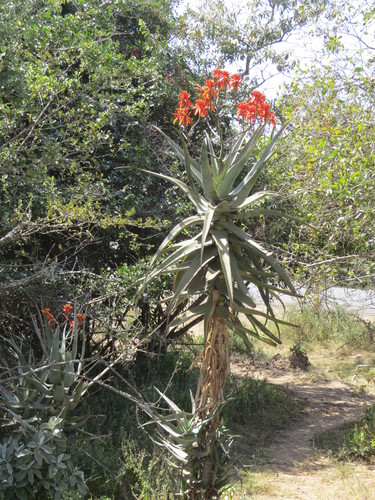
(c) Adedotun Ajibade, some rights reserved (CC BY-NC)
Description
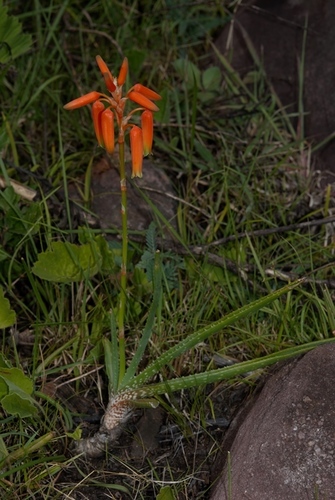
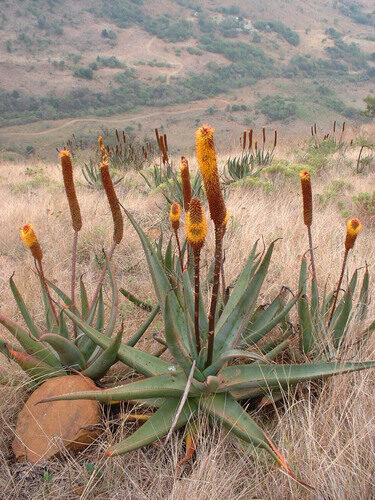
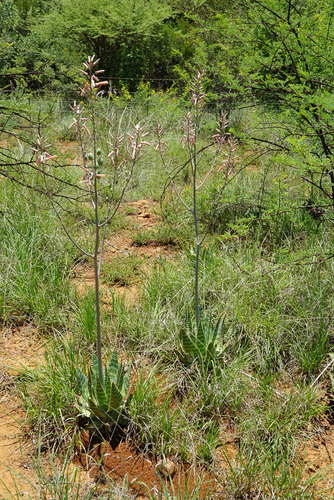
A herb that keeps growing from year to year. The leaves are fleshy. They are 60 cm long by 7-8 cm wide. They have teeth along the edge.
This description is brief — help expand it
Edible Uses
The flowers and their nectar are edible, and the plant is used as a vegetable.
Medicinal Uses
The leaf sap is used to treat intestinal and uro-genital problems. In Burkina Faso the dried powdered leaves are taken to treat malaria. A leaf decoction is drunk to cure cough. A decoction of the chopped whole plant is taken to treat venereal diseases and infertility in women. A leaf decoction is applied for treating cancer. Rheumatism is treated with leaf ash. The leaves are applied externally for all kinds of skin trouble: burns, wounds, insect bites, Guinea worm sores and vitiligo. The roots are used as a treatment for malaria. Throughout West Africa, decoctions of the bulbs and roots are taken to cure liver problems, especially jaundice. Decoctions of leaves, roots and whole plants are taken as a laxative, to treat stomach-ache and to get rid of internal parasites. The distinctive constituents in Aloe leaves are phenolic compounds, including chromone, anthraquinone or anthrone derivatives. Some of the compounds are found in many species, whereas others occur in only a few. The methanol extract of the dried leaf exudate has shown significant in-vivo activity against helminthiasis caused by Nippostrongylus spp.
Known Hazards
The sap of Aloe species contains anthraquinones. These compounds have several beneficial medicinal actions, particularly as a laxative, and many species of Aloe are thus employed in traditional medicine. Whilst safe in small doses and for short periods of time, anthraquinones do have potential problems if used in excess. These include congestion and irritation of the pelvic organs. Long term use of anthraquinone laxatives may also play a role in development of colorectal cancer as they have genotoxic potential, and tumorigenic potential.
Distribution
It is a tropical plant.
Where It Grows
Africa, Burkina Faso, Cameroon, Central Africa, Congo DR, Gabon, Ghana, Mali, Niger, Nigeria, Sahel, Sudan, Togo, Uganda, West Africa,
Cultivation
Aloe species follow the Crassulacean acid metabolism (CAM). CAM plants can fix carbon dioxide at night and photosynthesize with closed stomata during the day, thus minimizing water loss. This, plus their succulent leaves and stems, and the presence of a thick cuticle, makes them well adapted to dry conditions.
Propagation
Seed - we have no specific information on this species - in general Aloes are sown in a sandy, well-drained potting soil in a warm, shady position in standard seed trays. Germination takes about three weeks. Cover the seed with a thin layer of sand (1 - 2mm), keep moist. The seedlings can be planted out in individual bags or containers as soon as they are large enough to handle. Division of suckers.
Notes
Also put in the family Aloaceae. Also put in the family Asphodelaceae.
Synonyms
References (4)
- Burkill, H. M., 1985, The useful plants of west tropical Africa, Vol. 3. Kew.
- Dalziel, J. M., 1937, The Useful plants of west tropical Africa. Crown Agents for the Colonies London.
- Grubben, G. J. H. and Denton, O. A. (eds), 2004, Plant Resources of Tropical Africa 2. Vegetables. PROTA, Wageningen, Netherlands. p 559
- Peters, C. R., O'Brien, E. M., and Drummond, R.B., 1992, Edible Wild plants of Sub-saharan Africa. Kew. p 9