Hemerocallis thunbergii
Baker
Late yellow daylily
wikimedia· cc-by-sa
Wikimedia Commons - Krzysztof Ziarnek, Kenraiz
Summary
A perennial daylily reaching 0.5 m (1ft 8in) tall and wide. Hardy to UK zone 4 and USDA zones as indicated. Flowers appear from July to August. Hermaphroditic and adaptable to light sandy, medium loamy, and heavy clay soils across a range of pH levels from mildly acid to basic. Thrives in semi-shade or full sun and tolerates both dry and moist conditions.
Description
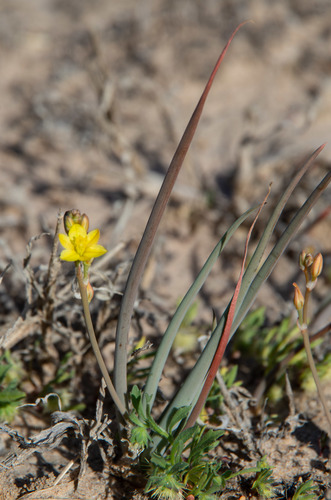
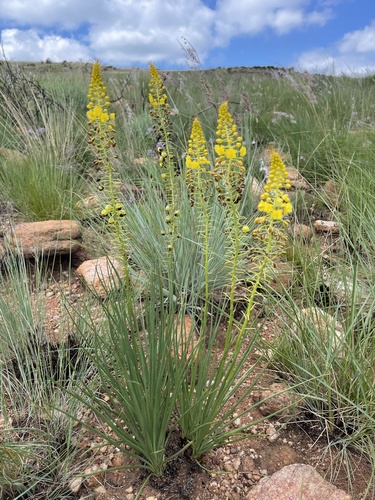
An evergreen herb. The roots are cylinder shaped but not enlarged. The leaves are 30-60 cm long and about 1 cm wide. They are curved. The flower arrangement is erect and branched. There are 3-15 flowers. The flowers are 9-11 cm long. They for a tube for about 1/3rd of their length. The flowers are yellow and have a scent. They open in the morning.
Edible Uses
Leaves and young shoots are edible cooked but must be harvested when very young before they become fibrous. Flowers and flower buds can be eaten raw or cooked; the flowers can also be dried and used as a thickener in soups. Flower buds contain approximately 43mg vitamin C per 100g, 983 IU vitamin A, and 3.1% protein.
Traditional Uses
The mature flower buds are gathered just as they open and scalded in boiling water, or steamed then sun dried.
This uses section is brief — help expand it
Medicinal Uses
The juice of the roots is an effective antidote in cases of arsenic poisoning. A tea made from boiled roots is used as a diuretic.
Known Hazards
Large quantities of the leaves are said to be hallucinogenic. Blanching the leaves removes this hallucinatory component. (This report does not make clear what it means by blanching, it could be excluding light from the growing shoots or immersing in boiling water.)
Distribution
A temperate plant.
Where It Grows
Asia, China*, Hawaii, Japan, Korea*, Pacific, Slovenia, USA,
Cultivation
Succeeds in most soils, including dry ones, preferring a rich moist soil and a sunny position but tolerating partial shade. Plants flower less freely in a shady position though the flowers can last longer in such a position. Grows well in heavy clay soils. Succeeds in short grass if the soil is moist. Prefers a pH between 6 and 7. Hybridizes freely with other members of this genus. Plants take a year or two to become established after being moved. They increase by means of runners and form loose spreading clumps. The roots are not swollen. Plants seem to be immune to the predations of rabbits. The plants are very susceptible to slug and snail damage, the young growth in spring is especially at risk. The fragrant flowers are very short-lived, they open in the late afternoon and die in the morning. However, plants produce a succession of flowers for several weeks of the summer, each scape carrying between 4 and 20 blooms.
Propagation
Sow seed in mid-spring in a greenhouse; germination is usually fairly rapid and good. Prick seedlings into individual pots when large enough to handle, overwinter in the greenhouse, and plant out in late spring. Divide plants in spring or after flowering in late summer or autumn — division is quick and easy at almost any time of year. Larger clumps can go straight into permanent positions; smaller clumps are best potted up and grown on in a cold frame until rooting well, then planted out in spring.
Other Uses
The tough dried foliage can be plaited into cord and used for making footwear.
Notes
There are about 15 Hemerocallis species. Also put in the family Hemerocallidaceae.
Synonyms
References (5)
- Garden 4:132. 1873 (J. G. Baker, Gard. Chron. ser. 3, 8:94. 1890)
- Hu, Shiu-ying, 2005, Food Plants of China. The Chinese University Press. p 318
- Hwang, H., et al, 2013, A Study on the Flora of 15 Islands in the Western Sea of Jeollanamdo Province, Korea. Journal of Asia-Pacific Biodiversity Vol. 6, No. 2 281-310
- Plants for a Future database, The Field, Penpol, Lostwithiel, Cornwall, PL22 0NG, UK. http://www.scs.leeds.ac.uk/pfaf/
- Staples, G.W. and Herbst, D.R., 2005, A tropical Garden Flora. Bishop Museum Press, Honolulu, Hawaii. p 688