Kniphofia foliosa
Hochst.
Torch lily, Red hot poker
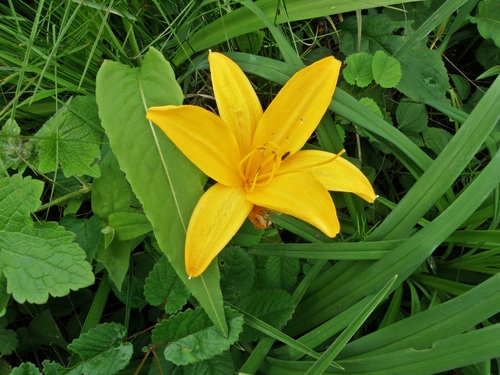
iNaturalist· cc-by
(c) Rafael Medina, some rights reserved (CC BY)
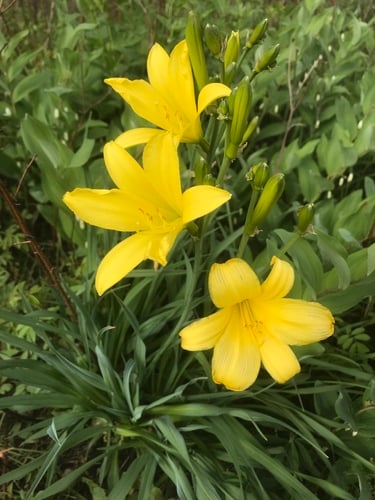
iNaturalist· cc-by-nc
(c) Veronika A. Johansson, some rights reserved (CC BY-NC)
Description
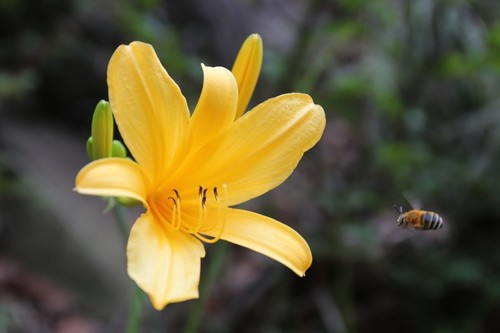
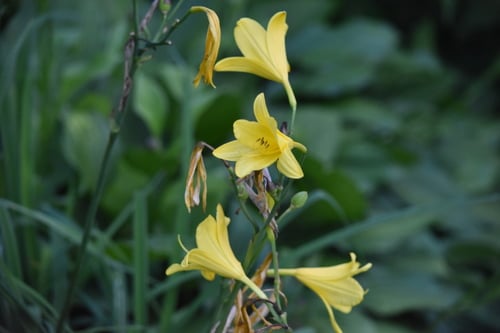
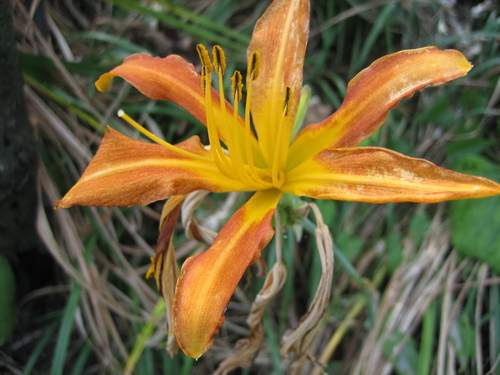
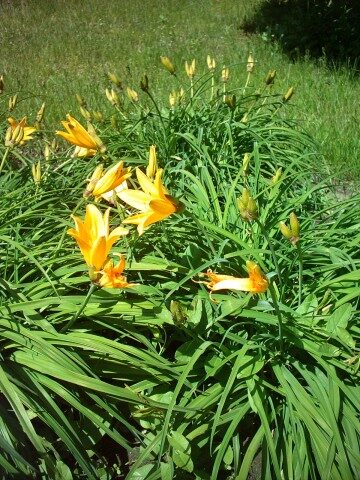
A robust herb. It keeps growing from year to year. It grows 1.7 m tall. It forms clumps. It often does not have a stem but can have one 40 cm tall. The leaves are in a ring at the base. They are simple and spreading. They are 100 cm long by 4 cm wide. There are fine teeth along the edge. The flowers are at the top in a clump 15-40 cm long. They are yellow, orange or red. The fruit is an oval capsule. It is 8 mm long. There are a few brown to black seeds.
Edible Uses
The rhizome and root are edible.
Medicinal Uses
The rhizomes are used for the treatment of abdominal cramps. The plant is also used to eradicate endoparasites in cattle. Knipholone was isolated from the roots. It was the first phenylanthraquinone to be isolated and has since also been found in plants in the genera Bulbinella, Bulbine and Senna. Phenylanthraquinones have antiplasmodial activity with little cytotoxicity. The antiplasmodial activity is slightly less than that of chloroquine, and chloroquine resistant Plasmodium strains are resistant to the Kniphofia compounds as well. The roots also contain the anthraquinone chrysophanol as well as putrescine-derived amides.
Distribution
It grows on mountainsides at 2,500-4,000 m altitude.
Where It Grows
Africa, East Africa, Ethiopia,
Cultivation
A plant of higher elevations in Ethiopia, where it can be found at elevations from 2,500 - 4,000 metres. It can be cultivated in the subtropics and in milder areas of temperate zones. Grows best in a sunny position. Prefers a light, sandy soil. Requires plenty of moisture in the growing season, but the soil must be well-drained and preferably not too wet in the dormant season.
Notes
There are about 65 Kniphofia species. Also put in the family Asphodelaceae.
References (3)
- Bosch, C.H., 2006. Kniphofia foliosa Hochst. [Internet] Record from Protabase. Schmelzer, G.H. & Gurib-Fakim, A. (Editors). PROTA (Plant Resources of Tropical Africa), Wageningen, Netherlands. < http://database.prota.org/search.htm>. Accessed 16 October 2009.
- Molla, A., Ethiopian Plant Names. http://www.ethiopic.com/aplants.htm
- World Checklist of Useful Plant Species 2020. Royal Botanic Gardens, Kew