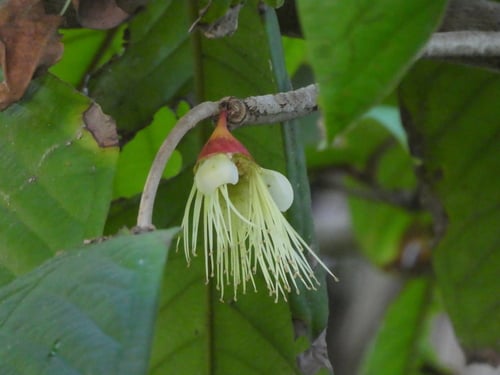
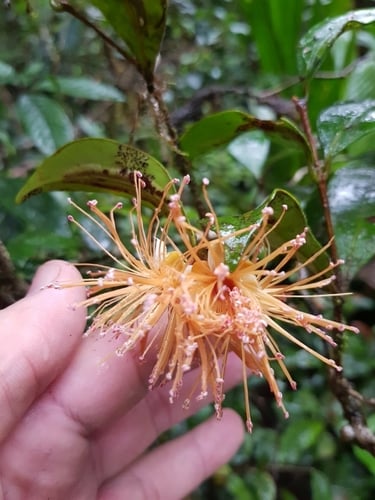
Metrosideros excelsa
Sol. ex Gaertn.
Pohutukawa
iNaturalist· cc-by-nc
(c) loribrummer, some rights reserved (CC BY-NC), uploaded by loribrummer
iNaturalist· cc-by-nc
(c) gillbsydney, some rights reserved (CC BY-NC)
Summary
Source: WikipediaAn evergreen tree reaching 7 m tall by 15 m wide, hardy to UK zone 8 but frost-tender. It remains in leaf year-round and flowers July to August. Bee-pollinated hermaphrodite flowers attract wildlife. The tree thrives in light, medium, or heavy well-drained soils across pH ranges, requires full sun, prefers moist soil, and tolerates maritime exposure.
Description
A tree. It is wide spreading. The leaves are round and leathery. The flowers are large.
This description is brief — help expand it
Edible Uses
An edible nectar is obtained from the flowers.
Traditional Uses
The nectar of the flower is eaten.
This uses section is brief — help expand it
Medicinal Uses
Astringent. Used in the treatment of dysentery.
Distribution
It is a temperate plant. It grows in coastal forest in the North Island of New Zealand.
Where It Grows
Australia, New Zealand*, Norfolk Island, Tasmania,
Cultivation
Prefers a well-drained but moisture-retentive lime-free soil in a sunny position. Plants are somewhat lime-tolerant but are unsuitable for shallow soils over chalk. Very resistant to maritime exposure. This species is not very hardy in Britain, tolerating temperatures down to about -5°c and succeeding outdoors only in the mildest areas of the country where it makes a small shrub. Plants grow very well on the Isles of Scilly, where they are cut back by cold perhaps once every twenty years. They usually sprout again from their thick branches. A good bee plant. Very ornamental. Plants in this genus are notably resistant to honey fungus.
Propagation
Sow seed in spring in a warm greenhouse, barely covering it. Prick seedlings into individual pots once large enough to handle and grow on under glass for at least their first winter. Plant out in late spring or early summer after the last expected frosts, and provide frost protection for at least the first winter outdoors. Take cuttings of half-ripe wood, 7–10cm with a heel, and root in individual pots in a frame. Good success rate.
Other Uses
Plants can be used as a hedge, performing well in exposed maritime positions. The wood is dense, compact, heavy, durable, and very strong, and is used for ship-making, bearings, and machine beds.
Synonyms
References (4)
- Crowe, A., 1997, A Field Guide to the Native Edible Plants of New Zealand. Penguin. p 45
- Fruct. sem. pl. 1:172, t. 34, fig. 8. 1788
- Kew Plants of the World Online
- Lavelle, M., 2008, Wild Flowers of Australia and Oceania. Southwater. p 71