Eucalyptus globulus
Labill.
Blue gum, Tasmanian blue gum
iNaturalist· cc-by
(c) Yoav Daniel Bar-Ness, some rights reserved (CC BY)
iNaturalist· cc-by-nc
(c) GMarques, some rights reserved (CC BY-NC)
iNaturalist· cc-by-nc
(c) GMarques, some rights reserved (CC BY-NC)
Summary
Source: WikipediaEucalyptus globulus, commonly known as southern blue gum or blue gum, is a species of flowering plant in the family Myrtaceae. It is a tall, evergreen tree endemic to southeastern Australia. This Eucalyptus species has mostly smooth bark, juvenile leaves that are whitish and waxy on the lower surface, glossy green, lance-shaped adult leaves, glaucous, ribbed flower buds arranged singly or in groups of three or seven in leaf axils, white flowers and woody fruit. There are four subspecies, each with a different distribution across Australia, occurring in New South Wales, Victoria and Tasmania. The subspecies are the Victorian blue gum, Tasmanian blue gum, Maiden's gum, and Victorian eurabbie.
Description
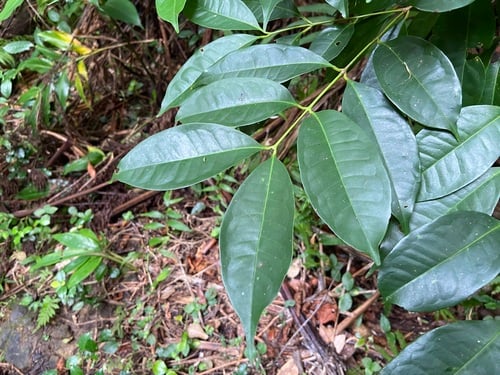
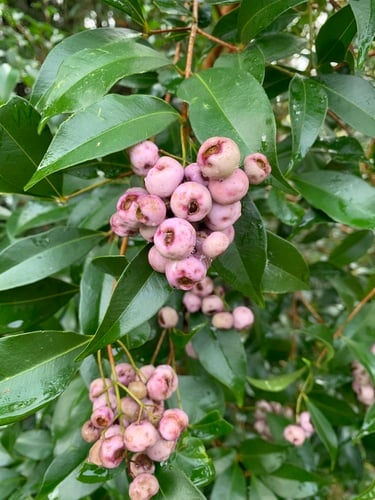
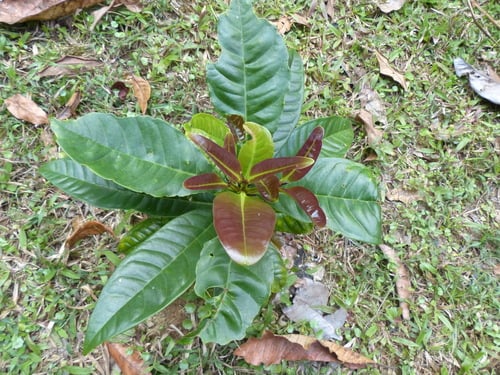
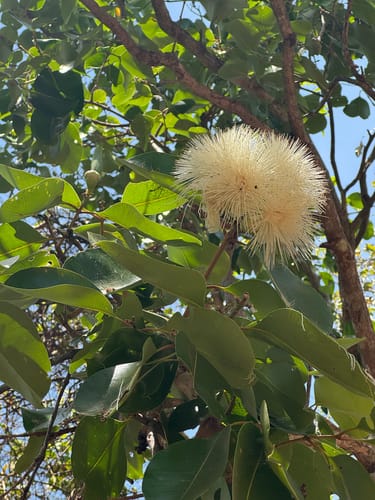
A spreading tree. It grows 15-50 m high. It spreads 10-25 m wide The bark is smooth and light yellow or grey. It sheds in strips. The inner bark is light green or brown. The young stems are square and the young leaves clasp the stems. They are oval and 15 cm long. The adult leaves are sickle shaped leaves 10-30 cm long. The flowers occur singly and are white to cream.
Edible Uses
An essential oil extracted from fresh or dried leaves is used as a flavouring in sweets, baked goods, and ice cream.
Traditional Uses
An essential oil distilled from the fresh or dried leaves. It is used to flavour candies, baked goods, ice cream and baked goods. Caution: Eucalyptus oil is poisonous. The fruit (seeds?) are used for a drink in Spain.
Medicinal Uses
Eucalyptus leaves are a traditional Aboriginal herbal remedy, and the leaf essential oil is a powerful antiseptic used globally for coughs, colds, sore throats and other infections, commonly appearing in over-the-counter cold remedies. The adult leaves, used without their petioles, are antiperiodic, antiseptic, aromatic, deodorant, expectorant, febrifuge, hypoglycaemic and stimulant. The leaves and their oil are also antispasmodic, and leaf extracts have demonstrated antibacterial activity. Aged essential oil is especially potent as an antiseptic, since ozone forms in it upon exposure to air, giving it a decided disinfectant action against lower life forms. The oil can be applied to cuts and skin infections, inhaled for nasal congestion, gargled for sore throats, or taken internally for a variety of complaints. As with all essential oils, larger doses can be harmful. The oil from this particular species has a somewhat disagreeable odour, so other members of the genus are now more commonly used medicinally. An oleo-resin exuded naturally from the tree — or obtained by cutting the trunk — is rich in tannin and powerfully astringent; it is taken internally for diarrhoea and bladder inflammation, and applied externally to cuts. The essential oil is also used in aromatherapy, where its keyword is 'respiratory system'.
Known Hazards
Citronellal, an essential oil found in most Eucalyptus species is reported to be mutagenic when used in isolation. In large doses, oil of eucalyptus, like so many essential oils has caused fatalities from intestinal irritation. Death is reported from ingestion of 4 - 24 ml of essential oils, but recoveries are also reported for the same amount. Symptoms include gastroenteric burning and irritation, nausea, vomiting, diarrhoea, oxygen deficiency, ,weakness, dizziness, stupor, difficult respiration, delirium, paralysis, convulsions, and death, usually due to respiratory failure. The plant is reported to cause contact dermatitis. Sensitive persons may develop urticaria from handling the foliage and other parts of the plant. Avoid if on treatment for diabetes mellitus. Infants and small children - avoid oil preparations on faces as possible life threatening spasms.
Distribution
It is a temperate plant. Arboretum Tasmania.
Where It Grows
Africa, Andes, Andorra, Australia*, Bolivia, Central America, Chile, East Africa, Ecuador, Madagascar, North America, Slovenia, South America, St Helena, Tasmania*, USA, Zimbabwe,
Cultivation
Prefers a sunny position in a moderately fertile well-drained moisture retentive circum-neutral soil. Succeeds in most soils, tolerating poor and dry soils, especially those low in mineral elements. Established plants are drought tolerant. Plants should not be grown in frost pockets or windy sites. Requires a sheltered position, disliking cold, dry or desiccating winds. Plants are reported to tolerate an annual precipitation of 80 to 160cm and an annual temperature range of ca 16 to 20°C. This species is not very hardy in Britain, tolerating temperatures down to about -5°c and often succumbing to heavy frosts. There is a tree 35 metres tall on the Isle of Man, there are several taller trees in S. Ireland and a tree on the Isle of Wight was 20 metres tall when it was 9 years old from seed. Eucalyptus species have not adopted a deciduous habit and continue to grow until it is too cold for them to do so. This makes them more susceptible to damage from sudden cold snaps. If temperature fluctuations are more gradual, as in a woodland for example, the plants have the opportunity to stop growing and become dormant, thus making them more cold resistant. A deep mulch around the roots to prevent the soil from freezing also helps the trees to survive cold conditions. The members of this genus are remarkably adaptable however, there can be a dramatic increase in the hardiness of subsequent generations from the seed of survivors growing in temperate zones. The Tasmanian blue gum is the most extensively planted eucalypt species in the world with a total of 800,000 ha in dozens of countries. This species is commonly planted in S. Europe, especially in Italy, Spain and Portugal, for timber, soil stabilization and the essential oil in its leaves. Trees have also been planted in marshy areas where they have the ability to reduce the wetness of the land (because they transpire so much water) thus getting rid of mosquitoes that were breeding there. Eucalyptus monocultures are an environmental disaster, they are voracious, allelopathic and encourage the worst possible attitudes to land use and conservation. A very fast growing tree, new growth can be up to 2.5 metres per year. Trees are gross feeders and can severely stunt the growth of nearby plants. Trees are very amenable to coppicing. Plants are shallow-rooting and, especially in windy areas, should be planted out into their permanent positions when small to ensure that they do not suffer from wind-rock. They strongly resent root disturbance and should be container grown before planting out into their permanent position. The flowers are rich in nectar and are a good bee crop. The bruised leaves emit a powerful balsamic smell. This species is the national emblem of Tasmania.
Propagation
Surface sow seed in February or March in a sunny greenhouse position. Species from high altitudes benefit from 6–8 weeks of cold stratification at 2°C. Pot seedlings into individual containers as soon as the second set of true leaves develops — leaving them longer risks poor establishment. Plant out into permanent positions in early summer with some cold protection through the first winter. Alternatively, sow in June and plant into final positions the following late spring. Seed remains viable for a long time.
Other Uses
The leaves and their essential oil act as an insect repellent. Planting trees in wet areas dries out the ground and makes it unsuitable for mosquito breeding. A decoction of the leaves repels insects and vermin, and Africans use finely powdered bark as an insect dust. Essential oil extracted from the leaves is used in perfumery and medicine; steam distillation yields about 0.9%, with reported field yields of 40–45 kilos of oil per hectare. The oil is also used in spot removers for grease and oil stains. Young leaves yield a yellow-brown dye that needs no mordant; young shoots give grey and green dyes; young bark gives a dark green dye. The wood is heavy (or light, according to one source), durable and fire resistant. It is used in carpentry, construction, fencing, piling, platforms, plywood, poles, sheds, tool handles and veneer, and the oil-rich timber is resistant to termites. This species is considered one of the best eucalypts for pulp production and papermaking.
Synonyms
Also Known As
Biligoma, Eucalipto aromatico
References (13)
- Amakura, Y et al, 2002, Constituents and their antioxidant effects in eucalyptus leaf extract used as a natural food additive. Food Chemistry 77:47-56
- Bonet, M. A. & Valles, J., 2002, Use of non-crop food vascular plants in Montseny biosphere reserve (Catalonia, Iberian Peninsula). International Journal of Food Sciences and Nutrition (2002) 53, 225–248
- Brown, D., 2002, The Royal Horticultural Society encyclopedia of Herbs and their uses. DK Books. p 207
- Facciola, S., 1998, Cornucopia 2: a Source Book of Edible Plants. Kampong Publications, p 140
- Kermath, B. M., et al, 2014, Food Plants in the Americas: A survey of the domesticated, cultivated and wild plants used for Human food in North, Central and South America and the Caribbean. On line draft. p 349
Show all 13 references Hide references
- Morton,
- Seidemann J., 2005, World Spice Plants. Economic Usage, Botany, Taxonomy. Springer. p 150
- Tanaka,
- Thomas, E., et al, 2008, The Relationship Between Plant Use and Plant Diversity in the Bolivian Andes, with Special Reference to Medicinal Plant Use. Hum Ecol (2008) 36:861–879
- Torre, de la, L., et al, 2008, Enciclopedia de las Plantas Útiles del Ecuador. Herbario QCA. Pontificia Universidad Católica del Ecuador. p 465
- Voy. rech. Perouse 1:153, t. 13. 1800
- Wiersema, J. H. & Leon, B., 2013, World Economic Plants. A Standard Reference CRC Press. 2nd Ed. p 287
- World Checklist of Useful Plant Species 2020. Royal Botanic Gardens, Kew