Eucalyptus gummifera - (Sol. ex Gaertn.)Hochr.
(Sol. ex Gaertn.)Hochr.
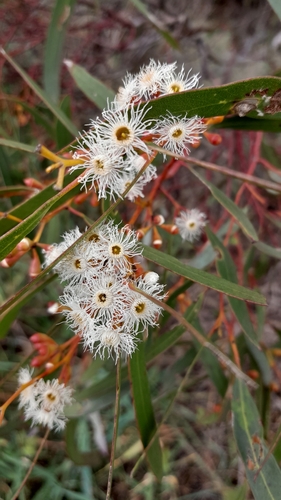
Red Bloodwood
gbif· cc-by
Meise Botanic Garden
gbif· cc-by-nc-sa
Fairchild Tropical Botanical Garden Herbarium (FTG)
gbif· cc-by
Meise Botanic Garden
Description
Eucalyptus gummifera is an evergreen Tree growing to 15 m (49ft 3in) at a fast rate. See above for USDA hardiness. It is hardy to UK zone 10. It is in leaf all year. The species is hermaphrodite (has both male and female organs) and is pollinated by Bees. Suitable for: light (sandy), medium (loamy) and heavy (clay) soils, prefers well-drained soil and can grow in nutritionally poor soil. Suitable pH: mildly acid, neutral and basic (mildly alkaline) soils and can grow in saline soils. It cannot grow in the shade. It prefers dry moist or wet soil and can tolerate drought. The plant can tolerate maritime exposure.
Edible Uses
Drink. The flowers produce copious amounts of nectar which can be sucked from the flowers or mixed with water to make a sweet drink that is called 'bool' in Australia.
Medicinal Uses
Antiseptic Astringent Parasiticide Skin. Eucalyptus leaves are a traditional Aboriginal herbal remedy. The essential oil found in the leaves is a powerful antiseptic and is used all over the world for relieving coughs and colds, sore throats and other infections. The essential oil is a common ingredient in many over-the-counter cold remedies. An essential oil obtained from the leaves is antiseptic, astringent and parasiticide. It is used in the treatment of various skin complaints. The essential oil obtained from various species of eucalyptus is a very powerful antiseptic, especially when it is old, because ozone is formed in it on exposure to air. It has a decided disinfectant action, destroying the lower forms of life. The oil can be used externally, applied to cuts, skin infections etc, it can also be inhaled for treating blocked nasal passages, it can be gargled for sore throat and can also be taken internally for a wide range of complaints. Some caution is advised, however, because like all essential oils, it can have a deleterious effect on the body in larger doses. An oleo- resin is exuded from the tree. It can also be obtained from the tree by making incisions in the trunk. This resin contains tannin and is powerfully astringent, it is used internally in the treatment of diarrhoea and bladder inflammation, externally it is applied to cuts etc.
Known Hazards
Citronellal, an essential oil found in most Eucalyptus species is reported to be mutagenic when used in isolation. In large doses, oil of eucalyptus, like so many essential oils has caused fatalities from intestinal irritation. Death is reported from ingestion of 4 - 24 ml of essential oils, but recoveries are also reported for the same amount. Symptoms include gastroenteric burning and irritation, nausea, vomiting, diarrhoea, oxygen deficiency, ,weakness, dizziness, stupor, difficult respiration, delirium, paralysis, convulsions, and death, usually due to respiratory failure.
Distribution
Australia - New South Wales, Tasmania, Victoria.
Where It Grows
AUSTRALASIA: Australia (New South Wales (east), Queensland (southeast), Victoria (east))
Cultivation
Prefers a sunny position in a moderately fertile well-drained moisture retentive circum-neutral soil. Tolerates poor and dry soils, especially those low in mineral elements. A drought resistant plant once established, it also tolerates saline soils. One report suggests that it might be quite wind tolerant, even on the coast. This species is hardy to at least -7°c in Australian gardens according to one report whilst another says that it only survives rare frosts in the wild. Plants are not likely to be very cold tolerant in Britain, provenances from the higher parts of its range in Tasmania are more likely to succeed. Eucalyptus species have not adopted a deciduous habit and continue to grow until it is too cold for them to do so. This makes them more susceptible to damage from sudden cold snaps. If temperature fluctuations are more gradual, as in a woodland for example, the plants have the opportunity to stop growing and become dormant, thus making them more cold resistant. A deep mulch around the roots to prevent the soil from freezing also helps the trees to survive cold conditions. The members of this genus are remarkably adaptable however, there can be a dramatic increase in the hardiness of subsequent generations from the seed of survivors growing in temperate zones. Eucalyptus monocultures are an environmental disaster, they are voracious, allelopathic and encourage the worst possible attitudes to land use and conservation. Plants are shallow-rooting and, especially in windy areas, should be planted out into their permanent positions when small to ensure that they do not suffer from wind-rock. They strongly resent root disturbance and should be container grown before planting out into their permanent position. The flowers are rich in nectar and are a good bee crop.
Propagation
Seed - surface sow February/March in a sunny position in a greenhouse. Species that come from high altitudes appreciate 6 - 8 weeks cold stratification at 2°c. Pot up the seedlings into individual pots as soon as the second set of seed leaves has developed, if left longer than this they might not move well. Plant out into their permanent positions in early summer and give them some protection from the cold in their first winter. The seed can also be sown in June, the young trees being planted in their final positions in late spring of the following year. The seed has a long viability.
Other Uses
Fuel Parasiticide Shelterbelt Wood. This tree might be suitable as a windbreak near the coast. Wood - red, hard, very durable in the soil, but it has gum streaks and veins. Rarely attacked by white ants, it is used mainly as a fuel, for which it is very good.
Synonyms
More from Myrtaceae
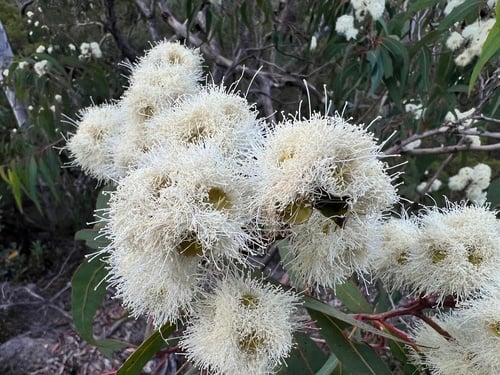
Eucalyptus eximia
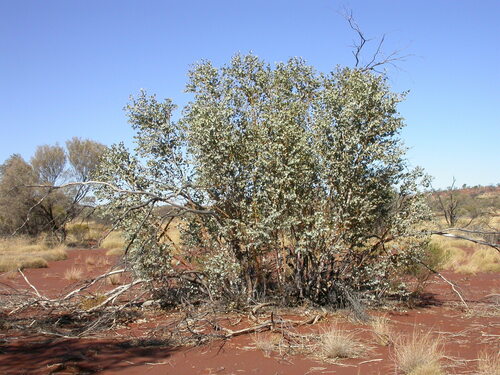
Eucalyptus gamophylla
Blue Mallee, Twin-leaved Gum, Blue-leafed mallee, Warilu, Twin-leaf Mallee
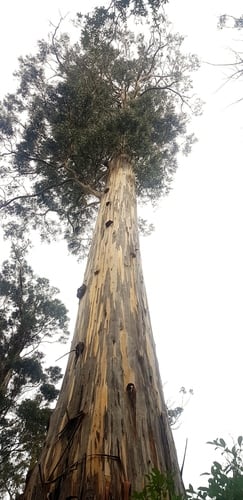
Eucalyptus globulus
Blue gum, Tasmanian blue gum
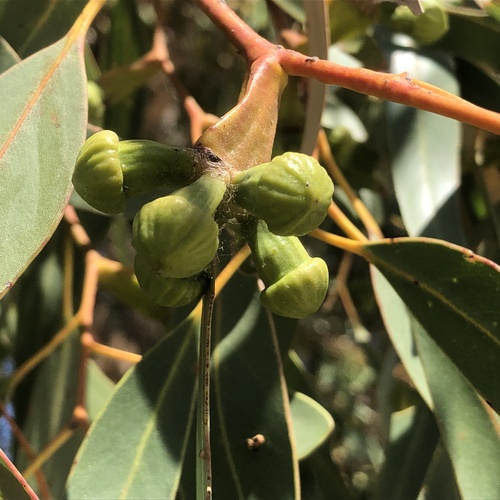
Eucalyptus gomphocephala
Tuart, Tuart Gum
Eucalyptus gracilis
White Mallee, Yorrell, Snap and Rattle, Red Mallee
Eucalyptus grandis
Flooded gum