Syzygium maire
(A. Cunn.) Sykes et Garn.-Jones
Swamp maire
iNaturalist· cc-by-nc
(c) rewielliot, some rights reserved (CC BY-NC), uploaded by rewielliot
iNaturalist· cc-by-nc
(c) mattward, some rights reserved (CC BY-NC), uploaded by mattward
iNaturalist· cc0
no rights reserved, uploaded by Peter de Lange
Summary
Source: WikipediaSyzygium maire, commonly known as the swamp maire, is an evergreen tree endemic to New Zealand. It is found throughout the North Island, and in the northern half of the South Island. The Māori name for the tree is maire tawake. Swamp maire grows in wetlands, where it develops breathing roots in waterlogged soils, but is also tolerant of reasonably dry situations. The creamy-white flowers in autumn are followed by bright red drupes around 3 cm in length in late winter. The fruit are edible and can be eaten raw or cooked. The fruits are rich in antioxidants. Swamp maire is sold for use in gardens as an ornamental plant. It is not related to other species called maire, which are in the genus Notelaea.
Description
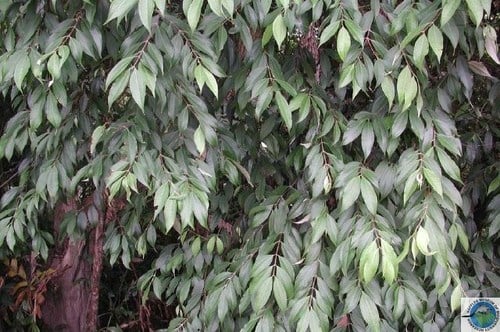
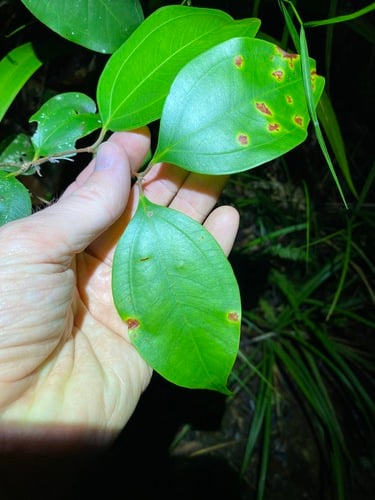
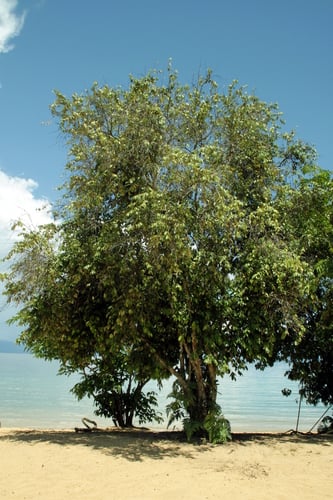
An evergreen tree. It grows 16 m tall. In wetlands it develops breathing roots. The bark is pale and smooth. The leaves are oval and pointed. They are 4-5 cm long by 1.5 cm wide. The flowers are creamy-white. They are 1 cm wide. The flowers are in clusters. The fruit are bright red and fleshy. They are 3 cm long. There is one seed.
Edible Uses
The bright red fleshy fruit can be eaten raw or cooked, and are especially popular with children. The fruit are rich in antioxidants.
Traditional Uses
The fruit can be eaten raw or cooked.
This uses section is brief — help expand it
Medicinal Uses
The fruit have antioxidant properties.
Distribution
It is a subtropical plant. It grows in wetlands. It can also grow in reasonably dry situations. It can be near streams and in higher altitude cloud forest.
Where It Grows
New Zealand,
Cultivation
Plants can be grown from seeds or cuttings. Seeds need to be in moist soil.
Production
The flowers develop in autumn and the fruit in late winter. The flowers can occur from November to July and fruit from January to December.
Other Information
The fruit are eaten especially by children.
Notes
The fruit are rich in antioxidants.
Synonyms
Also Known As
Maire tawake
References (1)
- Crowe, A., 1997, A Field Guide to the Native Edible Plants of New Zealand. Penguin. p 31