Eugenia victoriana
Cuatrec.
Guayabilla, Guaiabila
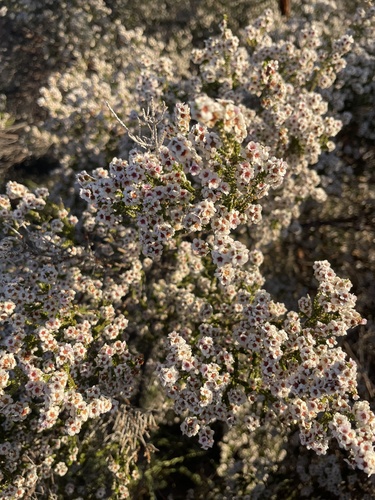
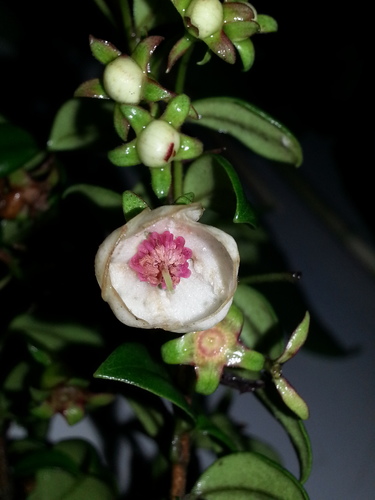
iNaturalist· cc-by-nc
(c) Marco Acuña, some rights reserved (CC BY-NC), uploaded by Marco Acuña
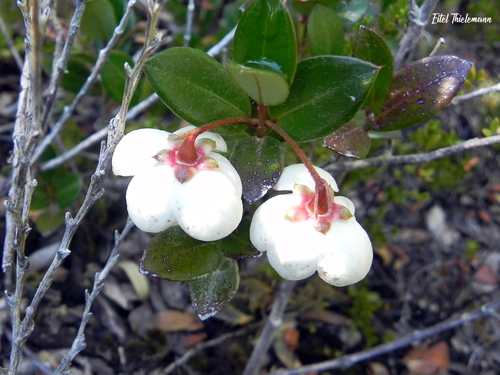
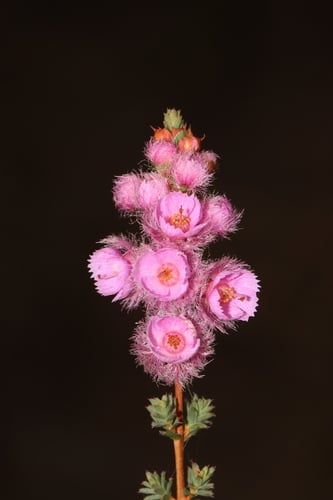
iNaturalist· cc-by-nc
(c) curreabee, some rights reserved (CC BY-NC)
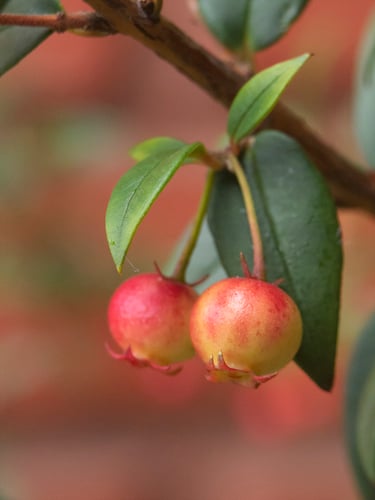
iNaturalist· cc-by-nc
(c) curreabee, some rights reserved (CC BY-NC)
Summary
Source: WikipediaEugenia victoriana is a small South American fruit tree of the genus Eugenia. Its common names include guayabilla and sundrop. Eugenia victoriana has the largest fruit of all known Eugenia species. The tree first flowers in its third or fourth year. The fruits are orange-colored, and have sour flesh and two to four large seeds.
Description
A large shrub or small tree. It loses many of its leaves during the year. It grows 2-3.5 m tall. The leaves are slightly leathery and 5-12 cm long. They have a short leaf stalk. The flower groups have both male and female flower parts. The flowers occur singly or is groups of 2-4 in the axils of leaves or at the ends of branches. The fruit are a bright glossy orange. They are flattened. They can be 8-12 cm across. They contain 2-4 large seeds.
Edible Uses
Fruit - raw. The thin-skinned fruit has a very succulent, aromatic pulp with an acidic flavour. It is somewhat reminiscent of the flavour of passion fruits (Passiflora spp.). The fruit is popular as a tasty flavouring for other juices. It can be used to make delicious jams and does not need additional pectin.They contain 2 - 4 seeds that separate easily from the pulp. The orange fruit is about 8cm long and 12cm in diameter.
Traditional Uses
The fruit are eaten raw or made into juice and jams.
This uses section is brief — help expand it
Distribution
A tropical plant. It can tolerate cooled conditions.
Where It Grows
Amazon, Andes, Brazil, Colombia*, South America,
Cultivation
Plants are grown from seed.
Propagation
Seed - should not be allowed to dry out, and is best sown as soon as it is ripe. Germination is slow, taking 1 - 6 months.
Production
The tree first flowers after 3-4 years.
Other Information
It is a cultivated fruit tree.
Notes
There are about 550 Eugenia species. They are mostly in tropical and subtropical South America.
Also Known As
Sundrop
References (4)
- Facciola, S., 1998, Cornucopia 2: a Source Book of Edible Plants. Kampong Publications, p 158
- Lopez-Diago, D. & Garcia, N., 2021, Wild edible fruits of Colombia. Biota ColomBiana 22 (2) p 44
- Lorenzi, H., Bacher, L., Lacerda, M. & Sartori, S., 2006, Brazilian Fruits & Cultivated Exotics. Sao Paulo, Instituto Plantarum de Estuados da Flora Ltda. p 455
- Roa, J. A. G. & Boada, D. S. G., 2018, Fundación para el Fortalecimiento de la Fruticultura y Plantas Alimenticias no Convencionales en Colombia.