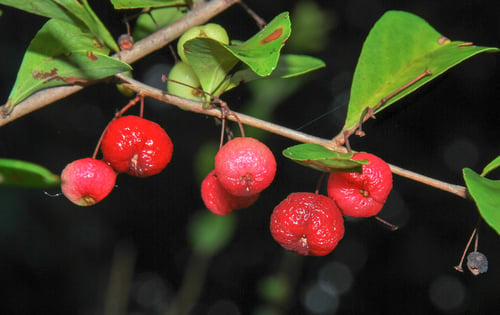
Eugenia uniflora
L.
Surinam cherry, Pitanga
iNaturalist· cc-by-nc
(c) avocstac, some rights reserved (CC BY-NC)
iNaturalist· cc-by-nc
(c) jessicahc74, some rights reserved (CC BY-NC)
Summary
Source: WikipediaEugenia uniflora is a flowering plant in the family Myrtaceae, native to tropical South America's east coast, ranging from Suriname, French Guiana to southern Brazil, as well as Uruguay and parts of Paraguay and Argentina. It is also known as Brazilian cherry, Cayenne cherry, cerisier carré, monkimonki kersie, ñangapirí, pitanga, shimarucu, and Suriname cherry. It is often used in gardens as a hedge or screen. It produces small, ribbed fruits (2 to 4 centimetres or 3⁄4 to 1+1⁄2 in), starting as green, then ranging through orange, scarlet, and maroon as they ripen. The tree was introduced to Bermuda for ornamental purposes, but is now out of control and listed as an invasive species. The tree has also been introduced to Florida.
Description
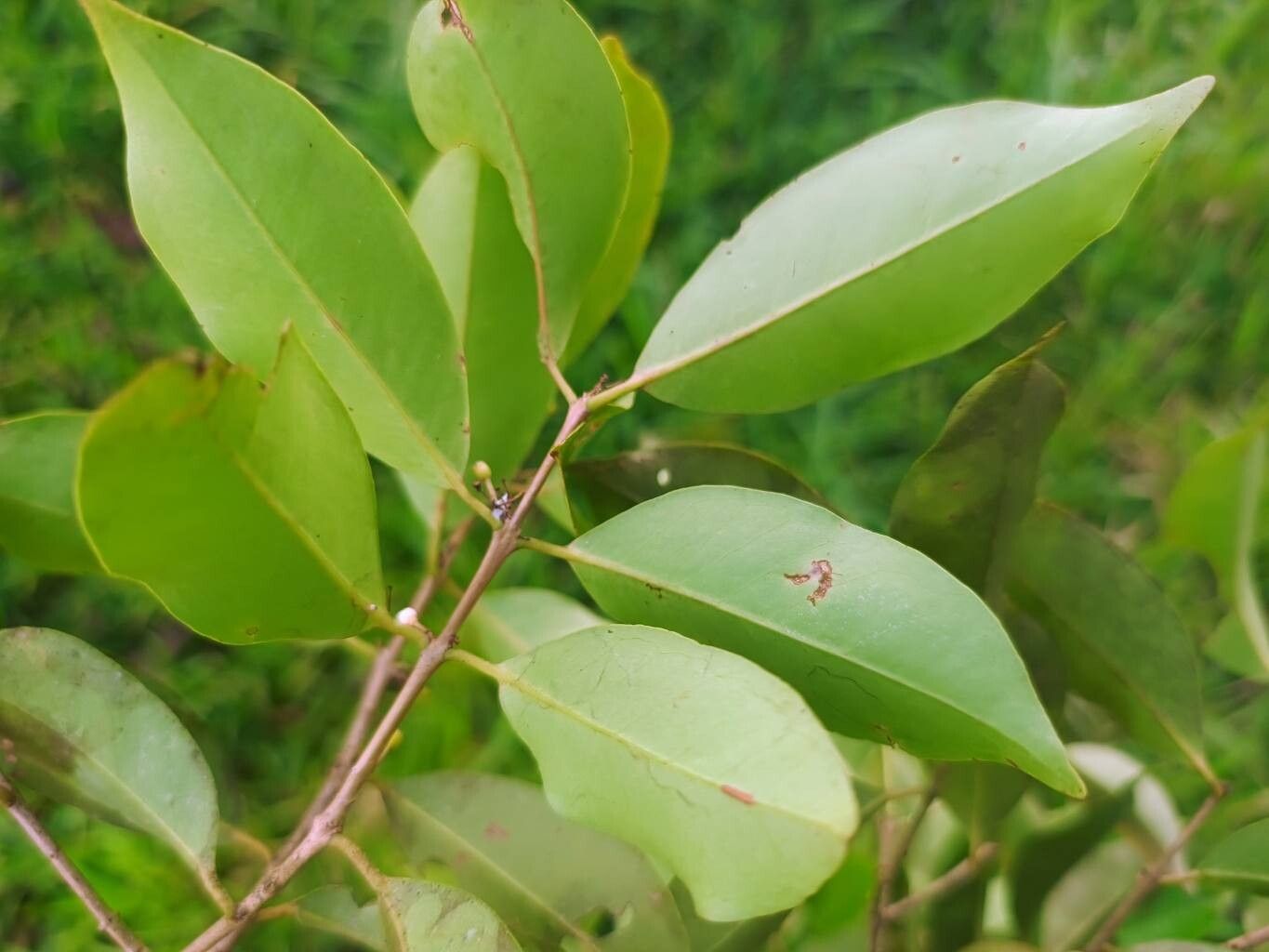
A small tree up to 5-7.5 m high. It is often a much smaller shrub. Branches often develop close to the ground. The branches are thin and wiry. It has attractive oval and pointed leaves. They are dark green and shiny. The leaves are 2.5-6 cm long by 1.5-3 cm wide. New leaves are dark purple or red. The flowers are small and white and the fruit is lobed and red. There is a single large seed inside. The fruit is about 3 cm across. The tree is used as a hedge plant. The flesh of the fruit is edible. There are several named cultivated varieties.
Edible Uses
The ripe fruit is delicious eaten fresh and can also be made into jams, jellies, pies, juices, sherbets, and other products. The ripe fruit is crimson to purplish-black with juicy, aromatic, subacid flesh. It is very rich in pectin and vitamin C, with a tangy flavour that can be bitter, and a distinctive aftertaste. Quality varies considerably: some forms are sweet, juicy, and mildly spicy, while others are peppery, sour, or resinous — much of this reflects natural variation in the fruit itself, including differences in acidity and resin levels. One fruit a day is said to provide all the vitamin C the body requires. The fruit is 15–30mm long. Unripe fruits can be used to make relishes and chutneys. Some forms fruit for up to 7 months a year. The aromatic leaves are used as a tea substitute.
Traditional Uses
The ripe fruit is eaten fresh. It can be cooked or used for jams and other products. The leaves are used as a substitute for tea.
This uses section is brief — help expand it
Medicinal Uses
The leaves are astringent, febrifuge, stomachic, and tonic. An infusion is used to treat head colds, influenza, chest colds, coughs, and fevers. An infusion is also drunk shortly before childbirth. Crushed leaves steeped in boiling water make a wash to soothe irritated skin. The fruits are used to reduce blood pressure and are made into a syrup for treating influenza. Compounds in the stems and leaves show possible antimicrobial activity.
Known Hazards
The seeds are extremely resinous and toxic.(Pollen may cause allergic reaction)
Distribution
It is a tropical plant. It grows in the lowlands. It is native to South America. It grows in the tropical lowlands from sea level up to about 800 m or higher in Papua New Guinea. In south India it grows to 1700 m altitude. In Argentina it grows from sea level to 1,500 m above sea level. It is suited to a warm moist climate. Adequate moisture is needed during fruit development. It can be grown in the subtropics. It can stand some frost. Mature trees can withstand frosts down to -3°C. It does best with a pH of 5-7. It grows in Miombo woodland in Africa. It suits hardiness zones 10-12. In XTBG Yunnan. In Sichuan.
Where It Grows
Africa, Amazon, Argentina, Asia, Australia, Bahamas, Belize, Bermuda, Bolivia, Brazil*, Cameroon, Cape Verde, Central Africa, Central America, China, Colombia, Cook Islands, Cuba, Dominican Republic, East Africa, El Salvador, Ethiopia, Fiji, French Guiana, Ghana, Guadeloupe, Guatemala, Guianas, Guinea-Bissau, Guyana, Haiti, Hawaii, India, Indochina, Indonesia, Jamaica, Japan, Madagascar, Malawi, Malaysia, Marquesas, Martinique, Mexico, Micronesia, Mozambique, Niue, Norfolk Island, Pacific, Panama, Papua New Guinea, PNG, Paraguay, Philippines, Pohnpei, Puerto Rico, Samoa, Sao Tome and Principe, SE Asia, Sierra Leone, South America, Sri Lanka, St Lucia, Suriname, Taiwan, Thailand, Tonga, Uganda, Uruguay, USA, Vanuatu, Venezuela, Vietnam, West Africa, West Indies, Zambia, Zimbabwe,
Cultivation
Brazil cherry succeeds in warm temperate to tropical areas, up to an elevation of 1,800 metres in the tropics. The temperature range for growth is reported to be 12 - 32°c, with the optimum between 21 - 27°c. It is rather cold-tolerant and will stand several degrees of frost unharmed, with older plants suffering only superficial injury at -5°c. The annual rainfall range for growth is reported to be 700 - 2,700mm, with the optimum between 1,200 - 2,000mm. It is well adapted to areas of high relative humidity but can also withstand a long dry season. Prefers a fertile, moist soil in a sunny to partially shaded position. Adaptable to a range of soil types, but intolerant of alkaline soils. Succeeds in alkaline soils according to another report. Prefers high levels of organic matter in the soil. A position in full sun is required for the plant to maintain its best shape. Plants are deep rooted and can withstand drought. Plants can become invasive in some areas, spreading by means of their roots. A fairly slow-growing plant. Flowering and fruiting may start when plants are 2 years old under favourable circumstances, usually it starts when 3 - 6 years old, on the flushes of the previous season or basal part of the shoots of the current season. Flowering and fruiting continue over an extended period (6 - 8 weeks) and, depending on the climate, there may be several crops in a year In India pruned bushes yielded 2.7 - 3.6 kg fruit per plant. The highest yield obtained in Israel was 11 kg fruit from one untrimmed plant. Two main types are distinguished: the most common form has bright cerise fruit and red-tinged foliage; the other form has dark-red to black berries and similarly tinted leaves; the latter form is rarer and tends to be sweeter and less resinous. There are several named varieties. Fruit are mature 5-6 weeks after flowering. The fruit is about 3 cm across. Plant Spacing 10 -12 ft. (3 - 3.6 m).
Propagation
Seed must come from significantly overripe, unblemished fruit. Once cleaned and dried, seed keeps its viability for only about 1 month and is best sown immediately in a partially shaded position in individual containers. A germination rate of around 80% can be expected, with sprouting within 20–50 days. Seed can also be planted 1–2cm deep in nursery beds and transplanted when 20–30cm tall. Layering, ground layering, grafting, and suckers are all viable propagation methods. Tips from trees with better fruit types can be grafted onto seedling rootstocks.
Other Uses
The crushed leaves release a pungent oil used as an insect repellent. The bark is rich in tannin, containing 20–28%. The wood is moderately heavy, hard, compact, and very durable; it is of small dimensions and used locally for items such as tool handles. The plant tolerates shearing well and becomes densely branched when trimmed regularly, making it suitable for use as a hedge or screen. It can also be grown as a houseplant.
Production
It is a slow growing plant. Several crops of fruit are produced each year. Flowers or fruit can be on the tree throughout the year in tropical locations. Trees start to produce fruit after about 3-4 years. Fruit are mature 5-6 weeks after flowering.
Other Information
Trees have been grown and distributed in some coastal areas in Papua New Guinea.
Notes
There are about 550 Eugenia species. They are mostly in tropical and subtropical South America. It has antioxidant activities.
Nutrition
| Part | Moisture | kJ | kcal | Protein | Vit A | Vit C | Iron | Zinc |
|---|---|---|---|---|---|---|---|---|
| Fruit | 90.8 | 138 | 33 | 0.8 | 150 | 26.3 | 0.2 | — |
Synonyms
Also Known As
Badirbonga, Brazilian cherry, Cayenne cherry, Ceremai belanda, Cereza de cayena, Cereza de Surinam, Ceri brazil, Cerise de cayenne, Dewandaru, Dorobokalatrano, Florida cherry, Guinda, Hong zi guo, Mayom-farang, Pendanga, Pitanga de praia, Pitangueira, Rasay, Surinaamsekers, Teri
References (92)
- Surinam cherry references
- Abbiw, D.K., 1990, Useful Plants of Ghana. West African uses of wild and cultivated plants. Intermediate Technology Publications and the Royal Botanic Gardens, Kew. p 46
- Ambasta, S.P. (Ed.), 2000, The Useful Plants of India. CSIR India. p 211
- Arora, R. K., 2014, Diversity in Underutilized Plant Species - An Asia-Pacific Perspective. Bioversity International. p 70
- Asfaw, Z. and Tadesse, M., 2001, Prospects for Sustainable Use and Development of Wild Food Plants in Ethiopia. Economic Botany, Vol. 55, No. 1, pp. 47-62
Show all 92 references Hide references
- Bailao, E. F. L. C., et al, 2015, Bioactive Compounds Found in Brazilian Cerrado Fruits. International Journal of Molecular Sciences. 16:23760-23783
- Barwick, M., 2004, Tropical and Subtropical Trees. A Worldwide Encyclopedic Guide. Thames and Hudson p 174
- Berihun, T. & Molla, E., 2017, Study on the Diversity and Use of Wild Edible Plants in Bullen District Northwest Ethiopia. Hindawi Journal of Botany. Article ID 8383468
- Bianchini, F., Corbetta, F., and Pistoia, M., 1975, Fruits of the Earth. Cassell. p 168
- Bodkin, F., 1991, Encyclopedia Botanica. Cornstalk publishing, p 459
- Bortolotto, I. M., et al, 2015, Knowledge and use of wild edible plants in rural communities along Paraguay River, Pantanal, Brazil. Journal or Ethnobiology and Ethnomedicine. 11:46
- Bortolotto, I. M., et al, 2018, Lista preliminar das plantas alimenticias nativas de Mato Grosso do Sul, Brasil. Iheringia, Serie Botanica, Porto Alegre, 73 (supl.):101-116
- Brack, P., et al, 2020, Frutas nativas do Rio Grande do Sul, Brasil: riqueza e potencial alimentício. Native fruits of Rio Grande do Sul, Brazil: richness and potential as food. Rodriguésia 71: e03102018.
- Brazil: Biodiversity for Food and Nutrition. http://www.b4fn.org/countries/brazil/
- Burkill, H. M., 1985, The useful plants of west tropical Africa, Vol. 4. Kew.
- Burkill, I.H., 1935, A Dictionary of the Economic Products of the Malay Peninsula. p 987
- Coradin, L. et al (Eds), 2011, Especies Nativas da Flora Brasileira de Valor Economico Atual ou Potencial. Brasilia MMA. p 170
- Coronel, R.E., 1982, Fruit Collections in the Philippines. IBPGR Newsletter p 6
- Cundall, P., (ed.), 2004, Gardening Australia: flora: the gardener's bible. ABC Books. p 579
- Darley, J.J., 1993, Know and Enjoy Tropical Fruit. P & S Publishers. p 129
- Edwards. S., et al, (Eds), 1995, Flora of Ethiopia and Eritrea. Vol.2, Part 2 Canellaceae to Euphorbiaceae. Uppsala, Sweden. p 92
- Facciola, S., 1998, Cornucopia 2: a Source Book of Edible Plants. Kampong Publications, p 158
- Flora of Australia Volume 49, Oceanic Islands 1, Australian Government Publishing Service, Canberra. (1994) p 217
- French, B.R., 1986, Food Plants of Papua New Guinea, A Compendium. Asia Pacific Science Foundation p 244
- Garner, R.J., and Chaudhri, S.A., (Ed.) 1976, The Propagation of Tropical fruit Trees. FAO/CAB. p 355
- Gouldstone, S., 1983, Growing your own Food-bearing Plants in Australia. Macmillan p 122
- Grandtner, M. M. & Chevrette, J., 2013, Dictionary of Trees, Volume 2: South America: Nomenclature, Taxonomy and Ecology. Academic Press p 243
- Hearne, D.A., & Rance, S.J., 1975, Trees for Darwin and Northern Australia. AGPS, Canberra p 66
- Hedrick, U.P., 1919, (Ed.), Sturtevant's edible plants of the world. p 302
- Hermandez Bermejo, J.E., and Leon, J. (Eds.), 1994, Neglected Crops. 1492 from a different perspective. FAO Plant Production and Protection Series No 26. FAO, Rome. p 16
- Hibbert, M., 2002, The Aussie Plant Finder 2002, Florilegium. p 99
- Howard, R., 1974-. Flora of the lesser Antilles.
- Hu, Shiu-ying, 2005, Food Plants of China. The Chinese University Press. p 576
- Hunter, D., et al, 2019, The potential of neglected and underutilized species for improving diets and nutrition. Planta (2019) 250:709-729
- Huxley, ed. The new Royal Horticultural Society dictionary of gardening. 1992
- INFOODS:FAO/INFOODS Databases
- International Seed Testing Association. 1988. International Seed Testing Association list of stabilized plant names. (ISTA)
- Jardin, C., 1970, List of Foods Used In Africa, FAO Nutrition Information Document Series No 2.p 135
- John, L., & Stevenson, V., 1979, The Complete Book of Fruit. Angus & Robertson p 160
- Katende, A.B., Birnie, A & Tengnas B., 1995, Useful Trees and Shrubs for Uganda. Identification, Propagation and Management for Agricultural and Pastoral Communities. Technical handbook No 10. Regional Soil Conservation Unit, Nairobi, Kenya. p 294
- Kinupp, V. F., 2007, Plantas alimenticias nao-convencionais da regiao metropolitana de Porto Alegre, RS, Brazil p 86
- Kiple, K.F. & Ornelas, K.C., (eds), 2000, The Cambridge World History of Food. CUP p 1836
- Kujawska, M. & Luczaj, L., 2015, Wild Edible Plants Used by the Polish Community in Misiones, Argentina. Human Ecology 43:855-869
- Lembaga Biologi Nasional, 1977, Buah-Buahan, Balai Pustaka, Jakarta. p 14
- Leon, J., 1968, Fundamentos Botanicos de Los Cultivos Tropicales p 399
- Little, E. L., et al, 1974, Trees of Puerto Rico and the Virgin Islands. USDA Handbook 449. Forestry Service. p 662
- Llamas, K.A., 2003, Tropical Flowering Plants. Timber Press. p 285
- Lord, E.E., & Willis, J.H., 1999, Shrubs and Trees for Australian gardens. Lothian. p 55
- Lorenzi, H., 2002, Brazilian Trees. A Guide to the Identification and Cultivation of Brazilian Native Trees. Vol. 01 Nova Odessa, SP, Instituto Plantarum p 278
- Lorenzi, H., Bacher, L., Lacerda, M. & Sartori, S., 2006, Brazilian Fruits & Cultivated Exotics. Sao Paulo, Instituto Plantarum de Estuados da Flora Ltda. p 214
- Lyle, S., 2006, Discovering fruit and nuts. Land Links. p 198
- Macmillan, H.F. (Revised Barlow, H.S., et al) 1991, Tropical Planting and Gardening. Sixth edition. Malayan Nature Society. Kuala Lumpur. p 299
- Martin, F. W., et al, 1987, Perennial Edible Fruits of the Tropics. USDA Handbook 642 p 40
- Mello, A. J. M., 2015, Cultural landscapes of the Araucaria Forests in the northern plateau of Santa Catarina, Brazil. Journal of Ethnobiology and Ethnomedicine 11:51
- Miguel, E., et al, 1989, A checklist of the cultivated plants of Cuba. Kulturpflanze 37. 1989, 211-357
- Morton, Julia F., 1987, Fruits of Warm Climates. Creative Resources Systems, Inc. . p. 386
- Norrington, L., & Campbell, C., 2001, Tropical Food Gardens. Bloomings Books. p 96
- NYBG herbarium "edible"
- Oliviera V. B., et al, 2012, Native foods from Brazilian biodiversity as a source of bioactive compounds. Food Research International 48 (2012) 170-179
- Omawale, 1973, Guyana's edible plants. Guyana University, Georgetown p 49
- Paz, F. S., et al, 2021, Edible Fruit Plant Species in the Amazon Forest Rely Mostly on Bees and Beetles as Pollinators. Journal of Economic Entomology, XX(XX), 2021, 1–13
- Peekel, P.G., 1984, (Translation E.E.Henty), Flora of the Bismarck Archipelago for Naturalists, Division of Botany, Lae, PNG. p 408, 406
- Plants of Haiti Smithsonian Institute http://botany.si.edu/antilles/West Indies
- Poponoe,W., 1920, Manual of Tropical and Subtropical Fruits. Macmillan. p 286-292.
- Priyadi, H., et al, Five hundred plant species in Gunung Halimun Salak National Park West Java. A checklist including Sundanese names, distribution and use. CIFOR, FFPRI, SLU p 35
- PROSEA (Plant Resources of South East Asia) handbook, Volume 2, 1991, Edible fruits and nut. p 165
- Purseglove, J.W., 1968, Tropical Crops Dicotyledons, Longmans. p 401
- Recher, P, 2001, Fruit Spirit Botanical Gardens Plant Index. www.nrg.com.au/~recher/ seedlist.html p 2
- Reitz, ed. 1965-. Flora ilustrada catarinense.
- Riley, J.M., 1971, Pitanga: Surinam cherry. Californian Rare Fruit Council Year Book 1971. p14-25.
- Riley, J.M., 1973, Growing Rare Fruit in Northern California. Californian Rare Fruit Council Year Book 1973. pp 67-90.
- Roa, J. A. G. & Boada, D. S. G., 2018, Fundación para el Fortalecimiento de la Fruticultura y Plantas Alimenticias no Convencionales en Colombia.
- Scarpa, G. F., 2009, Wild food plants used by the indigenous peoples of South American Gran Chaco: A general synopsis and intercultural comparison. Journal of Applied Botany and Food Quality 83:90-101
- Segura, S., et al, 2018, The edible fruit species in Mexico. Genet Resour Crop Evol (2018) 65:1767–1793
- Sp. pl. 1:470. 1753
- Staples, G.W. and Herbst, D.R., 2005, A tropical Garden Flora. Bishop Museum Press, Honolulu, Hawaii. p 423 (Drawing)
- Sukarya, D. G., (Ed.) 2013, 3,500 Plant Species of the Botanic Gardens of Indonesia. LIPI p 626
- Tankard, G., 1990, Tropical fruit. An Australian Guide to Growing and using exotic fruit. Viking p 106
- Terrell et al. 1986. Agric. Handb. no. 505.
- USDA, ARS, National Genetic Resources Program. Germplasm Resources Information Network - (GRIN). [Online Database] National Germplasm Resources Laboratory, Beltsville, Maryland. Available: www.ars-grin.gov/cgi-bin/npgs/html/econ.pl (10 April 2000)
- van Wyk, B., 2005, Food Plants of the World. An illustrated guide. Timber press. p 192
- Verheij, E. W. M. and R. E. Coronel, eds. 1991. Edible fruits and nuts. In: E. W. M. Verheij & R. E. Coronel (eds.), Plant Resources of South-East Asia (PROSEA). 2:165.
- Vignale, B., et al, 2016, Selección de frutales nativos en Uruguay. 19 Horticultura Argentina 35 (87): May.-Ago. 2016
- Villachica, H., (Ed.), 1996, Frutales Y hortalizas promisorios de la Amazonia. FAO, Lima. p 229
- Vivien, J., & Faure, J.J., 1996, Fruitiers Sauvages d'Afrique. Especes du Cameroun. CTA p 235
- Wiersema, J. H. & Leon, B., 2013, World Economic Plants. A Standard Reference CRC Press. 2nd Ed. p 290
- Williams, C.N., Chew, W.Y., and Rajaratnam, J.A., 1989, Tree and Field Crops of the Wetter Regions of the Tropics. Longman, p 140.
- World Checklist of Useful Plant Species 2020. Royal Botanic Gardens, Kew
- www.colecionandofrutas.org
- www.worldagroforestrycentre.org/sea/products/afdbases/af/asp/SpeciesInfo.asp?SpID=18082
- Yuncker, T. G., 1943, The Flora of Niue Island. Bernice P. Bishop Museum Bulletin 178 p 90
- Zawiah, N. & Othaman, H., 2012, 99 Spesies Buah di FRIM. Institut Penyelidikan Perhutanan Malaysia. p 230 (As Syzygium uniflora)