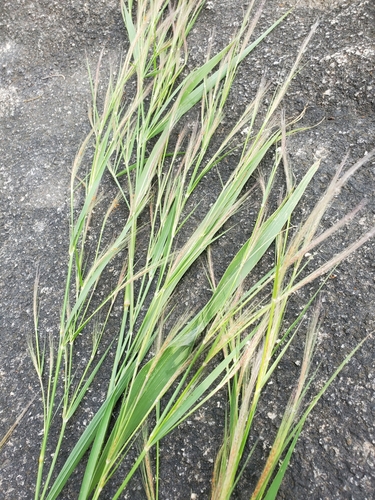
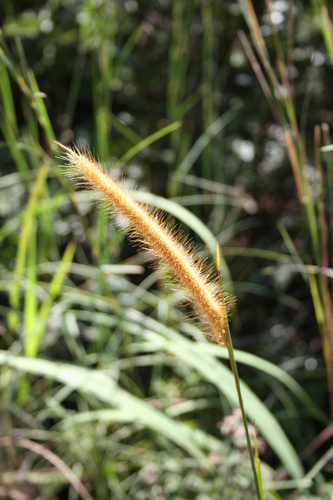
Oryza officinalis
Wall. ex G. Watt
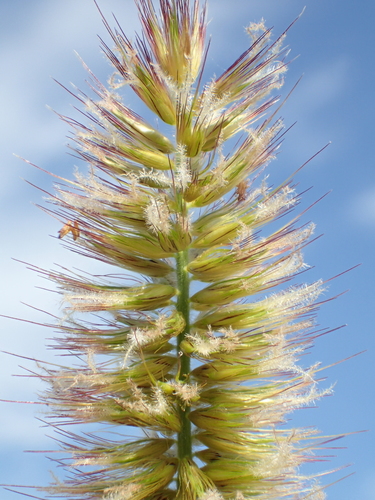
iNaturalist· cc-by-nc
(c) Jason Searle, some rights reserved (CC BY-NC), uploaded by Jason Searle
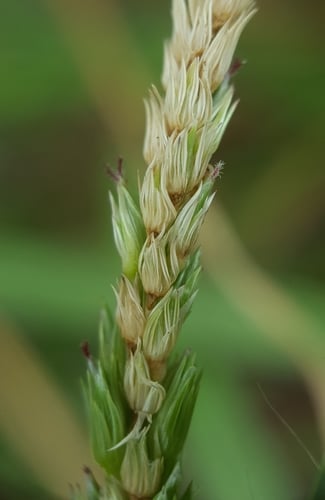
iNaturalist· cc-by-nc
(c) Jason Searle, some rights reserved (CC BY-NC)
Summary
Source: WikipediaOryza officinalis is species of flowering plant in the genus Oryza (rice) native to India, Nepal, the eastern Himalaya, southeast Asia, south-central and southeast China, Hainan, the Philippines, New Guinea, and the Northern Territory and Queensland in Australia. A perennial diploid with the CC rice genome, it can reach 3 m (10 ft) in height. It is the namesake of a widespread species complex.
Description
A grass. It keeps growing from year to year. It can be erect or creeping and forming roots at the nodes. It grows 1.5-3 m tall. The stems are 7-10 mm across. The leaf blade is 30-50 cm long by 2-3 cm wide.
Edible Uses
The red pericarp present in nearly all wild species is favoured by ethnic tribes and some urban people as having nutritional increments or is used for decorative purpose during festivities. On the other hand, if found in commercial lots, the red seed-coat carried by primitive cultivars lowers the grade of milled rice.
Distribution
It is a tropical plant. in southern China it grows on low hills and alluvial plains below 1,000 m above sea level. In Yunnan.
Where It Grows
Asia, Bangladesh, Bhutan, Cambodia, China, Himalayas, India, Indochina, Indonesia, Malaysia, Myanmar, Nepal, Papua New Guinea, PNG, Philippines, SE Asia, Sri Lanka, Thailand, Vietnam,
Cultivation
Succeeds in full sun and in partial shade. Prefers alluvial silt soils or sandy soils on limestone in the wild. Growth is slow at the seedling stage. Oryza species form a group of C3- cycle plants. Flowering occurs near the end of the prevailing rainy season. Grains are usually deciduous and often have a strong dormancy. Plants can be in flower at any time of the year.
Propagation
Seed. The seed of wild rice less than 12 months old often exhibits strong dormancy, which implies (though this has not been established) that the seed retains its viability for a considerable period. Heat treatment is generally effective in breaking dormancy - alternating temperatures between 34°c for 16 hours then 11°c for 8 hours is usually effective, though the time taken varies between species. Surface sow the seed in light shade and do not allow to dry out. Seed should germinate within 7 days at 30°c. Prick out 2 - 3 seedlings into individual pots when large enough to handle and, after a few days, move to a sunny position. Grow on until large enough to plant out.
Other Uses
Oryza officinalis is resistant to yellow stem borers, tungro virus and several planthoppers. Because they are a source of resistance to or tolerance of biotic and abiotic stresses, the most important use of the various species of wild rice is probably in breeding programmes to improve the species of cultivated rice.
Other Information
It is cultivated.
Notes
This is a diploid species with CC genome.
References (2)
- Dict. econ. prod. India 5:501. 1891
- Zeven, A. C. & de West, J. M. J., 1982, Dictionary of cultivated plants and their regions of diversity. Wageningen. p 53