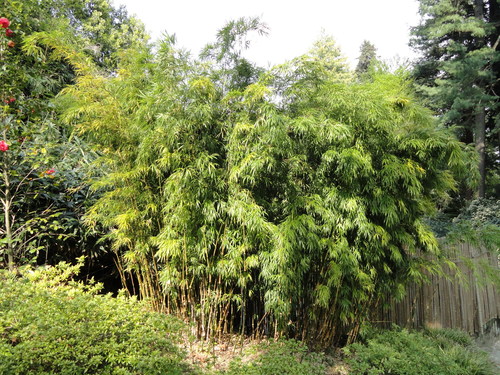
Pennisetum divisum
(Forsk. ex J. F. Gmel.) Henrard
Bristle grass
iNaturalist· cc-by-nc
(c) Mohammad Marafi, some rights reserved (CC BY-NC)
iNaturalist· cc-by-nc
(c) Mohammad Marafi, some rights reserved (CC BY-NC)
iNaturalist· cc-by-nc
(c) shanepelser, some rights reserved (CC BY-NC)
Description
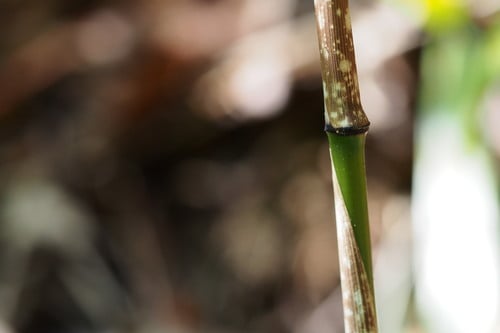
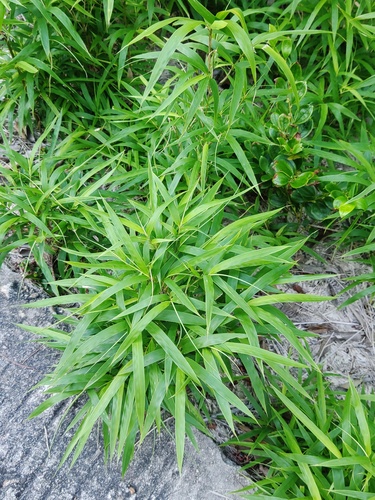
A grass. It keeps growing from year to year. It forms thick clumps. It has short woody rhizomes or underground stems. It grows 1 m high. The plant has a woody base. The stems have angular joints at the nodes. The leaves are rolled. The leaf blades are 7.5 cm long by 1-1.5 mm wide. The flowers are in a spike like head.
Edible Uses
The seeds are harvested and used as a cereal grain.
Distribution
A desert plant. It grows on gravelly and stony soils in Bahrain. It is a desert plant. It grows in dry Saharan areas in West Africa. It can grow in arid places.
Where It Grows
Africa, Arabia, Asia, Bahrain, Egypt, India, Iran, Iraq, Libya, Mali, Mediterranean, Middle East, Morocco, Niger, North Africa, Pakistan, Sahel, West Africa,
Notes
There are about 100 Pennisetum species.
Synonyms
Also Known As
Athmoom, Hada, Mekhamla, Morrat Ghazal, Oum khamela, Thaimoom
References (8)
- Ambasta, S.P. (Ed.), 2000, The Useful Plants of India. CSIR India. p 438
- Blumea 3:162. 1938
- Burkill, H. M., 1985, The useful plants of west tropical Africa, Vol. 2. Kew.
- Flora of Pakistan. www.eFloras.org
- Jardin, C., 1970, List of Foods Used In Africa, FAO Nutrition Information Document Series No 2.p 6 (As Pennisetum dichotomum)
Show all 8 references Hide references
- Nassif, F., & Tanji, A., 2013, Gathered food plants in Morocco: The long forgotten species in Ethnobotanical Research. Life Science Leaflets 3:17-54
- Phillips, D.C., 1988, Wild Flowers of Bahrain. A Field Guide to Herbs, Shrubs, and Trees. Privately published. p 117
- Rivera, D. et al, 2006, Gathered Mediterranean Food Plants - Ethnobotanical Investigations and Historical Development, in Heinrich M, Müller WE, Galli C (eds): Local Mediterranean Food Plants and Nutraceuticals. Forum Nutr. Basel, Karger, 2006, vol 59, pp 18–74 (As Pennisetum dichotomum)