Pennisetum glaucum
(L.) R. Br.
Bullrush millet, Pearl millet
iNaturalist· cc-by-nc
(c) Светлана Шавыкина, some rights reserved (CC BY-NC)
iNaturalist· cc-by-nc
(c) Светлана Шавыкина, some rights reserved (CC BY-NC)
iNaturalist· cc-by-nc
(c) Светлана Шавыкина, some rights reserved (CC BY-NC)
Summary
Annual grass reaching 3 m tall, flowering and seeding September to October, wind-pollinated hermaphroditic species. Grows in light sandy or medium loamy, well-drained soils tolerating poor nutrition. Adapts to mildly acidic to basic pH, requires full sun, tolerates dry to moist conditions and drought.
Description
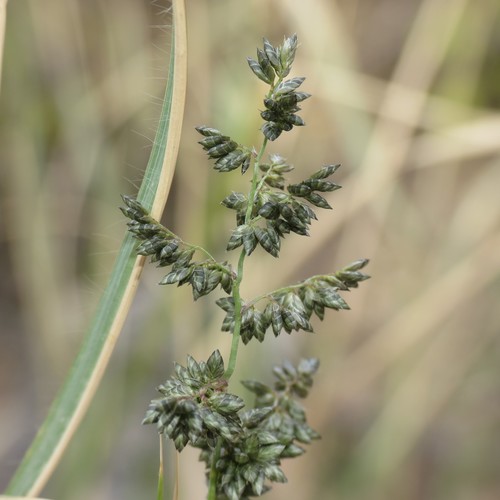
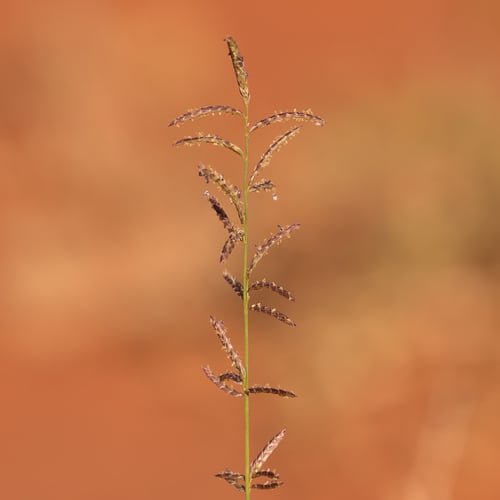
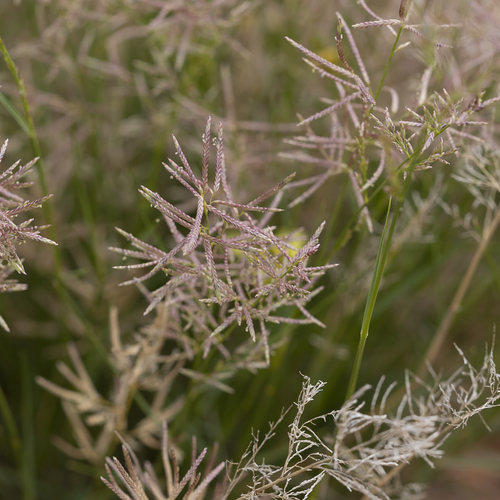
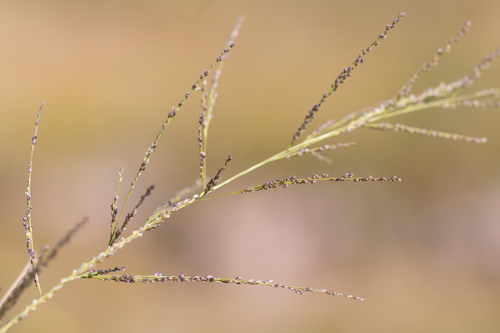
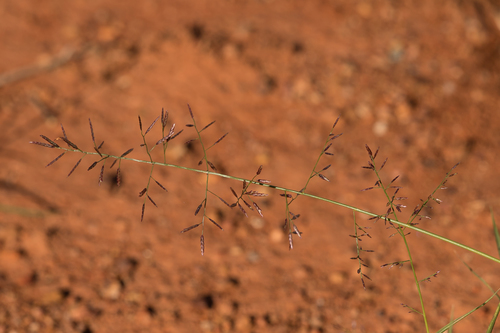
A millet grass. It is an annual grass. It grows to 3 m tall. The leaf blades are 20-100 cm long by 2-5 cm wide. The flower is dense and 40-50 cm long by 1.2-1.5 cm wide. They also vary a lot in shape and size. Plants that tiller produce smaller heads. The species varies a lot. There are 13 cultivated, 15 weed and 6 wild races of this grass. It has a cylindrical ear like a bullrush. The grains are small and round and have a shiny grey colour like pearls. There are thousands of cultivated varieties. Possibly now Cenchrus americanus (L.) Morrone
Edible Uses
The seeds can be eaten raw or cooked, used much like rice in sweet or savoury dishes, or ground into a flour for bread, porridge, and similar preparations. The grain is commonly fermented to produce various foods, and the sweet-tasting grains are eaten raw by children. The seeds are highly nutritious.
Traditional Uses
The seeds are eaten like rice. They are also ground into flour and made into bread and cakes and porridge. They are used to make alcoholic drinks. Caution: Alcohol is a cause of cancer. They are mixed with other grains and seeds to make fermented foods. Some kinds have sweet stalks that are chewed. The young ears can be roasted and eaten like sweet corn. The plant is also infested by a fungus which is eaten.
Medicinal Uses
The plant acts as an appetiser and tonic, and is considered useful in treating heart diseases. The fruits have been rubbed directly onto open facial pimples to help clear them.
Distribution
A tropical plant. It suits regions with a short growing season. It grows in areas with less than 600 mm of rainfall. It is often in hot places. (It is replaced with sorghum between 600 and 1200 mm rainfall and then by finger millet or maize above 1200 mm rainfall.) It is important in the drier areas of India and Pakistan. It can grow in arid places.
Where It Grows
Africa*, Algeria, Angola, Asia, Australia, Bahrain, Bangladesh, Benin, Botswana, Burkina Faso, Cameroon, Central Africa, Central African Republic, CAR, Central America, Chad, China, Congo DR, Côte d'Ivoire, East Africa, East Timor, Egypt, Eritrea, Ethiopia, Europe, Gambia, Ghana, Guinea, Guinée, Guinea-Bissau, Haiti, India, Ivory Coast, Kenya, Korea, Kuwait, Lesotho, Madagascar, Malawi, Mali, Mauritania, Middle East, Mongolia, Mozambique, Myanmar, Namibia, Nepal, Niger, Nigeria, North Africa, Northeastern India, Oman, Pakistan, Sahara, Sahel, Saudi Arabia, SE Asia, Senegal, Sierra Leone, Slovenia, Somalia, South Africa, Southern Africa, South Sudan, Spain, Sri Lanka, St. Kitts and Nevis, Sudan, Tanzania, Timor-Leste, Togo, Uganda, USA, West Africa, West Indies, Yemen, Zambia, Zimbabwe,
Cultivation
Plants are grown from seed. It is usually sown directly into the field. The plant density is adjusted to suit rainfall and soil fertility. The spacing is 45 cm apart up to 200 cm apart. It is also intercropped with other crops such as cowpea, sorghum and peanut. Crops are normally weeded 2 or 3 times.
Propagation
Sow seed in spring in a greenhouse. Once seedlings are large enough to handle, prick them out into individual pots and plant them out in early summer.
Other Uses
None known Special Uses
Production
It takes from 75-180 days to maturity. The heads can be picked by hand or the plant removed. Some types need to be picked 2 or 3 times as heads mature.
Other Information
It is cultivated for its grain. It is the second most important native African cereal. It is grown on 14 million hectares in Africa and 11 million hectares in India and Pakistan. It is the staple food of 100 million people.
Notes
There are about 100 Pennisetum species. Chemical composition: Protein = 11.5%. Fat = 6.03%. Carbohydrate = 40.73%. Ash = 8.23%.
Nutrition
| Part | Moisture | kJ | kcal | Protein | Vit A | Vit C | Iron | Zinc |
|---|---|---|---|---|---|---|---|---|
| Seeds | 11.6 | 1442 | 345 | 10.5 | 0 | 0 | 6.5 | 1.7 |
Synonyms
Also Known As
Amabele, Ayuo, Babala, Bajra, Ban kangni, Bandari ghas, Bandra, Barati, Bhadli, Bilikorla hullu, Bini, Bolu, Bonu, Bubele, Bultuk, Butun, Candle millet, Cat tail millet, Cumbu, Dagusa, Dauro, Dissi, Duhun, Dukhon, Emeye, Gaouri, Gawri, Gero, Haanibii, Hatchi, Hegni, Inyouti, Isansa, Jamir, Kala-sat, Kapelembe, Khwe-mi-pok, Kolaat, Kolhu, Kolvi, Kotu, Kukra, Kunchi, Likun, Machewere, Madja, Madjo, Maiwa, Masan, Massango, Mauza, Mawale, Mayi, Mhunga, Mhungu, Mi-mawele, Midjo-preto, Miglio perla, Mijo perla, Milhete, Milho africano, Milho-malha, Milho-preto, Millet perle, Mpyoli, Munga, Muzundi, Mwere, Nakka korra, Nashasha, Ntweka, Nyalothi, Nyauti, Nyo, Pale pigeon grass, Pinginatchi, Raa, Sajje, Sanyo, Short Millet, Somene, Spiked millet, Tamir, Toujin kibi, Uchewere, Unyaluthi, Unyawothi, Unyawoti, Uwele, Yayomaata, Yellow bristle-grass, Yellow Fox Tail, Yu gu, Zipti ghass
References (77)
- Abbiw, D.K., 1990, Useful Plants of Ghana. West African uses of wild and cultivated plants. Intermediate Technology Publications and the Royal Botanic Gardens, Kew. p 25 (As Pennisetum americanum)
- Ambasta, S.P. (Ed.), 2000, The Useful Plants of India. CSIR India. p 439 (As Pennisetum typhoides and Setaria glauca)
- Andrews, D.J. & Kumar, K.A., 2006. Pennisetum glaucum (L.) R.Br. [Internet] Record from Protabase. Brink, M. & Belay, G. (Editors). PROTA (Plant Resources of Tropical Africa), Wageningen, Netherlands. < http://database.prota.org/search.htm>. Accessed 20 October 200919 October 2009.
- Ara, R. I. T., 2015, Leafy Vegetables in Bangladesh. Photon eBooks. p 161
- Baa-Poku, F. & Asante, I. K., 2020, Use of Neglected and Underutilized Crop Species (NUCS) in some farming communities in the Upper Afram and Upper Dayi River Basins in Ghana. International Journal of Technology and Management Research 5 (2): 48-63
Show all 77 references Hide references
- Baidu-Forson, J.J., et al ,2014,. Assessment of agrobiodiversity resources in the Borotse flood plain, Zambia. CGIAR Research Program on Aquatic Agricultural Systems. Penang, Malaysia. Working Paper: AAS-2014-12.
- Burkill, H. M., 1985, The useful plants of west tropical Africa, Vol. 2. Kew.
- Burkill, I.H., 1966, A Dictionary of the Economic Products of the Malay Peninsula. Ministry of Agriculture and Cooperatives, Kuala Lumpur, Malaysia. Vol 2 (I-Z) p 1717
- Cherikoff V. & Isaacs, J., The Bush Food Handbook. How to gather, grow, process and cook Australian Wild Foods. Ti Tree Press, Australia p 196 (As Setaria glauca)
- Cobley, L.S. (rev. Steele, W.M.) 2nd Ed., 1976, An Introduction to the Botany of Tropical Crops. Longmans. p 50
- Dansi, A., et al, 2012, Diversity of the Neglected and Underutilized Crop Species of Importance in Benin. The Scientific World Journal. Volume 2012, Article ID 932947, 19 pages
- Ess. Agrostogr. 51, 169, 178. 1812 (As Setaria glauca)
- Facciola, S., 1998, Cornucopia 2: a Source Book of Edible Plants. Kampong Publications, p 178 (As Pennisetum americanum)
- FAO, 1988, Traditional Food Plants, FAO Food and Nutrition Paper 42. FAO Rome p 394
- Flora of Pakistan. www.eFloras.org
- Fowler, D. G., 2007, Zambian Plants: Their Vernacular Names and Uses. Kew. p 71
- Fox, F. W. & Young, M. E. N., 1982, Food from the Veld. Delta Books. p 296
- GAMMIE, (As Setaria glauca)
- Glew, R. H., et al, 1997, Amino Acid, Fatty Avid and Mineral Composition of 24 Indigenous Plants of Burkina Faso. Journal of Food Composition and Analysis 10, 205-217 (As Pennisetum americanum)
- Grivetti, L. E., 1980, Agricultural development: present and potential role of edible wild plants. Part 2: Sub-Saharan Africa, Report to the Department of State Agency for International Development. p 30 (As Pennisetum gambiense) p 41 as Pennisetum tiphoideum;
- Guite, C., 2016, Study of wild edible plants associated with the Paite Tribe of Manipur, India. International Journal of Current Research. Vol. 8, Issue 11, pp. 40927-40932
- Harris, F. M. A. and Mohammed, S., 2003, Relying on Nature: Wild Foods in Northern Nigeria. Ambio Vol. 32 No. 1. p 25-30
- Shaheen, N., et al, 2013, Food Composition Table for Bangladesh. University of Daka. p 3 (As Pennisetum typhoideum)
- Hedrick, U.P., 1919, (Ed.), Sturtevant's edible plants of the world. p 470 (As Pennisetum typhoideum)
- Heywood, V.H., Brummitt, R.K., Culham, A., and Seberg, O., 2007, Flowering Plant Families of the World. Royal Botanical Gardens, Kew. p 394
- http://www.botanic-gardens-ljubljana.com/en/plants
- Hussey, B.M.J., Keighery, G.J., Cousens, R.D., Dodd, J., Lloyd, S.G., 1997, Western Weeds. A guide to the weeds of Western Australia. Plant Protection Society of Western Australia. p 62
- Jardin, C., 1970, List of Foods Used In Africa, FAO Nutrition Information Document Series No 2.p 7 (As Pennisetum typhoides and Pennisetum pycnostachyum))
- Jardin, C., 1970, List of Foods Used In Africa, FAO Nutrition Information Document Series No 2.p 6 (As Pennisetum echinurus and Pennisetum malachochaete and Pennisetum maiwa and Pennisetum ancylochaete and Pennisetum cinereum and Pennisetum gambiense and Pennisetum leonis and Pennisetum nigritarum)
- Khasbagan, Hu-Yin Huai, and Sheng-Ji pei, 2000, Wild Plants in the Diet of Athorchin Mongol Herdsmen in Inner Mongolia. Economic Botany 54(4): 528-536 (As Setaria glauca)
- Kiple, K.F. & Ornelas, K.C., (eds), 2000, The Cambridge World History of Food. CUP p 114
- Koni, J. M. & Bostein, K., 2008, Noms et usages des plantes utiles chez les Nsong, DR Congo. University of Gothenburg. Department of Oriental and African Languages. p 32
- Lazarides, M. & Hince, B., 1993, Handbook of Economic Plants of Australia, CSIRO. p 185 (Also as Pennisetum americanum and Pennisetum typhoides and Setaria glauca)
- Lykke, A. M., Mertz, O, and Ganaba, S., 2002, Food Consumption in Rural Burkina Faso, Ecology of Food and Nutrition, 41:119-152
- Macmillan, H.F. (Revised Barlow, H.S., et al), 1991, Tropical Planting and Gardening. Sixth edition. Malayan Nature Society. Kuala Lumpur. p 354 (As Pennisetum americanum)
- Masoodi, H. U. R. & Sundriyal, R. C., 2020, Richness of non-timber forest products in Himalayan communities—diversity, distribution, use pattern and conservation status. Journal of Ethnobiology and Ethnomedicine 16:56 (As Setaria glauca)
- Masters, T., 2021, Traditional food plants of the upper Aswa River catchment of northern Uganda—a cultural crossroads. Journal of Ethnobiology and Ethnomedicine (2021) 17:24
- Maundu, P. et al, 1999, Traditional Food Plants of Kenya. National Museum of Kenya. 288p
- Menninger, E.A., 1977, Edible Nuts of the World. Horticultural Books. Florida p 150 (As Pennisetum typhoides)
- Molla, A., Ethiopian Plant Names. http://www.ethiopic.com/aplants.htm
- National Research Council, 1996, Lost Crops of Africa. Volume 1: Grains. National Academy Press, Washington, D.C. p 77
- Nyadanu, D., et al, 2015, Agro-biodiversity and challenges of on-farm conservation: the case of plant genetic resources of neglected and underutilized crop species in Ghana. Genet. Resourc. Crop Evol. 62(7):
- Paczkowska, G. & Chapman, A.R., 2000, The Western Australian Flora. A Descriptive Catalogue. Western Australian Herbarium. p 113
- Peduruhewa, P. S., et al, 2021, Potential of Underutilized Wild Edible Plants as the Food for the Future – A Review. Journal of Food Security, Vol. 9, No. 4, 136-147
- Peters, C. R., O'Brien, E. M., and Drummond, R.B., 1992, Edible Wild plants of Sub-saharan Africa. Kew. p 25
- Plants for a Future database, The Field, Penpol, Lostwithiel, Cornwall, PL22 0NG, UK. http://www.scs.leeds.ac.uk/pfaf/
- Prodr. 195. 1810
- PROSEA (Plant Resources of South East Asia) handbook Volume 10 Cereals. p 118
- Purseglove, J.W., 1979, Millets, in Simmonds N.W.,(ed), Crop Plant Evolution. Longmans. London. p 91 (As Pennisetum americanum)
- Purseglove, J.W., 1972, Tropical Crops. Monocotyledons. Longmans p 204 (As Pennisetum typhoides)
- Rashid, H. E., 1977, Geography of Bangladesh. Westview p 251 (As Pennisetum typhoideum)
- READ, (As Setaria glauca)
- Rodin, R.J., The Ethnobotany of the Kwanyama Ovambos, Missouri Botanical Garden. p 145 (As Pennisetum typhoides)
- Royal Botanic Gardens, Kew (1999). Survey of Economic Plants for Arid and Semi-Arid Lands (SEPASAL) database. Published on the Internet; http://www.rbgkew.org.uk/ceb/sepasal/internet [Accessed 3rd June 2011]
- Ruiters-Welcome, A. K., 2019, Food plants of southern Africa. Ph.D. thesis. Univ. of Johannesburg p 89
- Sangare, G., et al, 2016, Contribution of previous legumes to soil fertility and millet yields in West African Sahel. African Journal of Agricultural Research 11(28) pp 2486-2498
- Segnon, A. C. & Achigan-Dako, E. G., 2014, Comparative analysis of diversity and utilization of edible plants in arid and semi-arid areas in Benin. Journal of Ethnobiology and Ethnomedicine 2014, 10:80
- Shah, S. K., 2014, Dietary contribution of underutilized minor crops and indigenous plants collected from uncultivated lands and forests in Nepal. in Promotion of Underutilized Indigenous Food Resources for Food Security and Nutrition in Asia and Pacific. FAO. Bangkok p 64 (As Pennisetum typhoideum)
- Shava, S., et al, 2009, Traditional food crops as a source of community resilience in Zimbabwe. International Journal of the African Renaissance 4(1) (As Pennisetum americanum)
- Singh, H.B., Arora R.K.,1978, Wild edible Plants of India. Indian Council of Agricultural Research, New Delhi. p 85 (As Setaria glauca)
- Singh, V. and Singh, P., 1981, Edible Wild Plants of Eastern Rajasthan. J. Econ. Tax. Bot. Vol 2 pp 197-207 (As Setaria glauca)
- Small, E., 2009, Top 100 Food Plants. The world's most important culinary crops. NRC Research Press. p 352
- Solomon, C., 2001, Encyclopedia of Asian Food. New Holland. p 234 (As Pennisetum typhoides)
- Teron, R. & Borthakur, S. K., 2016, Edible Medicines: An Exploration of Medicinal Plants in Dietary Practices of Karbi Tribal Population of Assam, Northeast India. In Mondal, N. & Sen, J.(Ed.) Nutrition and Health among tribal populations of India. p 154 (As Pennisetum americanum) Terrell, 1976, Taxon 25:297-304
- Tredgold, M.H., 1986, Food Plants of Zimbabwe. Mambo Press. p 26
- Tutul, E et al, 2009, Angiospermic Flora of Runctia Sal Forest, Bangladesh. Bangladesh J. Plant Taxon. 16(1): 83-90. p 86 (As Setaria glauca)
- UPHOF, (As Setaria glauca)
- USDA, ARS, National Genetic Resources Program. Germplasm Resources Information Network - (GRIN). [Online Database] National Germplasm Resources Laboratory, Beltsville, Maryland. Available: www.ars-grin.gov/cgi-bin/npgs/html/econ.pl (10 April 2000)
- van Wyk, B., 2005, Food Plants of the World. An illustrated guide. Timber press. p 283
- van Wyk, Be, & Gericke, N., 2007, People's plants. A Guide to Useful Plants of Southern Africa. Briza. p 12
- van Wyk, B-E., 2011, The potential of South African plants in the development of new food and beverage products. South African Journal of Botany 77 (2011) 857–868
- Vickery, M.L. and Vickery, B., 1979, Plant Products of Tropical Africa, Macmillan. p 11 (As Pennisetum typhoides)
- Welcome, A. K. & Van Wyk, B.-E., 2019, An inventory and analysis of the food plants of southern Africa. South African Journal of Botany 122 (2019) 136–179
- Wiersema, J. H. & Leon, B., 2013, World Economic Plants. A Standard Reference CRC Press. 2nd Ed. p 505
- Williamson, J., 2005, Useful Plants of Malawi. 3rd. Edition. Mdadzi Book Trust. p 189 (As Pennisetum americanum)
- Wilson, J.M. & Witcombe, J.R., Crops for Arid lands, in Wickens, G.E., Goodin, J.R., and Field, D.V.,(Eds.) 1985, Plants for Arid Lands. Unwin Hyman, London, p 38
- www.zimbabweflora.co.zw 2011