Pouteria melanopoda
Eyma
Moraballi, Black pouteria
iNaturalist· cc-by-nc
(c) Nils Servientis - Bivouac Naturaliste, some rights reserved (CC BY-NC), uploaded by Nils Servientis - Bivouac Naturaliste
iNaturalist· cc-by-nc
(c) Nils Servientis - Bivouac Naturaliste, some rights reserved (CC BY-NC)
Summary
Source: WikipediaPouteria melanopoda is a species of plant in the family Sapotaceae. It is found in French Guiana and Suriname.
Description
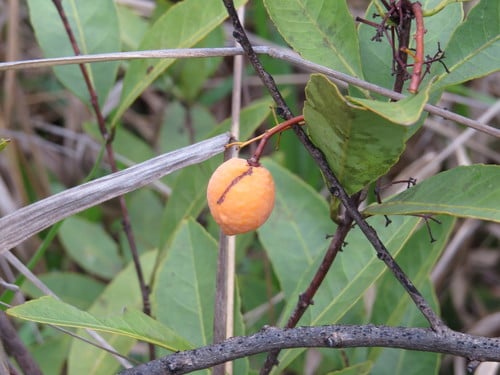
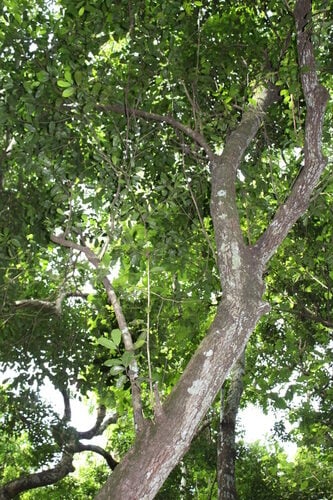
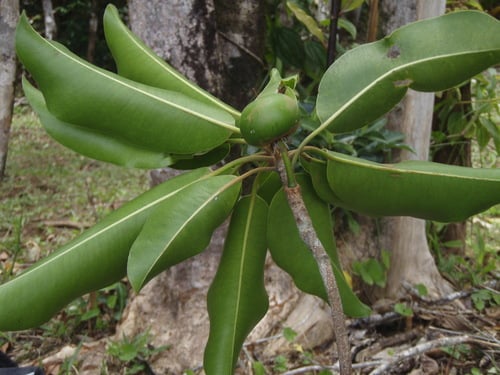
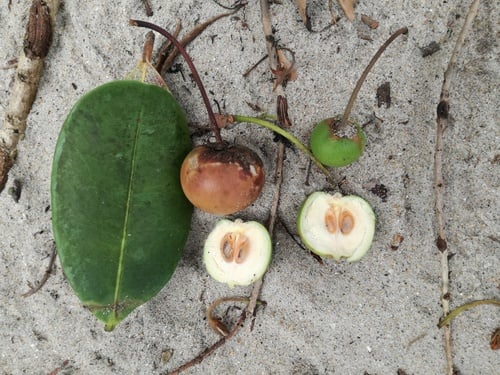
A tree. It grows 27 m tall. The flowers are in tufts in the leaf axils. The stalks are 0.5 cm long and brown and hairy. The fruit occur singly or in pairs. The fruit is an oval berry. It is 1.5 cm long by 1.2 cm wide. It is green and the pulp is white. It is edible. There is usually only one seed. It is 1.4 cm long by 0.9 cm wide. It is dark brown.
Edible Uses
Fruit - raw. A white, transparent pulp. The ellipsoid fruit can be 15mm or more long and 12mm wide, containing generally one large seed.
Traditional Uses
The pulp of the fruit is eaten raw.
This uses section is brief — help expand it
Medicinal Uses
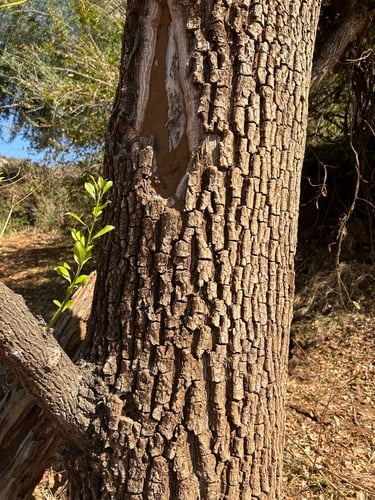
A decoction of the boiled bark is used as a wash for treating rheumatism, sprains, contusions and muscular pain. The inner bark is combined with the crushed leaves and rubbed on the body to rid it of lice and soothe bee stings.
Distribution
It is a tropical plant. It grows in rainforests on slopes. It grows up to 400 m above sea level.
Where It Grows
Amazon, Brazil, Guiana, Guianas, Guyana, South America, Suriname,
Also Known As
Akoinciba, Akwansiba, Asepoekoe, Blaka-jamboka, Bobi waata, Hariraro assepoekoe, Riemhout, Wasa poekoelan, Wase poekoerian
References (4)
- Fouqué, A., 1972, Espèces fruitières d'Amérique tropicale. Institut français de recherches fruitierès outre-mer (ifac)
- Grandtner, M. M. & Chevrette, J., 2013, Dictionary of Trees, Volume 2: South America: Nomenclature, Taxonomy and Ecology. Academic Press p 527
- van Roosmalen, M.G.M., 1985, Fruits of the Guianan Flora. Utrecht Univ. & Wageningen Univ. p 410
- Van Roosmalen, M.G.M., & Garcia, O. M., 2000, Fruits of the Amazonian Forest. Part 2: Sapotaceae. Acta Amazonica 30(2): 187-290