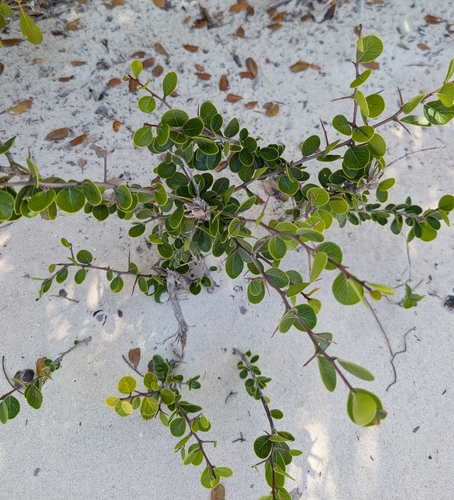
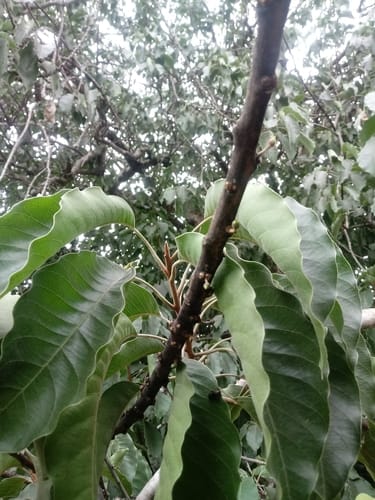
Manilkara zapota - (L.) P.Royen.
(L.) P.Royen.
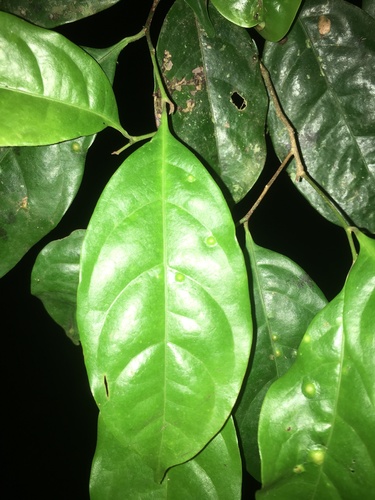
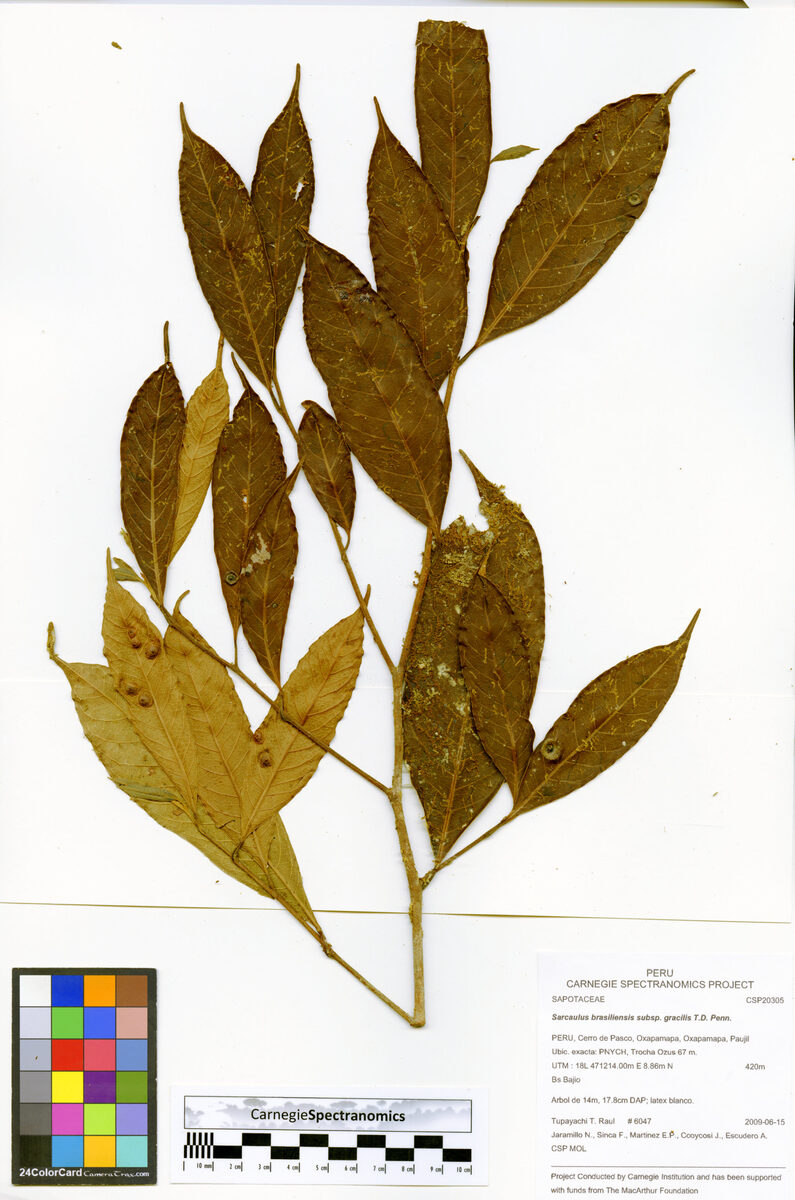
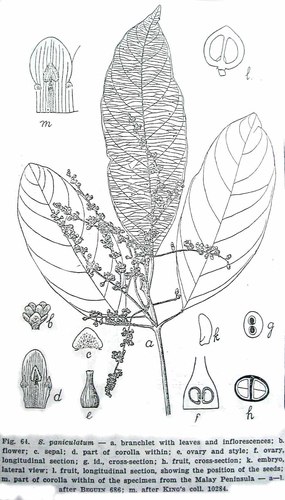
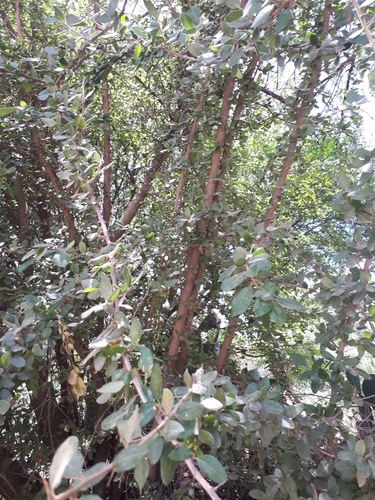
Sapodilla, Nispero
gbif· cc-by-nc
Aronah
gbif· cc-by-nc
luciechassot
gbif· cc-by-nc
luciechassot
Description
Manilkara zapota is an evergreen Tree growing to 25 m (82ft) by 25 m (82ft) at a slow rate. See above for USDA hardiness. It is hardy to UK zone 10 and is frost tender. The flowers are pollinated by Insects. It is noted for attracting wildlife. Suitable for: light (sandy), medium (loamy) and heavy (clay) soils, prefers well-drained soil and can grow in nutritionally poor soil. Suitable pH: mildly acid and neutral soils and can grow in very acid and saline soils. It cannot grow in the shade. It prefers dry or moist soil and can tolerate drought. The plant can tolerates strong winds but not maritime exposure.
Edible Uses
Gum. The fruit can be eaten raw, or used in making sherbets, custard, ice cream, pies, jams, jellies etc. Slightly larger than a plum, when fully ripe, the flesh is soft, very sweet, slightly acid and totally delicious, with the flavour of pears, cinnamon and brown sugar combined. The fruit contains tannin, which is astringent. In order to be at its best, the fruit needs to be eaten when it is absolutely ripe and has lost that astringency, and so it is difficult to grow commercially. The globose fruit is about 10cm in diameter. The stems are a source of a milky latex called balata or chicle. This inelastic polymer can be coagulated when it becomes hard and brittle until chewed. It has long been used as the base for chewing gum. The very young leaves and shoots can be eaten raw or cooked. Some caution is advised since older leaves contain poisonous alkaloids.
Medicinal Uses
Antidiarrhoeal Antipyretic Astringent Diuretic Febrifuge Odontalgic Tonic UrinaryA leaf decoction is taken for fever, haemorrhage, wounds and ulcers. For neuralgia, leaf with tallow is applied as a compress on the temples. The flowers are used as one of the ingredients of a powder that is rubbed on the body of a woman after childbirth. The bark is astringent, febrifuge and tonic. Tannin from the bark is used to cure diarrhoea and fever. The fruit is eaten as a remedy for indigestion and diarrhoea. Seeds are antipyretic, and when ground with water they act as a diuretic. They are used to expel urinary and gall bladder stones. The pulverized roots are used to treat thrush in babies. The plant is a source of sapotin, a glucoside used in medicine as a febrifuge.
Known Hazards
Older leaves contain a poisonous alkaloid. Seeds contain hydrocyanic acid and should be removed before eating the fruit.
Distribution
C. America - Panama to Mexico.
Where It Grows
NORTHERN AMERICA: Mexico, Chihuahua, Durango, San Luis Potosí, Sinaloa, Sonora, Tamaulipas, Zacatecas, Campeche, Chiapas, Colima, Guerrero, Hidalgo, Jalisco, México, Michoacán de Ocampo, Morelos, Nayarit, Oaxaca, Puebla, Querétaro, Quintana Roo, Tabasco, Veracruz de Ignacio de la Llave, Yucatán, SOUTHERN AMERICA: Belize, Guatemala, Nicaragua,
Cultivation
Sapodilla can grow well in a wide range of climatic conditions from the wet tropics to dry cool subtropical areas; but they prefer a moist hot climate similar to that found at medium to low elevations, usually below 600 metres, in tropical areas, such as in coastal regions. Commercial crops can be obtained at elevations up to 900 metres in the tropics, with the tree producing at least some fruit up to 2,500 metres. It grows best in areas where annual daytime temperatures are within the range 20 - 34°c, but can tolerate 11 - 42°c. When dormant, the plant can survive very short-lived temperatures down to about -4°c, but young growth can be severely damaged at -1°c. It prefers a mean annual rainfall in the range 1,000 - 1,500mm, but tolerates 400 - 2,000mm. Fruiting is not adversely affected by heavy rainfall. Grows best in full sun. An undemanding plant, it is one of the few fruit trees to thrive in the poor, wind-swept low-lying coral islands of the West Indies, though it grows better given fertile conditions. Grows well in calcareous soils. Dislikes heavy clay soils. Prefers a well-drained soil. Prefers a pH in the range 6 - 7, tolerating 5.5 - 8.5. Established plants are drought resistant, they also resist strong winds and moderate levels of salt in the soil. The tree has a main fruiting period, but some flowers and fruits are produced throughout the year. Fruits take about 4 months to mature. Seedlings may take 5 - 8 years to bear fruit, while grafted varieties take only 2 - 3 years from planting out. Trees reach their maximum cropping at around the age of 30 years. A good tree may yield up to 2,500 - 3,000 fruits per year, or about 250 - 300 kilos. Annual yields per ha of 20 - 30 tonnes have been reported in Florida, 20 - 25 tonnes in the Philippines and 20 - 80 tonnes in India. There are some named varieties. Flowering Time: Late Winter/Early Spring. Bloom Color: Pale Green Inconspicuous/none.
Propagation
Seeds germinate after about 30 days without any treatment and with up to 80% success rate. Cuttings Air-layering of 2-year-old branches, 45 - 60cm long, 1 cm in diameter and suitably leafy. Grafting.
Other Uses
Furniture Gum Latex Tannin Teeth Wood. Seaside backyard tree. Shade tree. Coastal street tree. Public open space. Xerophytic. Other Uses Wild and cultivated trees in America are tapped for their milky latex, which coagulates into chicle, the principal constituent of chewing gum before the advent of synthetic alternatives. The gum is also used in transmission belts, dental surgery, and as a substitute for gutta-percha, a coagulum of the latex of Palaquium spp. Chicle gum is obtained from oblique cuts or slashes made in the trunk of the tree during the rainy months. From these cuts there issues a milky latex which must be coagulated by heat, and formed into solid blocks for export. Tannin from the bark is used to tan ship sails and fishing tackle. The heartwood is dark reddish or reddish brown, the sapwood pinkish. It is without distinctive odour or taste, of rather low lustre, rather fine-textured and with fairly straight grain. The wood is noted for its strength and durability, it is also very hard, tough, dense, and resistant to insects. It is not easy to work and has a tendency to splinter, but can be finished smoothly. It is suitable for heavy construction, railway ties, furniture, joinery and tool handles.
Synonyms
Also Known As
Sapodilla, Nispero, Baramasi, Buah chiku, Canistel, Chicle, Chico sapote, Chicomamey, Chicu, Chikoo, Chiku, Ciku, Hong xiem, Imut, Korob, Lamoot, Lamud-farang, Lamud, Lamut-farang, Lamut, Lomut, Mammee sapota, Marmalade fruit, Mespil, Mispel, Mispu, Muy, Muyozapot, Naseberry, Neesberry, Nispero, Nispero quitense, Rata-mi, Ren xin guo, Safeta, Sagadu, Sapatu, Sapota, Sapoti, Sapotilha, Sapotille, Sauh menila, Sawa londo, Sawo manila, Sopeta, Sopheda, Tam lu'c, Ya, Xaboche, Zapota, Zapote, Zapote chico, Zapote morado, Zapotillo, beef apple, breiapfelbaum, chicle, chico zapote, chiko|sepadilla / rata mee, chiku tree, chiquibul, ciku, crown gum, guenda-xina, iabn, kaugummibaum, mratabu, mrutabu, naseberry, nispero, níspero, palo maria, peruetano, ratabu, sagadú, sapatu, sapodilla, sapodilla plum, sapodillbaum, sapote, sapotier, sapotilla, sapotillier, sapotillplommon, sopota, tree potato, zapote, zapote chico, zapote de abejas, zapotillo, zapotl.