Manilkara staminodella
Gilly
Chicle de Segunda
iNaturalist· cc-by-nc
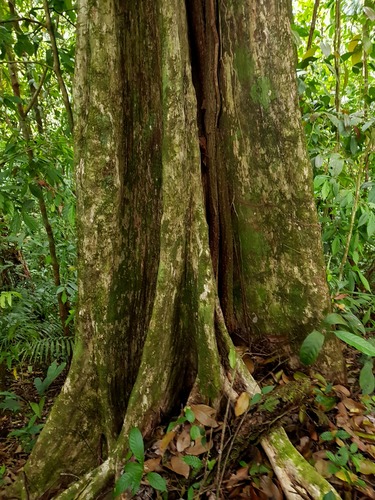
(c) Leonardo Álvarez-Alcázar, some rights reserved (CC BY-NC), uploaded by Leonardo Álvarez-Alcázar
iNaturalist· cc-by-nc
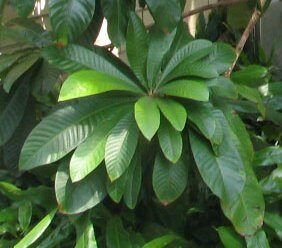
(c) capepolly, some rights reserved (CC BY-NC)
Description
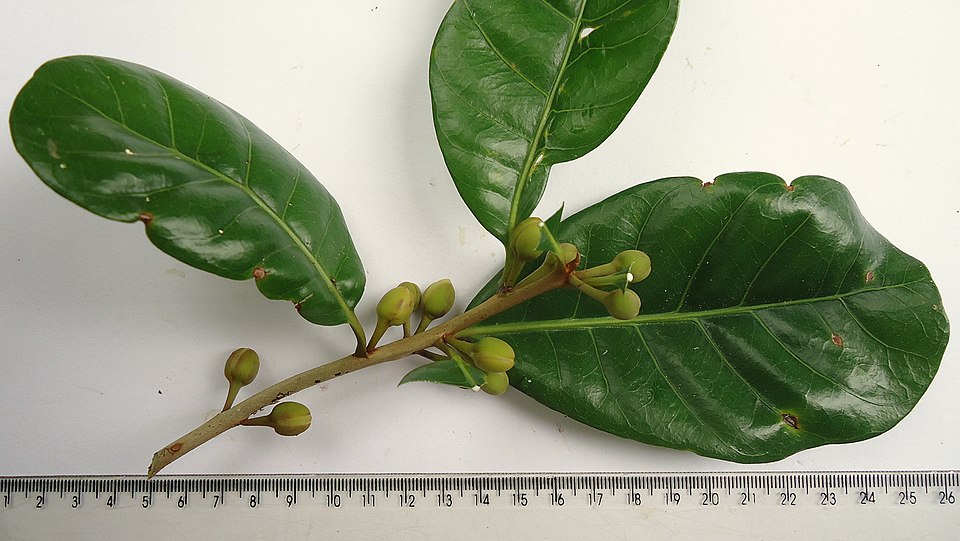
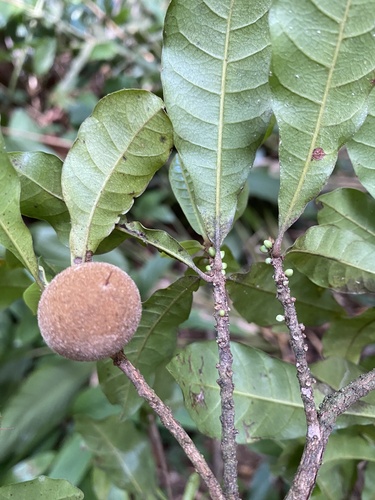
A tree. It can be 30 m high and does not have buttresses. The trunk is 75 cm across. The bark is cracked and in in squares. The bark has sticky white sap. The young shoots can be smooth or have soft brown hairs. The leaves are 4.6-12 cm long by 2-6 cm wide. They are oblong or oval and they can be papery or rough. There are 14-21 pairs of secondary veins. The leaf stalk is 1-3.4 cm long. There is a slight channel in the upper surface. The flowers occur singly or in pairs. They are white or cream. The fruit are 3.5-5 cm long. There are several seeds.
Edible Uses
The sticky white sap is harvested and chewed as chicle. The latex is also used as an edible product.
Traditional Uses
The sap is used for chewing as chicle.
This uses section is brief — help expand it
Distribution
A tropical plant. It grows on hill slopes between 100-850 m altitude.
Where It Grows
Belize, Central America, Costa Rica, Guatemala, Mexico, Nicaragua, North America,
Notes
There are about 75 Manilkara species.
Synonyms
Also Known As
Chiquibul, Muy, Tiejerillo
References (2)
- Kermath, B. M., et al, 2014, Food Plants in the Americas: A survey of the domesticated, cultivated and wild plants used for Human food in North, Central and South America and the Caribbean. On line draft. p 520
- Pennington, T.D., 1990, Sapotaceae in Flora Neotropica Monograph 52. New York Botanical Gardens. p 69