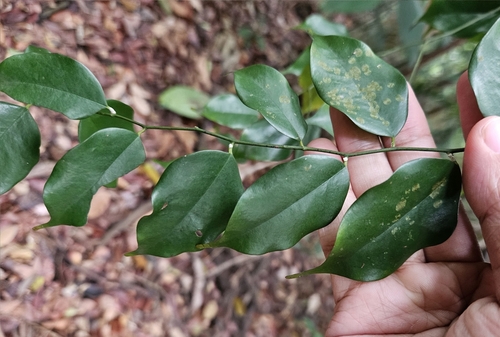
Moutabea guianensis
Aubl.
Guianas moutabea
iNaturalist· cc-by-nc
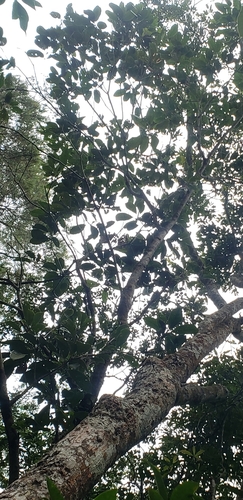
(c) Sébastien SANT, some rights reserved (CC BY-NC), uploaded by Sébastien SANT
iNaturalist· cc-by-nc
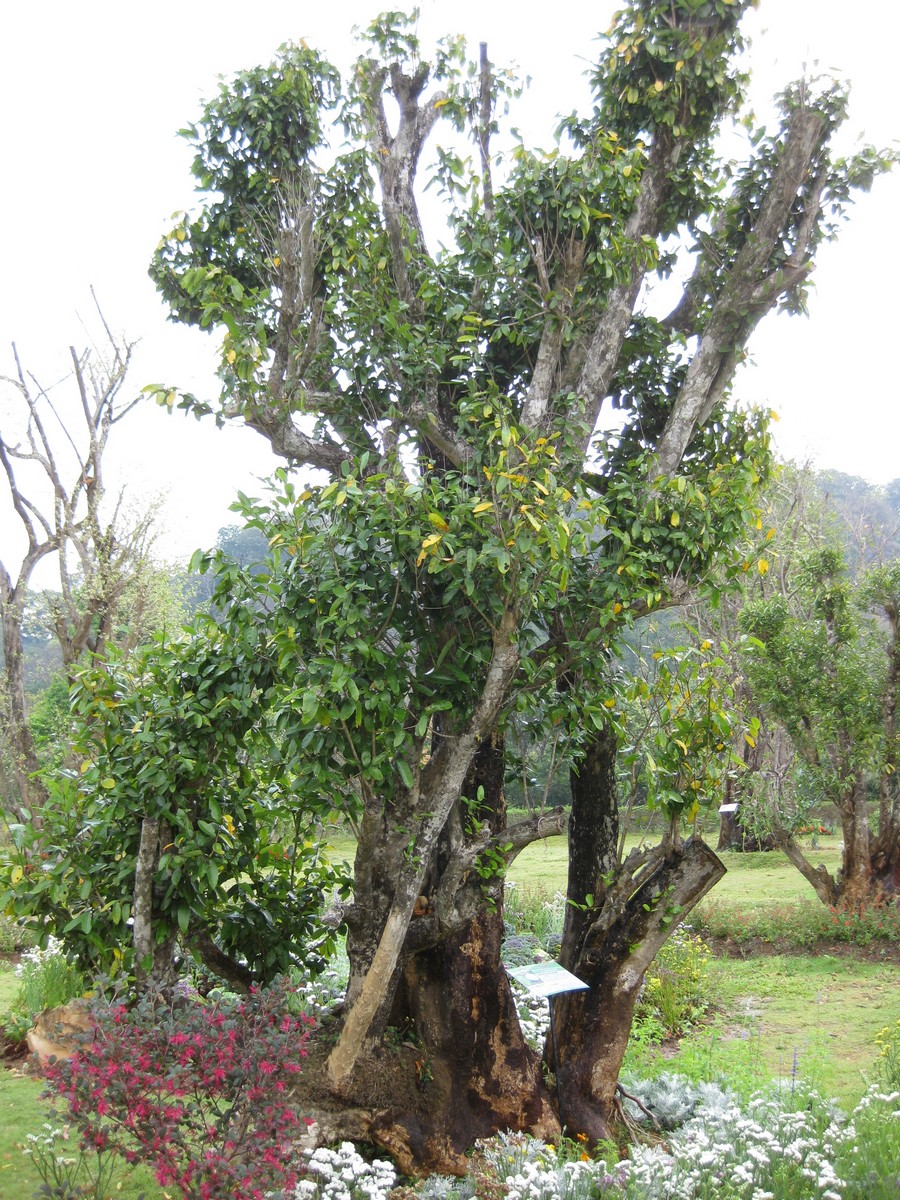
(c) Julien Piolain, some rights reserved (CC BY-NC)
iNaturalist· cc-by-nc
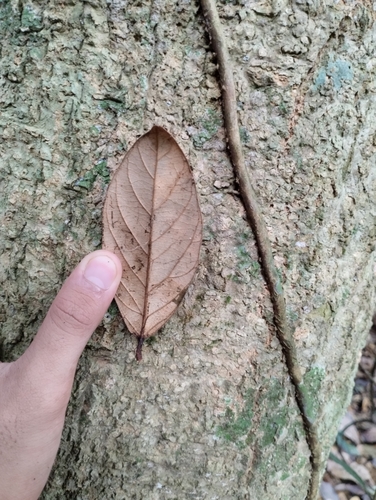
(c) Julien Piolain, some rights reserved (CC BY-NC)
Description
A tree or liana. As a tree it can be 8 m tall and as a climber it can be 35 m long. The flowers are yellowish-white and in groups in the axils of leaves. The flowers have a strong scent. The fruit is round and 4.1 cm long by 4.4 cm wide. It is dark green but ripens to yellow or orange. The pulp is thin and edible. There are 5 seeds. The aril or fleshy layer around the seeds is edible.
Edible Uses
The thin pulp of the fruit is eaten, as is the fleshy aril surrounding the seeds. The stems provide potable water.
Distribution
It is a tropical plant. It grows in rainforest and savanna.
Where It Grows
Amazon, Brazil, Colombia, Ecuador, French Guiana, Guianas, Guyana, South America, Suriname, Venezuela,
Synonyms
Also Known As
Apenliaan, Fruto de macaco, Graine tortue, Nerriti, Ojo de venado, Ojo de zamuro
References (5)
- Grandtner, M. M. & Chevrette, J., 2013, Dictionary of Trees, Volume 2: South America: Nomenclature, Taxonomy and Ecology. Academic Press p 424
- Lopez-Diago, D. & Garcia, N., 2021, Wild edible fruits of Colombia. Biota ColomBiana 22 (2) p 48
- Reis, S. V. and Lipp, F. L., 1982, New Plant Sources for Drugs and Foods from the New York Botanical Garden herbarium. Harvard. p 151
- Roa, J. A. G. & Boada, D. S. G., 2018, Fundación para el Fortalecimiento de la Fruticultura y Plantas Alimenticias no Convencionales en Colombia.
- van Roosmalen, M.G.M., 1985, Fruits of the Guianan Flora. Utrecht Univ. & Wageningen Univ. p 361