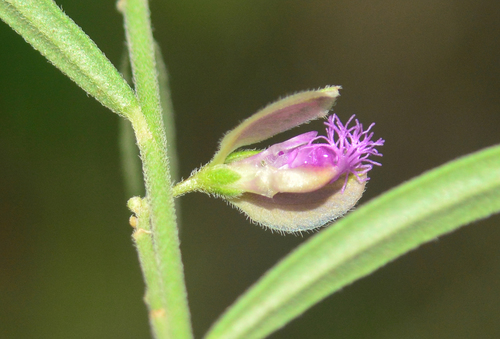
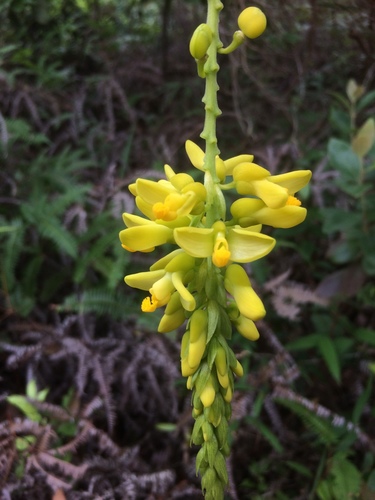
Polygala tenuifolia
Willd.
Chinese Senega
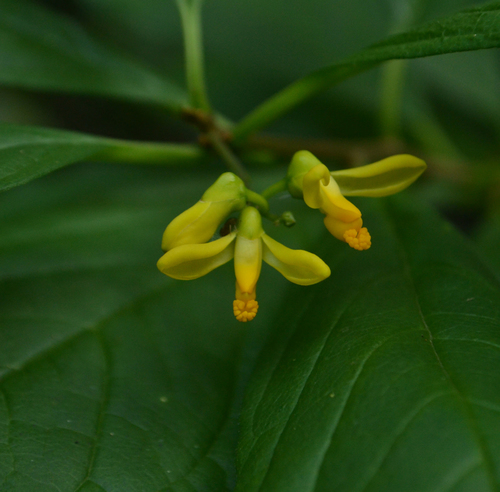
iNaturalist· cc-by-nc
(c) Chuangzao, some rights reserved (CC BY-NC), uploaded by Chuangzao
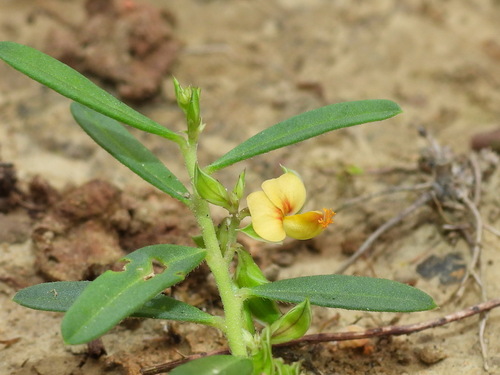
iNaturalist· cc-by-nc
(c) Chuangzao, some rights reserved (CC BY-NC), uploaded by Chuangzao
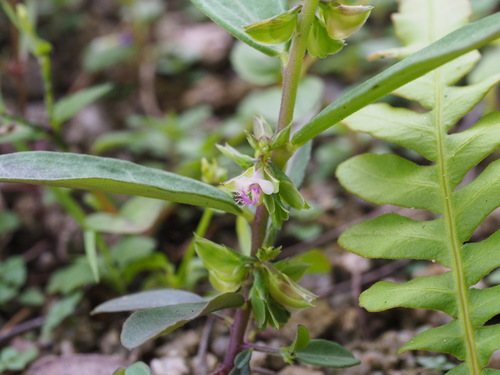
iNaturalist· cc-by-nc
(c) Оля Завгородняя, some rights reserved (CC BY-NC), uploaded by Оля Завгородняя
Summary
Source: WikipediaPolygala tenuifolia (yuǎn zhì; Chinese: 远志) is an herb in the family Polygalaceae which is hardy to USDA Zone 6.
Description
A herb. It keeps growing from year to year. The main root is 10 cm long and stout. The stems are ridged and hairy. The leaves have almost no stalks and the leaves are narrow and 10-3- mm long by 1-2 mm wide.
Edible Uses
Young leaves are eaten cooked. The root is also eaten cooked — the core is removed first, then the root is boiled in several changes of water.
Traditional Uses
The roots are boiled in several changes of water. The core is removed then the root boiled again in fresh water before eating. The leaves are shoots are also eaten.
Medicinal Uses
Known as Yuan Zhi, this plant contains triterpenoid saponins that promote the clearing of phlegm from the bronchial tubes. It is used primarily as an expectorant and stimulant for bronchial asthma, chronic bronchitis, and whooping cough. The root is antibacterial, cardiotonic, cerebrotonic, expectorant, haemolytic, hypotensive, sedative, and tonic, acting mainly on the heart and kidney energies. Taken internally, it treats coughs with profuse phlegm, bronchitis, insomnia, palpitations, poor memory, anxiety, depression, and nervous tension. Applied externally, it is used on boils and carbuncles. The root is harvested in autumn and dried for later use. The leaves are used as a kidney tonic.
Known Hazards
Although no specific mention has been seen for this species, at least one member of this genus is said to be poisonous in large quantities.
Distribution
It is a temperate plant. It grows on grassland and mountain slopes between 500-2,300 m above sea level.
Where It Grows
Asia, China, Korea, Manchuria, Mongolia, Russia,
Cultivation
Prefers a moderately fertile moisture-retentive well-drained soil, succeeding in full sun if the soil remains moist throughout the growing season, otherwise it is best in semi-shade. Dislikes shade according to another report. Plants are hardy to at least -15°c.
Propagation
Sow seed in spring or autumn in a cold frame. Prick seedlings into individual pots once large enough to handle and grow on in the greenhouse through their first winter. Plant out into permanent positions in late spring or early summer, after the last expected frosts. The plant can also be propagated by division or by cuttings of young shoots taken in late spring and rooted in a frame.
Other Uses
None known.
Notes
There are about 600 Polygala species.
References (5)
- Lim, T. K., 2015, Edible Medicinal and Non Medicinal Plants. Volume 9, Modified Stems, Roots, Bulbs. Springer p 66
- Plants for a Future database, The Field, Penpol, Lostwithiel, Cornwall, PL22 0NG, UK. http://www.scs.leeds.ac.uk/pfaf/
- READ,
- Sp. pl. 3(2):879. 1802
- Urgamal, M., Oyuntsetseg, B., Nyambayar, D. & Dulamsuren, Ch. 2014. Conspectus of the vascular plants of Mongolia. (Editors: Sanchir, Ch. & Jamsran, Ts.). Ulaanbaatar, Mongolia. “Admon“ Press. 334pp. (p. 143-158).