Guarea kunthiana
A. Juss.
Kunth muskwood, Sali
iNaturalist· cc-by-nc
(c) Apipa, some rights reserved (CC BY-NC), uploaded by Apipa
iNaturalist· cc-by-nc
(c) Apipa, some rights reserved (CC BY-NC), uploaded by Apipa
iNaturalist· cc-by-nc
(c) Adela Ma. Panizza, some rights reserved (CC BY-NC), uploaded by Adela Ma. Panizza
Description
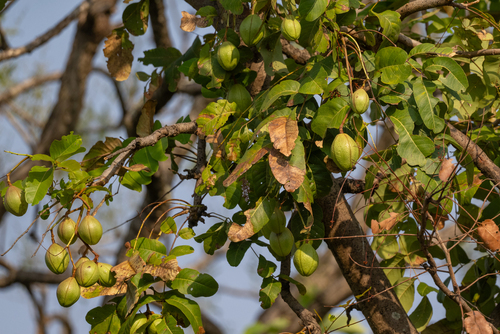
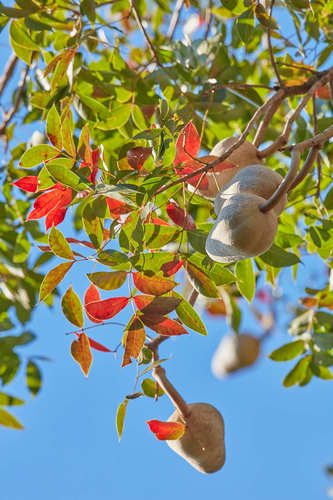
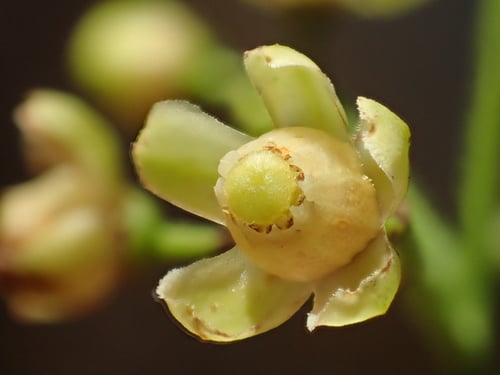
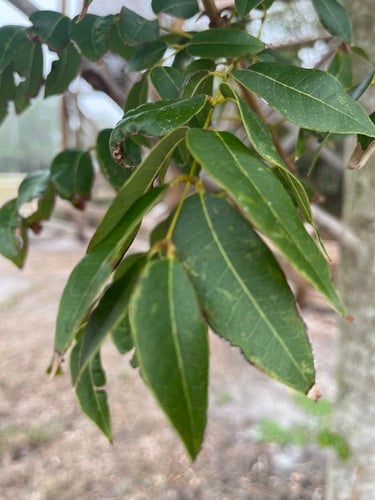
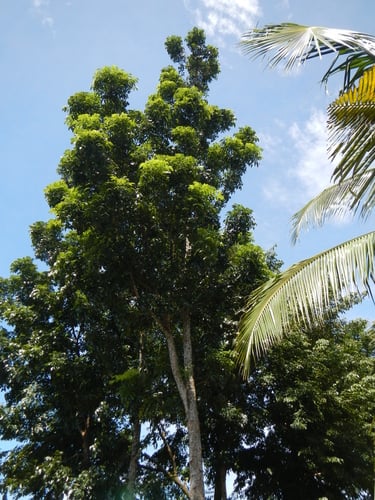
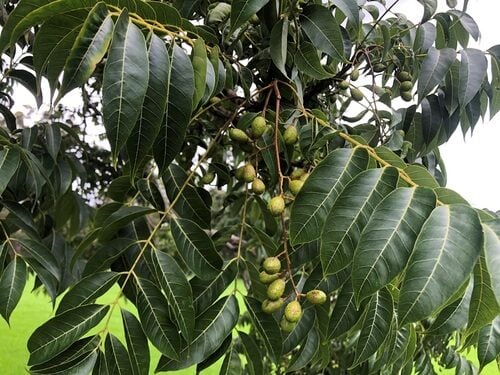
A tree. It grows 30-50 m high. It has small buttresses. The leaves are compound. The flower groups are about 12 cm long. The flowers are yellowish-white. The fruit stalks are thickened and 0.7 cm long. The fruit is an oval capsule. It is 4 cm long by 3.8 cm wide. It is reddish-brown. There are 4-8 seeds. These have 2 flat and 1 curved side. It is 2.5 cm long by 1.3 cm wide. The fleshy layer on the seeds is edible. The seeds hang on long stalks.
Edible Uses
Fruit - raw. The parts that are actually eaten are the funicle (the filamentous stalk that attaches the seed to the placenta) and the hilum (the part that attaches the funicle to the seed). A mealy texture.
Medicinal Uses
A cold water infusion of the bark is drunk as a treatment for malaria. Some people prepare the drink from the outer bark, while others prefer to use only the rasped inner bark.
Distribution
It is a tropical plant. It grows in rainforest especially along rivers. In Argentina it grows from sea level to 1,000 m above sea level.
Where It Grows
Amazon, Argentina, Bolivia, Brazil, Central America, Colombia, Ecuador, French Guiana, Guianas, Guyana, Honduras, Martinique, Nicaragua, Panama, Paraguay, Peru, South America*, Suriname, Venezuela,
Cultivation
Succeeds in full sun to moderate shade. Requires a moist soil.
Propagation
Seed - best sown as soon as it is ripe in a partially shaded position in a nursery seedbed. A low germination rate can be expected, with the seed sprouting within 20 - 35 days.
Other Uses
The wood is medium-textured, heavy, soft, with moderate mechanical properties and reasonably durable if kept dry. It is used for making floor boards, furniture and boxes. The wood is used for fuel. We do not have any more specific information for the wood of this species, but the following is a general description for the wood of this genus:- The heartwood is pinkish to deep reddish-brown; it is distinct, but not sharply demarcated from the sapwood. The texture is medium; the grain rather straight; luster is rather low; green wood is aromatic but odour and taste are very mild or not distinctive in dry specimens. The heartwood has good resistance to dry-wood termites and is durable in the ground. The wood air dries slowly, but with only a moderate amount of warping and no checking. It saws and machines easily and well in all operations except boring, where there is a tendency to tear and crumble. It is used for making furniture, cabinet work, turnery, interior trim, joinery, ship construction (planking and trim), general carpentry, and decorative and utility veneer and plywood. We do not have any specific information for this plant, but many species in this genus are commonly planted in coffee plantations in order to provide shade.
Synonyms
Also Known As
Ainki chalt, Cacao blanco, Cancharana macho, Caraya-bola, Cedrikko cimarron, Cedrillo de montana, Chanutiyo, Higuerillo, Jatuauba, Jito, Mancore, Mborevi, Ponchero, Puka, Rembui, Requilla, Sacha requia, Sacha tocota, Tapake, Tukuta, Wamokaowe, Wamonkai, Yantsau, Zwarte doifisiri
References (5)
- Grandtner, M. M. & Chevrette, J., 2013, Dictionary of Trees, Volume 2: South America: Nomenclature, Taxonomy and Ecology. Academic Press p 274
- Lopez-Diago, D. & Garcia, N., 2021, Wild edible fruits of Colombia. Biota ColomBiana 22 (2) p 43
- Roa, J. A. G. & Boada, D. S. G., 2018, Fundación para el Fortalecimiento de la Fruticultura y Plantas Alimenticias no Convencionales en Colombia.
- Torre, de la, L., et al, 2008, Enciclopedia de las Plantas Útiles del Ecuador. Herbario QCA. Pontificia Universidad Católica del Ecuador. p 437
- van Roosmalen, M.G.M., 1985, Fruits of the Guianan Flora. Utrecht Univ. & Wageningen Univ. p 286