Swietenia macrophylla
King
Honduras mahogany, Big-leaf mahogany
iNaturalist· cc0
no rights reserved, uploaded by 葉子
iNaturalist· cc-by-nc
(c) Roberto González, some rights reserved (CC BY-NC)
iNaturalist· cc-by-nc
(c) Roberto González, some rights reserved (CC BY-NC)
Summary
Source: WikipediaSwietenia macrophylla, commonly known as mahogany, Honduran mahogany, Honduras mahogany, or big-leaf mahogany is a species of plant in the Meliaceae family. It is one of three species in genus Swietenia that yield genuine mahogany timber, the others being Swietenia mahagoni and Swietenia humilis. It is native to South America, Mexico and Central America, but naturalized in the Philippines, Singapore, Malaysia and Hawaii, and cultivated in plantations and wind-breaks elsewhere.
Description
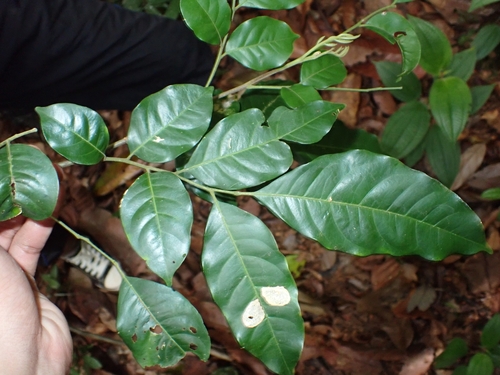
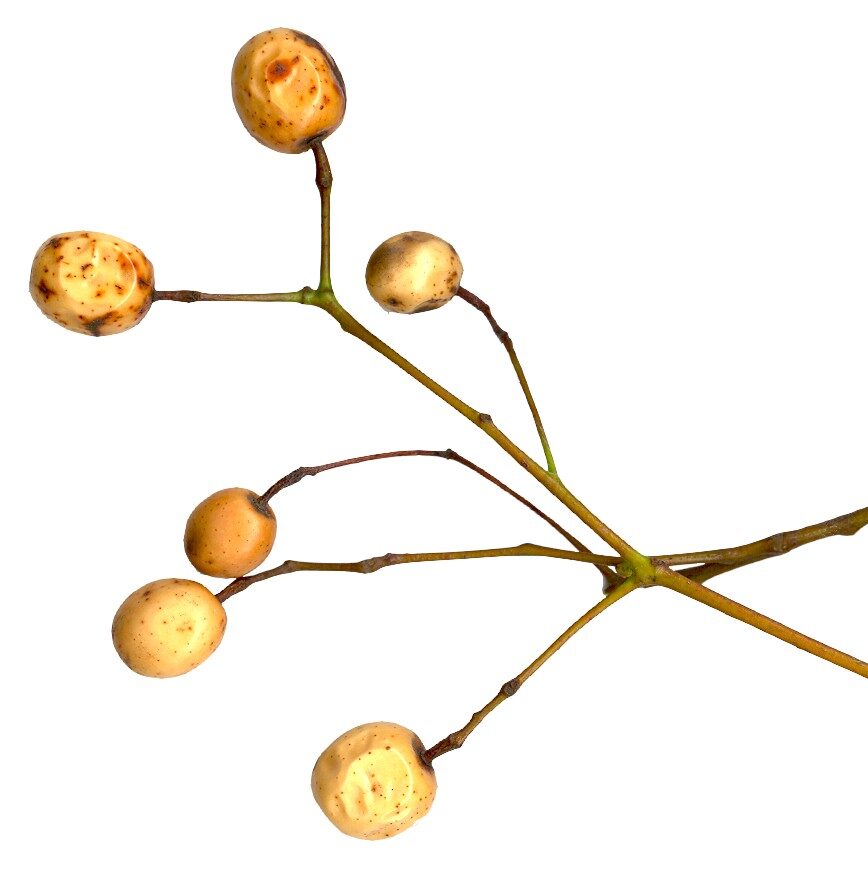
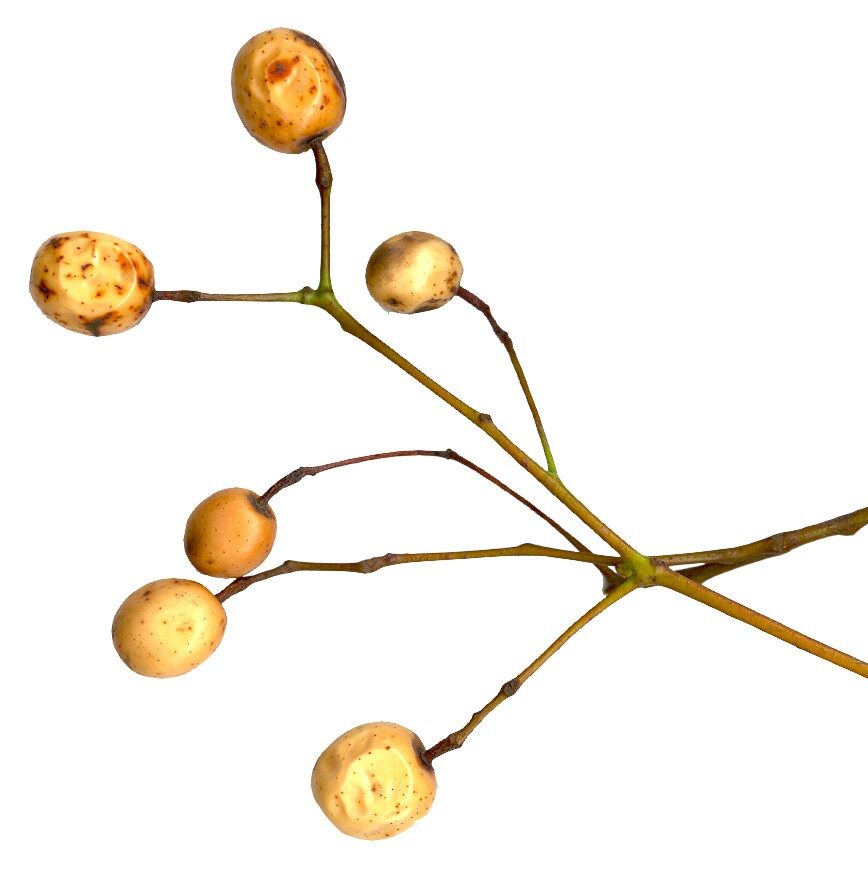
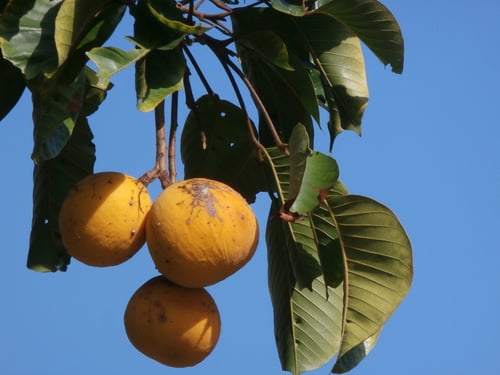
A tall tree. It grows 40-60 m high. Large trees have big buttresses. The bark is grey with cracks along it. The crown is large and round. The leaves are compound with an even number of leaflets along the stalk. The leaves are bunched towards the ends of the branches. The leaflets are unequal on each side. The flowers are small and white or green. They are in clusters above the leaves. The fruit are brown capsules. They are held erect above the leaves. The seeds are large and winged.
Edible Uses
No edible uses are known beyond the production of a gum from the bark.
Medicinal Uses
Various medicinal uses of parts of the tree are reported from Central America. The bark is astringent, bitter and febrifuge. An infusion is used to treat diarrhoea and fevers.
Distribution
It is a tropical plant. They grown in open forest areas. It suits drier areas. Brisbane Botanical Garden.
Where It Grows
Africa, Andamans, Asia, Australia, Belize, Bolivia, Brazil, Cambodia, Central America, China, Colombia, Costa Rica, Dominican Republic, Ecuador, El Salvador, Guatemala, Haiti, Honduras*, Indochina, Indonesia, Laos, Malaysia, Maldives, Mexico, Nepal, Nicaragua, North America, Pakistan, Panama, Peru, Rotuma, SE Asia, South America, Sri Lanka, Thailand, Venezuela, West Indies, West Timor,
Cultivation
A plant of the wet tropics, where it is found at elevations up to 1,500 metres, but grows best below 600 metres. It grows best in areas where annual daytime temperatures are within the range 20 - 30°c, but can tolerate 11 - 39°c. It prefers a mean annual rainfall in the range 2,000 - 4,000mm, but tolerates 1,400 - 6,000mm. Young trees require at least light shade and are fairly tolerant to dense shade, but conditions for optimum growth of older trees call for full overhead light combined with side protection. Grows best on well-drained, fertile sites with medium to heavy soils. Prefers a pH in the range 6.5 - 7.5, tolerating 6 - 8.5. The tree is reported to be very firm in the wind, and resistant to cyclones. The species has some weed potential and may invade native forest communities, especially following disturbance. It should not be planted in close proximity to areas of high nature conservation significance. Flowering and fruiting are distinctly seasonal. Fruit may be produced once a year, and trees start to produce fruit regularly when about 15 years old. Seeds have a thin, tail-like wing that makes them rotate when they fall; they are thus dispersed by wind as far as 500 metres from the parent tree. In natural stands it is beneficial to open the canopy over dense, young regeneration in which saplings are about 1.8 metres high. In plantation forestry, the tree has always been planted at 10 x 3 metres (333 stems/ha), because it requires large amounts of light. Plantations established at such wide spacing rarely need thinning unless selectively to remove diseased stems. The tree is self-pruning and further pruning is not necessary. When grown for timber, The tree has a rotation age of 30 - 35 years, with a final stocking rate of 150 - 250 stems/ha. This species hybridizes with S. macrophylla and S. Mahagoni. Hybridization has been confirmed by cytological studies. Flowering Time: Evergreen Deciduous Smooth-Textured Shiny/Glossy-Textured. Bloom Color: Pale Yellow Pale Green Inconspicuous/none. Spacing: 30-40 ft. (9-12 m) over 40 ft. (12 m) .
Propagation
No pre-treatment is required, though stored seed germinates more rapidly if soaked in warm water for 12 hours before sowing. Sow in nursery beds or containers, covering seed with 3cm of soil. Germination of fresh seed normally begins 10–17 days after sowing, with a germination rate of over 90%. Keep seedlings under shade until planting out when they reach approximately 50–100cm tall. Viability can be maintained for at least one year in hermetic storage. No loss in viability occurs after 7 months storage at 12°C, but only 2.5% of seeds germinated following 2 years of hermetic storage with dry seeds at 3–5°C.
Other Uses
Big leaf mahogany is among the pioneer species that reoccupy degraded agricultural land within its native range. It has been used in reforestation projects and performs well in areas not protected from grazing. It serves as a shade tree for cacao, coffee and young dipterocarp plantations. When young, it can be grown as an under-crop for teak (Tectona grandis), where its ability to tolerate heavy thinning without exposing the soil to desiccation or erosion is particularly valuable. In Puerto Rico, farmers have planted it among subsistence crops including corn, beans, bananas, sweet potatoes and cassava. The crushed fruit shells have been used as a potting medium. A gum produced from cuts in the bark is marketed in both pure form and mixed with other gums. The bark is used for dyeing and tanning leather. An oil extractable from the seed kernels is very bitter and purgative and may have commercial value. The heartwood is reddish, pinkish, salmon coloured or yellowish when fresh, deepening with age to deep rich red or brown, clearly demarcated from the up to 40mm wide band of yellowish or whitish sapwood. The wood has a high golden lustre, a rather fine to coarse texture, and a straight to roey, wavy or curly grain that often produces an attractive figure. It is of medium weight, reasonably durable, though not recommended for ground contact. It seasons well with little checking or distortion, is easy to work with hand tools and finishes to a smooth surface. Gluing and nailing properties are good, though discolouration can occur in contact with iron, copper and brass under humid conditions. It polishes well and does not crack or bend, making it highly valued for quality furniture and cabinet work. It has also been used in interior panelling, joinery, turnery, plywood and heavy construction. Its precision allows use in models, patterns, instrument cases, clocks, printer's blocks and parts of musical instruments. Veneer quality can be limited by colour variation, wavy grain, pin knots and pinhole borer damage.
Synonyms
Also Known As
Honduran mahogany, mahogany - English, aguano - Portuguese (Brazil), araputanga -Portuguese (Brazil), caóba - Portuguese (Brazil), cedro-í - Portuguese (Brazil), mogno - Portuguese (Brazil), mogno-brasileiro - Portuguese (Brazil), caoba - Spanish, mara - Spanish (Bolivia), aguano - Spanish (Peru), hondurasmahogny - Swedish. Mahogani, aguano, araputanga, big leaf mahogany, big-leaf mahogany, caoba, caóba, cedro-í, gaúbana, honduran mahogany, honduras mahogany, hondurasmahogny, mahogany, mara, mogno, mogno-brasileiro, unsubu, yulu.
References (9)
- Condit, R., et al, 2011, Trees of Panama and Costa Rica. Princeton Field Guides. p 316
- Flora of Pakistan. www.eFloras.org
- Grandtner, M. M., 2008, World Dictionary of Trees. Wood and Forest Science Department. Laval University, Quebec, Qc Canada. (Internet database http://www.wdt.qc.ca)
- Ping, L. C., et al, 2012, Effect of Pretreatments on Chemical and Antioxidant Properties of Sky Fruit (Swietenia macrophylla) Seed Oil. J. Teknol. dan Industri Pangan Vol XX111 No. 2
- Plants of Haiti Smithsonian Institute http://botany.si.edu/antilles/West Indies
Show all 9 references Hide references
- Sujanapal, P., & Sankaran, K. V., 2016, Common Plants of Maldives. FAO & Kerala FRI, p 256
- Tan, S., et al, 2009, New Phragmalin-type limonoids from Swietenia macrophylla King. Food Chemistry 115: 1279-1285
- Wongprasert, T. et al, 2011, A Synoptic Account of the Meliaceae of Thailand. Thai For. Bull. 39:210-266
- World Checklist of Useful Plant Species 2020. Royal Botanic Gardens, Kew