Posoqueria acutifolia
Mart.
Acute leaf posoqueria
iNaturalist· cc-by
(c) Victor Farjalla Pontes, some rights reserved (CC BY), uploaded by Victor Farjalla Pontes
iNaturalist· cc-by
(c) Diogo Luiz, some rights reserved (CC BY), uploaded by Diogo Luiz
Description
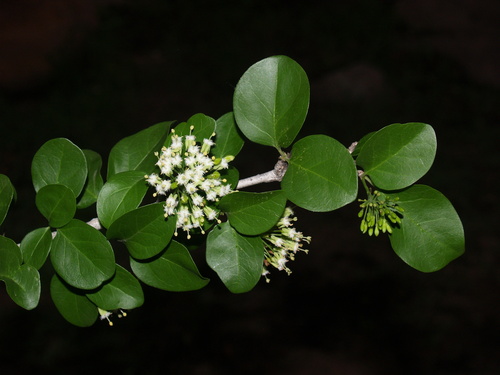
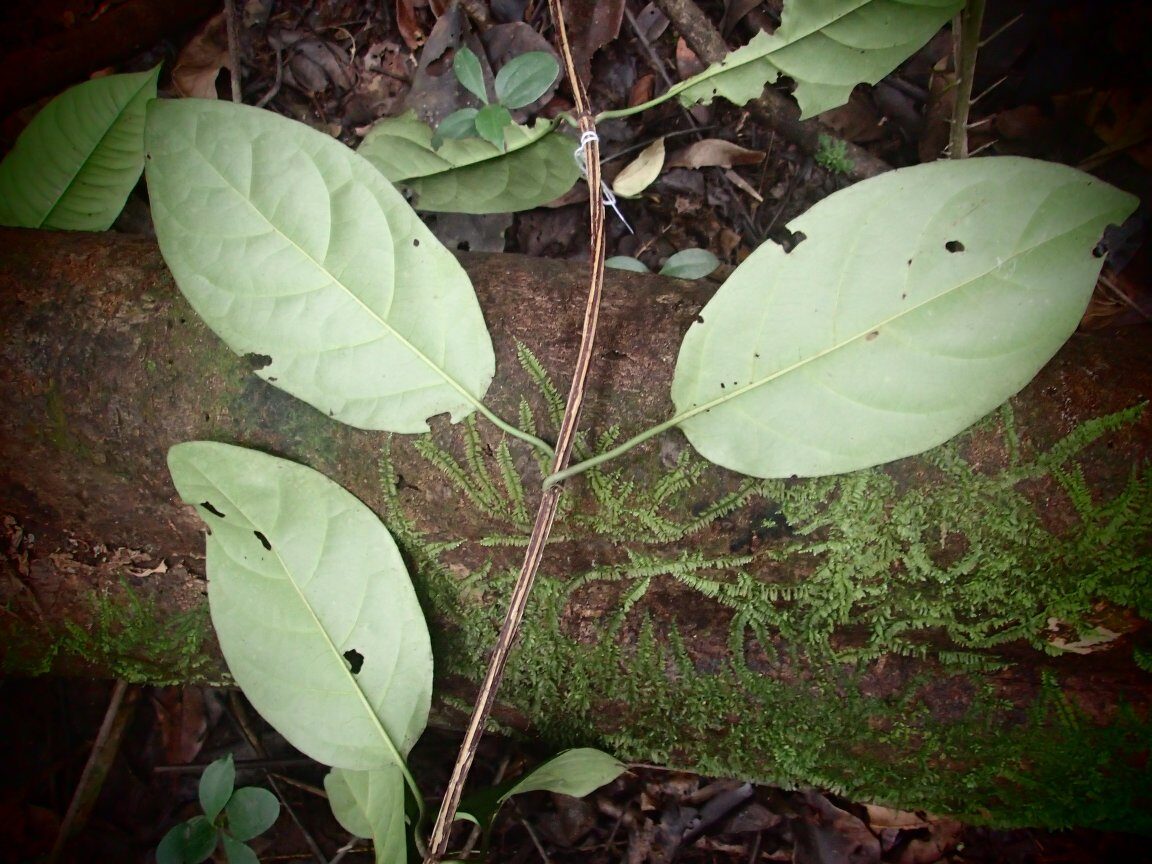
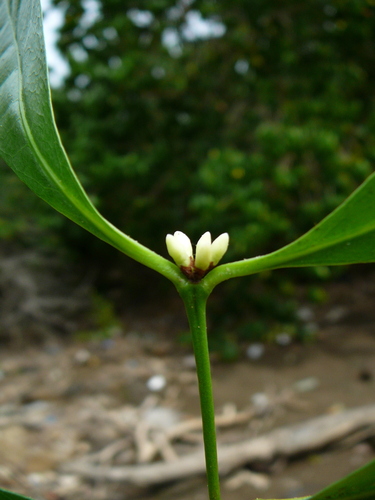
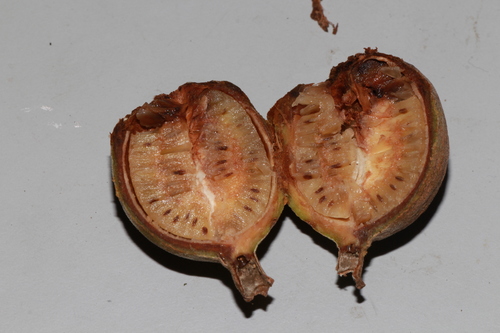
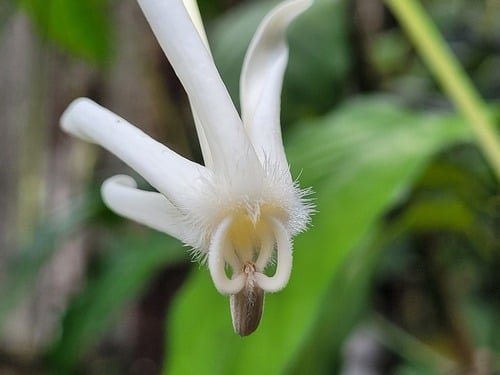
A tree. It grows 4-8 m tall. The crown is pyramid shape and sparse. The trunk is branched and 20-30 cm across. The bark is thin and rough. The leaves are simple and without a distinct edge. They are 8-15 cm long by 4-8 cm wide. The leaf stalks are 4-10 mm long. The flowers are tube shaped and 8-18 cm long. The fruit is round and yellow when ripe. The seeds let light through. The layer around the seeds is edible.
Edible Uses
The layer of pulp surrounding the seeds is edible.
Distribution
It grows in forests in Brazil near the Atlantic coast.
Where It Grows
Brazil, South America,
Cultivation
Plants are grown from seed. The ripe fruit are harvested and the seeds removed and planted fresh. Seeds germinate in 50-60 days. The seedlings can be transplanted into the field in 6-7 months.
Propagation
Seed - best sown as soon as it is ripe in a partially shaded position in a nursery seedbed or in individual containers. A low germination rate can be expected, with the seed sprouting within 50 - 60 days. When the seedlings in the seedbed are 5 - 6cm tall, pot them up into individual containers and they should be ready to plant out 6 - 7 months later.
Other Uses
The wood is straight-grained, moderately heavy, hard, flexible, with good mechanical properties and moderately durable, even when exposed. Although of small dimensions, it is very good for cabinet making, lathe work, tool handles, walking sticks etc. The wood is used for fuel and for making charcoal.
Notes
There are about 15 Posoqueria species.
Also Known As
Bacupari-miudo, Bago-de-macaco, Fruto-de-macaco, Pau-de-macaco
References (2)
- Grandtner, M. M. & Chevrette, J., 2013, Dictionary of Trees, Volume 2: South America: Nomenclature, Taxonomy and Ecology. Academic Press p 519
- Lorenzi, H., 2002, Brazilian Trees. A Guide to the Identification and Cultivation of Brazilian Native Trees. Vol. 02 Nova Odessa, SP, Instituto Plantarum p 312